Family rings: tradition and meaning
Inheriting a family engagement ring carries sentimental value no new jewel can replicate. The tradition, the practical challenges and how to make it your own.
Created with AI assistance and human review. Editorial standards

Some rings arrive in a crisp new jewellery box. Others arrive wrapped in a square of fabric, kept for decades in a grandmother's bedside drawer. The second kind carries something no freshly cut diamond can buy: the story of a promise that was already kept.
The tradition of inheriting a family engagement ring has deep roots across Europe, though how it plays out varies enormously by region, family and generation. Below, we look at what lies behind this custom, when it makes sense to follow it, what practical challenges it raises and how to navigate the sometimes delicate moment when your future mother-in-law's ring is not quite what you had pictured.
Key points
- Inheriting a family engagement ring is a tradition with genuine historical roots: for much of the twentieth century, the ring passed between generations as a gesture of welcome into the family.
- The most common inherited rings are those of a paternal or maternal grandmother or of the mother; there are also pieces acquired specifically to start a family tradition where one did not previously exist.
- Before making any decisions, take the piece to a jeweller for a full technical assessment: the condition of the setting, the width of the band and the clarity of the stone can all hold surprises.
- If the design does not feel right, the options range from resetting it with the original stone to keeping the ring for special occasions and buying something new.
- A resize costs between £30 and £80 at most jewellers; if the band features a continuous pavé or decoration, it can exceed £150.
- Standard home contents policies often cover jewellery only up to a modest threshold without a specific valuables clause. For a family piece of real worth, obtaining a professional valuation and extending your cover is the sensible step.
Where this tradition comes from
For much of the twentieth century, the engagement ring was treated as a family asset. Households with means bought one and kept it, fully intending it to pass to the next generation. Families with fewer resources sometimes had no choice: a new ring for every wedding was simply not possible, and the same piece moved from sister to sister, mother to daughter.
This logic of transmission carried a very specific symbolic dimension. When a man placed on his fiancée's finger the ring his own mother had worn, he was saying, without words, that he was welcoming her into the innermost circle of his family. It was a gesture of belonging, a declaration of acceptance with more weight than any speech.
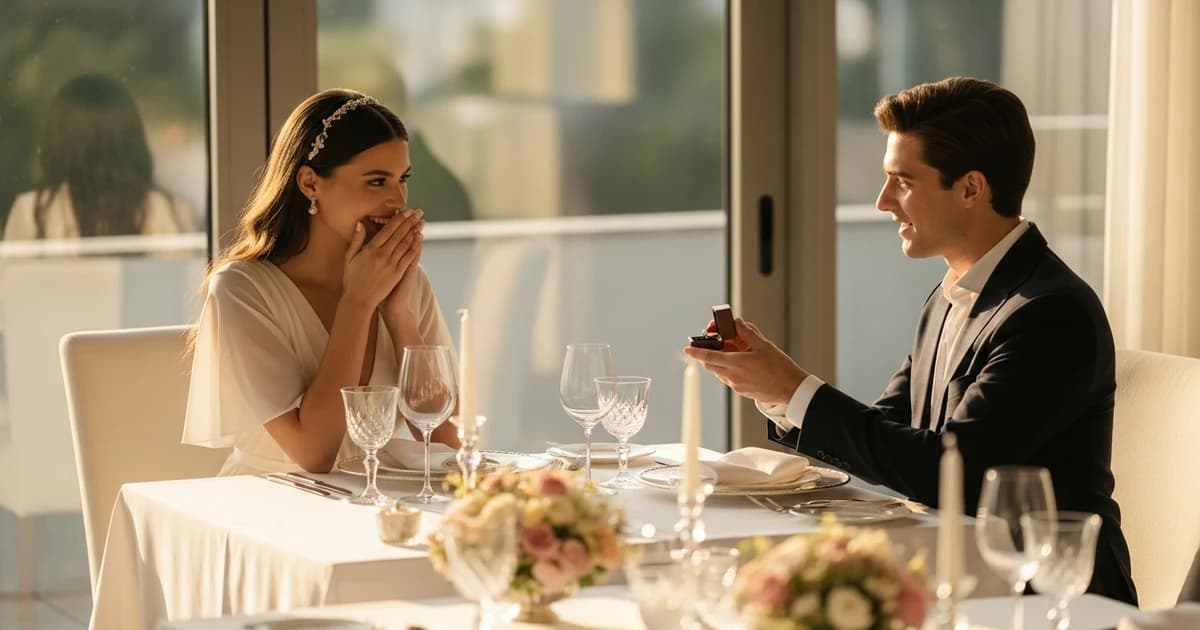
In the context of a formal proposal gathering, which in many traditions brought both families together, the presentation of the mother's ring had an almost ceremonial quality. You can read more about how that ritual unfolded in the guide to the formal proposal.
The kinds of family rings that circulate today
Not all inherited rings are alike, and it is worth distinguishing between them because each one presents a different set of circumstances.
A paternal or maternal grandmother's ring
This is the most common case and also the one most loaded with expectation. The piece is typically between fifty and a hundred years old, with an aesthetic that belongs firmly to its era: high claw settings, solitaires featuring old-cut diamonds that look quite different from modern cuts, or coloured stones such as rubies and sapphires, which were fashionable before the colourless diamond became the universal standard.
A mother's ring
More recent, and more likely to be in good condition. In many cases the mother offers it voluntarily the moment she hears about the engagement, sometimes even before the couple has thought to ask.
A piece bought by the family specifically for the occasion
This happens in families where no heirloom ring exists but where there is a genuine desire to create that tradition. Parents or grandparents purchase a piece with the explicit intention that it will be passed down. It is a less widespread practice but a growing one, particularly among families who see jewellery as both an investment and a legacy.
All included
- Banquet venue
- Wedding Planner
- Marriage Paperwork
- Photographer
- Décor
- Flowers
- Master of Ceremonies
- Deejay
- Open Bar
The proposal with a family ring
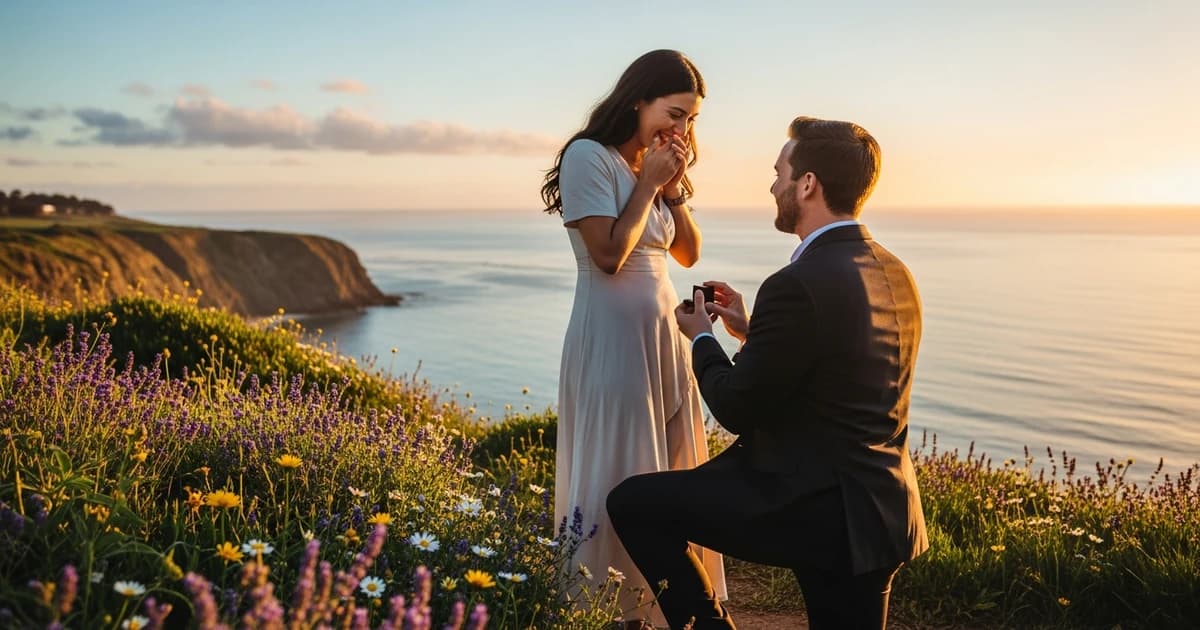
Proposing with a family ring requires a different kind of preparation from buying a new one. Two variables matter above all: whether the person receiving it knows the ring's history, and whether they have formed any expectations about what their engagement ring will look like.
If your partner grew up watching that ring on their grandmother's hand and knows it well, a proposal with that piece can be one of the most meaningful moments you could imagine. If, on the other hand, they have never expressed any particular attachment to it or have mentioned at some point that they would love to choose their own ring, it is worth having a conversation before the proposal, even if that means giving up a little of the surprise.
A formula many couples land on: propose with the family ring and make clear, in that same moment, that if they would prefer to have it redesigned or replaced, that conversation is entirely open. The symbolic gesture remains intact; the final decision becomes a shared one.
When the ring does not feel right: real options
This is the most delicate territory and also the most common. The ring holds enormous sentimental value for the person giving it, but the person receiving it cannot quite see themselves wearing it. These are the most frequently chosen paths, in no particular order:
Wearing it as it is throughout the engagement and deciding later. Many people find that, given time, the ring wins them over. The story behind it gradually transforms how they perceive the design.
Resetting the stone in a new mount. This is the most popular option when the stone carries sentimental or financial value but the setting does not feel right. A skilled jeweller can extract the stone and set it in a fully bespoke new mount. The result is a piece that holds both past and present.
Adding to it rather than replacing it. Instead of starting over, you can build on what is there: flanking the central stone with new side stones, adding a pavé band, or designing a wedding ring that is made specifically to sit alongside the inherited piece.
Keeping the ring and buying something new. Sometimes the most honest choice. The family ring can become a piece worn on special occasions, or passed to the next generation, without anyone feeling they have let the tradition down.
For a clearer sense of the design options before you speak to a jeweller, it can help to read the guide to engagement rings.
The physical condition of the piece: what to look for
A ring that has been worn for decades accumulates wear that is not always visible to the naked eye. Before making any decisions, the most sensible first step is to take it to a trusted jeweller for a full technical assessment. The key things to check:
The condition of the claws or setting. If the claws are worn down, the stone may be at risk of coming loose. Reinforcing them is usually a minor and relatively inexpensive job, but it is not one to skip.
The width of the band. Very fine bands that have been worn for years can have areas of thinning that make the piece fragile. Sometimes additional metal needs to be added or, in more serious cases, the band replaced entirely.
The cleanliness of the stone. Precious stones accumulate grease and residue in the setting that dulls their brilliance. A professional clean can transform the appearance of a piece that seemed flat or lifeless.
A resize, if needed, is the most common practical step. A straightforward adjustment typically costs between £30 and £80 at most jewellers, depending on the metal and the band's width. If the band features continuous decoration or pavé, the cost can exceed £150. Before taking the piece in, it is worth knowing the exact size required. You will find a full explanation in this article on how to measure ring size.
Insurance: a step worth taking seriously
An inherited ring can have considerable financial value, particularly if it includes a meaningful precious stone or a well-preserved precious metal band. And yet very few people think to insure it before the wedding.
Standard home contents policies often cover jewellery only up to a modest threshold without a specific valuables clause. For a family piece with real history and worth, the prudent course is to obtain an official valuation from a certified jeweller and, from there, take out a valuables extension or a standalone specialist policy that reflects what the piece is actually worth.
This article was reviewed by our editorial team. How we create our content
Frequently Asked Questions
Not sure which one suits you?
Try every silhouette on your own photo with Wedded's virtual try-on. The first 5 try-ons are free.