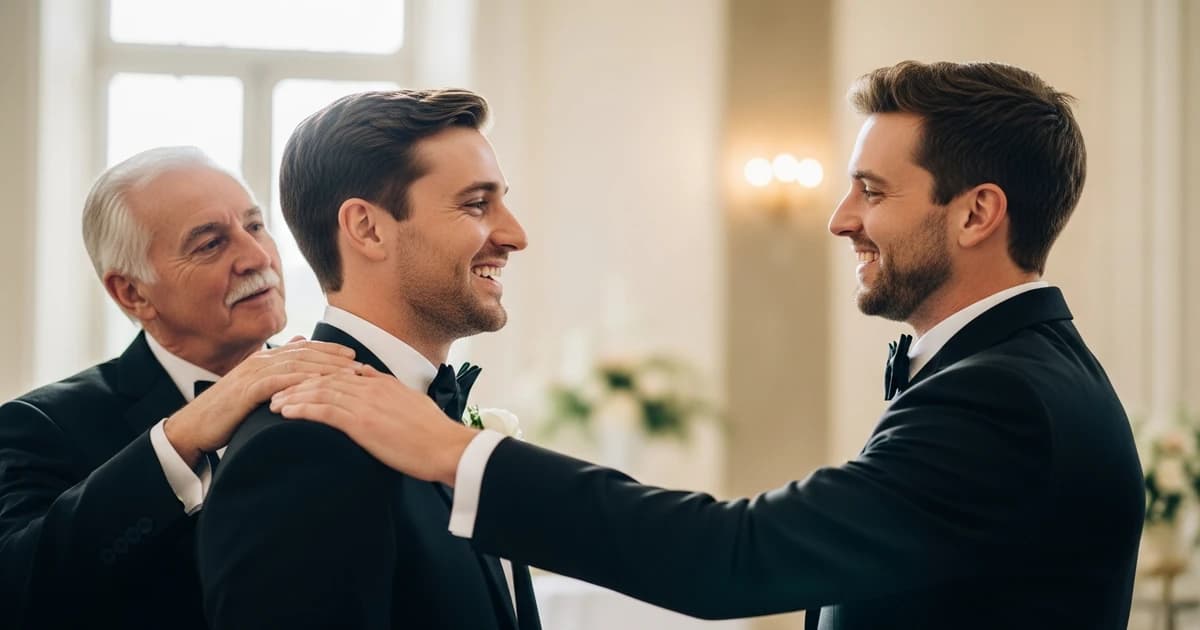
Wedding Witnesses in Spain: How Many and Who Can Do It
Two witnesses at every civil wedding, two at every Catholic one. Who qualifies, what documents to bring, how to choose them and how to ask. Full legal guide.
Created with AI assistance and human review. Editorial standards
Key points
- Spanish law requires exactly two witnesses at every civil wedding, both adults with a valid identity document.
- Catholic weddings also require two, and in many dioceses they must be baptised. Check with your parish priest before confirming anyone.
- Their only legal obligation is to sign the register, but in practice witnesses are expected to speak at the toast and often to organise the hen or stag as well.
- Ask with at least three months' notice, in person, and be upfront about the date, the ID requirement and whether you want a speech.
- Always have an informal backup in mind. An expired ID or a stomach bug on the wedding day happens more often than you would think.
Wedding Witnesses: How Many You Need and Who Can Do It
Every civil wedding in Spain requires exactly two witnesses, as set out in Ley 20/2011 of the Civil Registry. People frequently ask whether the number is two or three because the full process involves three signature moments: one witness during the pre-wedding marriage file (expediente matrimonial, completed weeks before the ceremony) and two witnesses on the day itself. Legally, what matters is two witnesses present at the ceremony to sign the marriage register.
Catholic weddings, governed by the Code of Canon Law (can. 1108), also require two witnesses. Without their signatures the register is incomplete and the marriage has no legal effect.
The witness also carries a human dimension: this is the person who knows one of you well enough to stand there and say so. That dual role, legal and symbolic, is why the choice deserves more thought than it usually gets. We cover everything from the legal foundations to the small gestures that turn a signature into a memory.
How many witnesses do you need at a wedding?
Spanish civil law requires exactly two witnesses, both adults with full legal capacity and a valid identity document on the day. Catholic weddings require the same number. The common confusion about whether the total is two or three comes from the civil process: a separate signature is collected weeks before the ceremony during the marriage file. On the wedding day itself the answer is always two.
Two or three? Clearing up the confusion
The civil marriage process in Spain has two distinct stages:
-
Marriage file (expediente matrimonial), completed weeks before the wedding: one witness is asked to confirm they know the couple and that there are no legal impediments.
-
Ceremony, on the wedding day: two witnesses sign the marriage register. These are the only ones required by law (Ley 20/2011, art. 56).
In practice it is common for one person to cover both stages, which is why people sometimes count three witnesses across the whole process. But on the day, two is both the minimum and the maximum.
Witnesses at a Catholic wedding
The Catholic Church also sets the number at two, under the Code of Canon Law (can. 1108). Many Spanish dioceses additionally require that witnesses be baptised, though the exact rules vary; check directly with your parish priest or the diocesan marriage delegate before confirming anyone.
What a wedding witness actually is
Legally, a witness is the person who confirms to the state that the marriage has taken place freely and consciously, and who signs the register as evidence of that. Without that signature, the document is incomplete.
Beyond the legal definition, the witness is also someone who can speak about one of you with genuine knowledge and affection. Those two things, the bureaucratic and the personal, are what make the choice feel significant. And they should.
Who qualifies as a witness
Civil wedding
The Civil Registry Act requires two witnesses who are adults and have full legal capacity. Each partner can bring one of their own, or both can share the same two witnesses. There is no hierarchy: both carry exactly the same legal weight.
Foreign nationals and non-residents are perfectly valid, provided they present a recognised identity document: a passport, or for EU citizens, their national ID card.
Catholic wedding
The Church requires two witnesses, who in most Spanish dioceses must also be baptised. The rules on this can vary between dioceses, so it is worth confirming with the parish priest early, not the week before.
Weddings with both ceremonies
When a couple holds a civil ceremony followed by a religious one, or the reverse, the witnesses for each can be the same people or different ones. In Spain the two sets often overlap, but nothing requires it.
What witnesses must bring on the day
This feels like a minor detail until someone arrives with a photocopied ID and the ceremony has to pause. It happens more often than it should.
Witnesses must prove their identity with a valid document:
- DNI (national ID card) for Spanish citizens.
- Passport for foreign nationals, or as an alternative to the DNI.
- Another EU country's national identity card, for EU citizens.
No photocopies. No expired documents. No phone photos of a document. Remind them explicitly, because the day will be busy and they will almost certainly forget unless you say it more than once.
For civil weddings held at the Civil Registry, some town halls and local courts also ask witnesses to fill in a prior form with their personal details. Check with the Registry in advance. More on the paperwork side in the civil wedding documentation guide.
How to choose your witnesses
Availability and genuine trust matter more here than family obligation or closeness alone.
Real availability. A witness has to be physically present, on time, with valid documents. If your first choice lives abroad or has an unpredictable diary, make sure they can genuinely commit before you ask. "Of course, of course" is not the same as a confirmed flight.
Good judgement under pressure. At weddings with family tensions, the witness is the person standing closest to you. Someone who reads situations quietly and does not add drama is worth more than someone emotionally significant but prone to conflict.
It also helps to know what you expect from them beyond the signature. Some witnesses want to be fully involved: they organise the hen or stag, coordinate the toast, arrive with a speech. Others prefer to fulfil their role and step back. Neither is wrong, but having that conversation early saves everyone a lot of unspoken assumptions.
If you are also thinking about the best man's role and how it overlaps with being a witness, there is more in the best man and groomsmen guide. And if you are distributing roles across a larger wedding party, the bridesmaids complete guide covers how to split responsibilities without awkwardness.
All included
- Banquet venue
- Wedding Planner
- Marriage Paperwork
- Photographer
- Décor
- Flowers
- Master of Ceremonies
- Deejay
- Open Bar
How to ask someone to be your witness
Done well, this is one of those moments they will remember for years. Done badly, it becomes a logistical request that feels like being assigned a task.
In person, with real notice. Three months minimum if they live abroad. Asking with two weeks to go is not only stressful for them, it communicates that you did not think of them until now.
With something written. A handwritten note explaining why you chose them has a weight that no message app can replicate. It also gives them something to keep.
With complete honesty about what it involves. Valid ID, presence at the exact ceremony time, potentially a speech if you want one. The surprise of being asked to speak at the last minute is not charming. Say it now.
The witness's role during the ceremony
Civil wedding
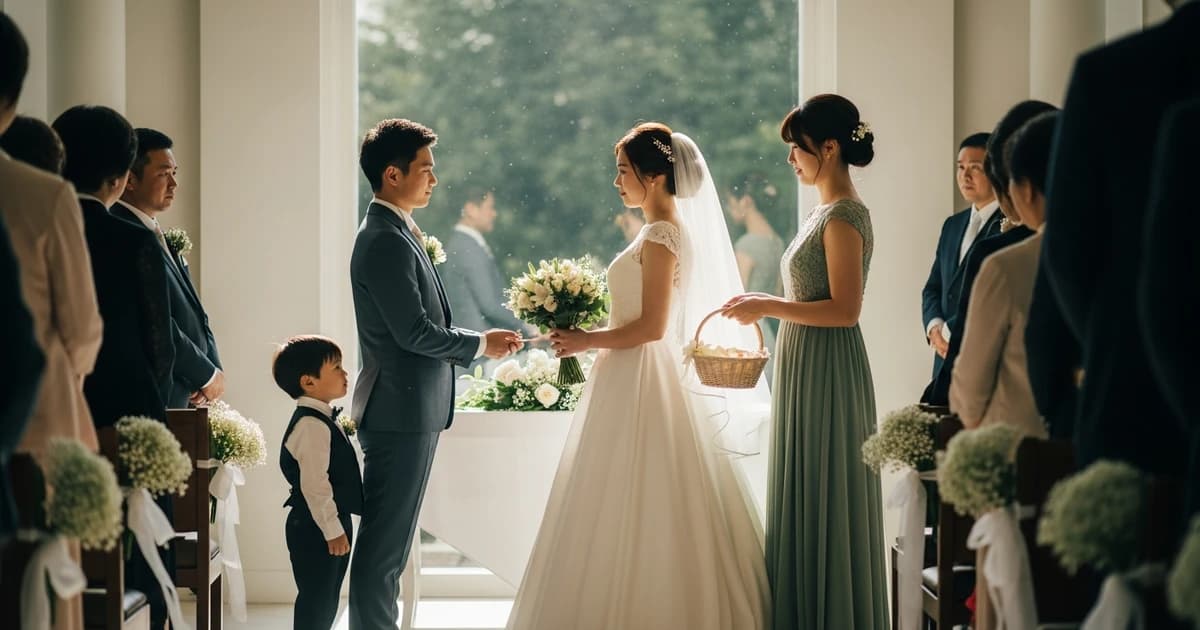
The witness stands or sits alongside the couple during the ceremony. When the registrar or judge indicates, they sign the marriage register. At more personalised civil ceremonies some witnesses read a text or say a few words, but this is entirely optional and depends on the format the couple has agreed with the officiant.
Catholic wedding
The witness signs the parish marriage book. In many parishes they are also asked to be present in the sacristy before the ceremony to verify details. Their presence throughout the mass or religious ceremony is part of the witness of faith the Church requires.
At the reception
This is where the unofficial role begins. The witness is usually the one who coordinates the toast and, at many weddings, also organised the hen or stag. If they have a speech prepared, even better. There is no fixed script, but there is a strong social expectation in Spain that the witness will say something during the celebration. Tell them that upfront.
Dress code for witnesses
Witnesses do not have a uniform, but they carry an implicit aesthetic responsibility: to look the part without upstaging the couple.
At weddings with morning dress (chaqué) or dark suits, the witness typically coordinates with the groom. The groomsmen suit and morning dress guide covers exactly how that coordination usually works.
If it is a winter wedding, the witness choosing her outfit will find the winter wedding guest dress guide useful for fabric and colour decisions that match the formality of the occasion.
Catholic weddings: the documentation side
A Catholic wedding has its own documentary requirements for witnesses. In many Spanish parishes witnesses are asked to present their baptism certificate or to confirm their baptised status before the ceremony.
The canonical marriage file also includes a witness declaration about the free status of the couple. This happens during a prior interview with the parish priest, weeks or months before the wedding. If you are a witness at a Catholic wedding, prepare for that appointment. It is not optional. Everything else on the documentation side is in the Catholic wedding documentation guide.
When things go wrong
A witness falls ill on the wedding day. At a civil ceremony, if a witness cannot attend, the ceremony may be delayed or, in extreme cases, postponed. This is why having an informal backup is worth mentioning to one trusted guest in advance: someone who knows they might be needed and keeps their ID to hand. It never hurts to ask.
The two witnesses cannot stand each other. It happens, especially when one comes from each side of a family with existing tensions. The sensible move is to avoid asking them to share tasks in the run-up to the wedding if the dynamic between them is difficult.
Expired ID on the day. Ask them to check it now. Then remind them a week before. An expired document is a completely avoidable crisis.
Conclusion
Choosing your witnesses well and asking them with clarity and genuine care is one of those decisions that seems small until it isn't. The signature takes ten seconds; the relationship behind it took years. It deserves the same attention as any other significant decision in the wedding.
The ask itself is worth doing properly. I have seen a handwritten note and a coffee turn into the most emotional moment of the whole wedding week, before a single flower was arranged. And I have seen the opposite: a WhatsApp message sent at midnight, two weeks out, with "PS can you be my witness?" buried at the end. The person said yes. But they remembered how it was asked. So will yours.
Related Reading
This article was reviewed by our editorial team. How we create our content
Frequently Asked Questions
Not sure which one suits you?
Try every silhouette on your own photo with Wedded's virtual try-on. The first 5 try-ons are free.