Wedding bouquet: price guide and styles
A wedding bouquet costs between £80 and £600 depending on flowers and size. Discover styles, real prices and how to choose the one that suits your dress and budget.
Created with AI assistance and human review. Editorial standards
Key takeaways
- A wedding bouquet costs between £80 and £600, depending on flower choice, season and the complexity of the arrangement.
- Seasonal, locally grown flowers are always the most affordable option; imported or hothouse varieties can double the price.
- The bouquet typically represents roughly a fifth or more of the total floral budget, with table centrepieces and ceremony décor accounting for the rest.
- Confirm your order three to six months in advance, particularly if your wedding falls during peak season.
- At your first florist meeting, ask for the specific names of the varieties being proposed and clarify exactly which items are included in the quote.
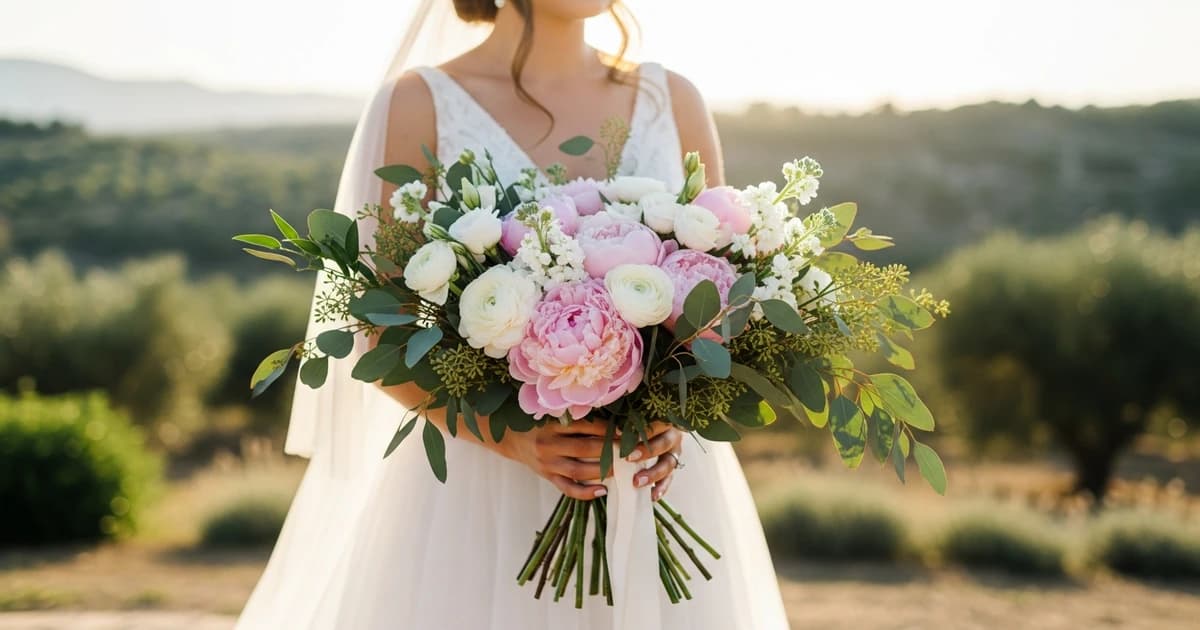
The wedding bouquet tends to be one of the first things photographed during getting-ready shots and the last thing the bride puts down before walking up the aisle. Its price can range from £80 to well over £600, depending on decisions that, once explained clearly, are perfectly manageable. This guide breaks down the most popular bouquet styles and the key factors that determine whether you stay within budget or drift beyond it.
What determines the price of a wedding bouquet
The final cost depends on four variables that every florist weighs differently for each commission.
The flowers you choose are the single biggest factor. A Dutch-imported peony in the middle of winter can cost a florist between £3 and £5 per stem; a seasonal ranunculus grown domestically, under £1. In a medium bouquet, the difference in flower cost can range from £40 to £120 in materials alone, depending on the varieties selected.
The season affects both price and availability. Getting married in May with in-season peonies costs considerably less than ordering the same flowers in December from a hothouse. Florists work with seasonal catalogues, and it is always worth asking what is at its best around your wedding date.
Size and structure add hours of labour. A cascading bouquet that falls to the hip takes roughly twice as long to construct as a compact round bouquet. Those hours feed directly into the final quote.
The florist and their location also play a role. A floral studio in central London or Edinburgh carries different overheads to a workshop in a smaller town. That reflects the business structure, not the quality of the work.
Wedding bouquet styles and their price ranges
Round bouquet or classic posy
The most requested style at weddings. Flowers gathered into a spherical shape, stems wrapped in satin or jute ribbon. It works with almost every neckline and dress silhouette.
Approximate price: between £100 and £250, depending on the flowers chosen. With white roses and eucalyptus, it is easy to stay toward the lower end of that range. With peonies or gardenias, expect to move toward the middle. Many florists consider this the most versatile commission they receive, precisely because the format suits so many different aesthetics.
Cascading bouquet
This style falls downward from the hands in an elongated shape, with flowers and foliage trailing toward the floor. It was the dominant bouquet of the eighties and nineties, has made a strong return in romantic-style weddings, and pairs particularly well with long-trained gowns.
Approximate price: between £200 and £500. The construction is more involved and uses considerably more material.
Wild or meadow bouquet
A mix of varied flowers with long stems and an informal feel. Hugely popular at outdoor weddings and celebrations with a bohemian or rustic aesthetic. Its financial advantage is genuine: combining simple seasonal blooms with grasses and generous foliage brings the material cost down substantially, and the result is no less beautiful for it.
Approximate price: between £80 and £180. It is the most accessible option and does not read as a compromise. Worth noting that the looser the style, the more the florist's eye for proportion and colour balance matters.
Single-variety bouquet
One type of flower, sometimes one single colour. Highly photogenic, with an elegance that needs no explanation. It might be an armful of white calla lilies, a bundle of tulips or twenty identical peonies. This is arguably the hardest style to execute badly, provided the flowers are good quality.
Approximate price: between £90 and £300, depending on the flower. Calla lilies and tulips sit at the more affordable end of this style; gardenias and orchids at the more expensive.
Preserved or dried flower bouquet
Preserved flowers hold their appearance for months or even years. They are an increasingly popular choice for autumn and winter weddings, and a wonderful option for brides who want to keep their bouquet without the effort of drying it afterwards. Unlike fresh arrangements, preserved bouquets can be ordered well in advance and stored without any special conditions.
Approximate price: between £120 and £350. The preservation process increases the cost of materials, but the result is long-lasting and far easier to transport.
How to talk to your florist: the questions worth asking
Your first meeting with a florist is, in practice, a decisive conversation. Arriving with visual references saves time and avoids misunderstandings. A selection of photographs on your phone, along with a swatch of your dress fabric, is usually enough for a florist to understand your direction without lengthy explanation. That said, there are specific questions worth raising before agreeing to any quote.
Ask which flowers will be in season on your exact date. Request the names of the specific varieties being proposed rather than accepting a vague description. Clarify what the quote actually covers. For a medium-sized wedding, the total floral budget can be two or three times the cost of the bridal bouquet alone if items such as the buttonhole, bridesmaids' flowers and table centrepieces are not itemised from the start.
Confirm the delivery schedule. The bouquet should arrive at your getting-ready location with enough time to be properly hydrated, but not so early that it sits at room temperature for hours. A reliable florist will deliver within the two hours before the ceremony.
All included
- Banquet venue
- Wedding Planner
- Marriage Paperwork
- Photographer
- Décor
- Flowers
- Master of Ceremonies
- Deejay
- Open Bar
The bouquet and the dress: a decision made together
The bouquet is not chosen in isolation. Its size, colour and structure need to work with the silhouette of your dress. A very full cascading bouquet competes visually with a heavily detailed lace gown; a small round posy can disappear against a voluminous skirt. A useful rule of thumb: the more ornamentation on the dress, the cleaner and more restrained the bouquet should be.
Colour deserves careful thought. Pure white suits almost everything, but off-white, cream or champagne flowers can make an ivory dress look more yellow than it actually is in photographs. Ask your florist to look at a fabric swatch before confirming the palette.
If you are still defining your dress style, the Wedded dress finder can help you identify your aesthetic before your first florist appointment. Knowing your preferred silhouette makes the bouquet conversation far more focused.
Total floral budget: the bouquet is only one line item
The bridal bouquet is usually just one part of the overall floral spend. The rest is absorbed by table centrepieces, ceremony arch or altar décor, bridesmaids' bouquets, buttonholes and arrangements for the entrance or photo backdrop. It is worth asking your florist for a full itemised breakdown from the outset so the final invoice does not come as a shock.
For a wedding of around 80 guests with moderate floral décor, total floral budgets in the UK commonly fall between £800 and £2,500, though the figure varies considerably depending on the florist, region and flower choices. Weddings with high-end florists or imported blooms can exceed that range with ease.
When budgets are tighter, certain approaches tend to work well. Concentrating the statement flowers on the ceremony arch or top table and using generous foliage elsewhere is one reliable route. Committing to a single flower variety in large quantities is another, since volume orders can often be negotiated at a better unit price. For more on how to allocate a wedding budget overall, this guide on how to plan a budget-friendly wedding covers the broader picture.
Warning signs that a floral quote is too low
A quote that sits well below the typical ranges is worth examining carefully. Some things to watch for:
- The florist does not ask for a deposit or offer any form of written agreement.
- They ask no questions about your date, venue or the quality of light in the space.
- The quote refers only to "white flowers" or "a romantic style" without naming any specific varieties.
Wedding floristry requires forward planning and advance sourcing. A quote with no room for either usually means last-minute substitutions.
For guidance on choosing any wedding supplier, including your florist, the criteria covered in this article on how to choose wedding vendors are a solid starting point.
Preserving your bouquet after the wedding
Here are some practical options for keeping your bouquet after the wedding:
Air drying: hang the bouquet upside down in a dark, dry room for three weeks. The flowers lose some colour and volume but hold their shape. Roses, lavender and more structured blooms respond well to this method; peonies and fleshy flowers tend to fare less reliably, often losing their form before fully drying.
Pressing: flat
This article was reviewed by our editorial team. How we create our content
Frequently Asked Questions
Not sure which one suits you?
Try every silhouette on your own photo with Wedded's virtual try-on. The first 5 try-ons are free.


