Short vs Long Wedding Dress: The Definitive 2026 Guide
Short or long wedding dress? The definitive guide to choosing based on wedding type, time of day and personality. With a quick test to decide.
Created with AI assistance and human review. Editorial standards
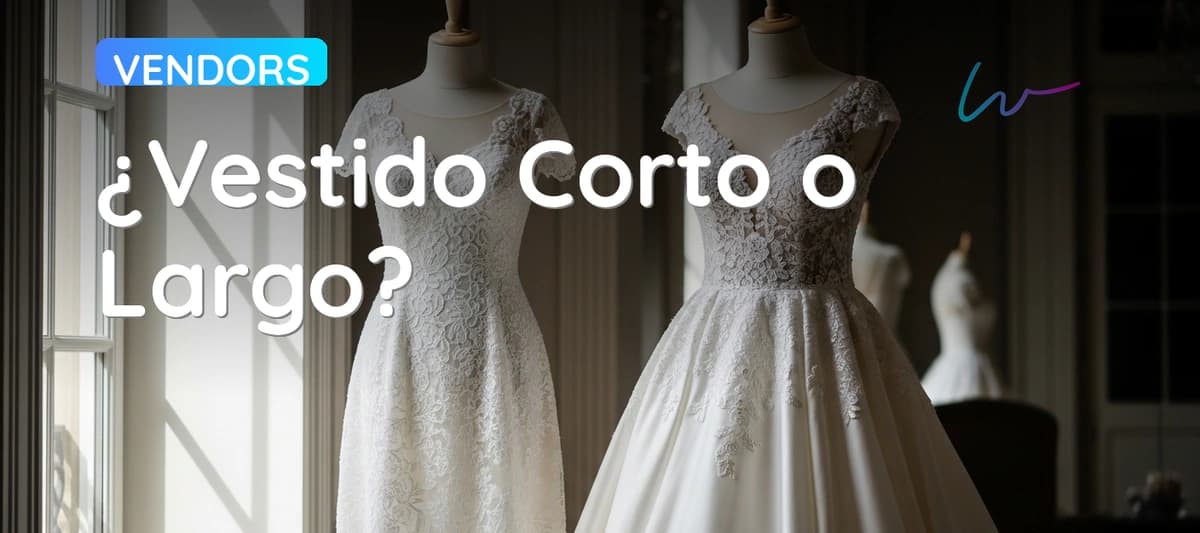
Short vs Long Wedding Dress: The Definitive 2026 Guide
The question of wedding dress length is probably the first real decision a bride makes when she starts looking. It is not a minor detail: it affects the type of silhouette you try on, the expected budget, accessories, shoes and how comfortable you will be during the reception. And yet many brides arrive at their first bridal appointment without having answered it.
In 2026, the answer is no longer as straightforward as "long is more elegant and short is for informal weddings". The landscape has shifted. The collections of leading bridal houses now include mini dresses and midis in couture-quality fabrics that rival any gown with a train in terms of craftsmanship. At the same time, the long dress still has contexts where it is, quite simply, the right choice.
This guide gives you the objective criteria to decide.
Why the Short Dress Is No Longer the "Less Serious" Option in 2026
For decades, the image of the Spanish bride was dominated by a single reference point: floor-length gown, train, veil. Anything that departed from that canon was perceived as a concession to informality. The short dress was the option for the bride who "could not afford" the long dress, or who did not want to take the wedding "seriously".
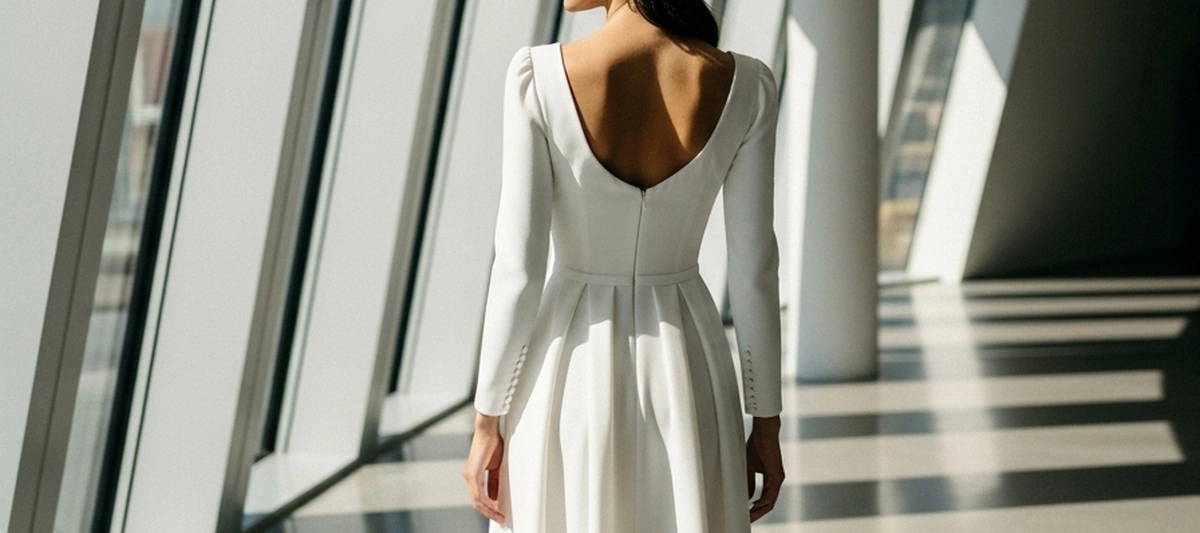
That perception has fundamentally changed over the past five years.
The shift has two main causes. The first is structural: in Spain, more than 79% of marriages are civil ceremonies (INE, 2022), and the civil format does not carry an inherited dress code that favours length. The second is fashion: couture houses and leading bridal brands have been including short dresses in their main collections for several seasons, not as a secondary line but as central proposals.
In 2026, dress length says nothing about the seriousness of the wedding. What it does communicate is what type of celebration it is designed for.
When Short Wins: Civil, Intimate, Urban or Second Dress
There are four situations where the short dress is not just valid but objectively the best choice.
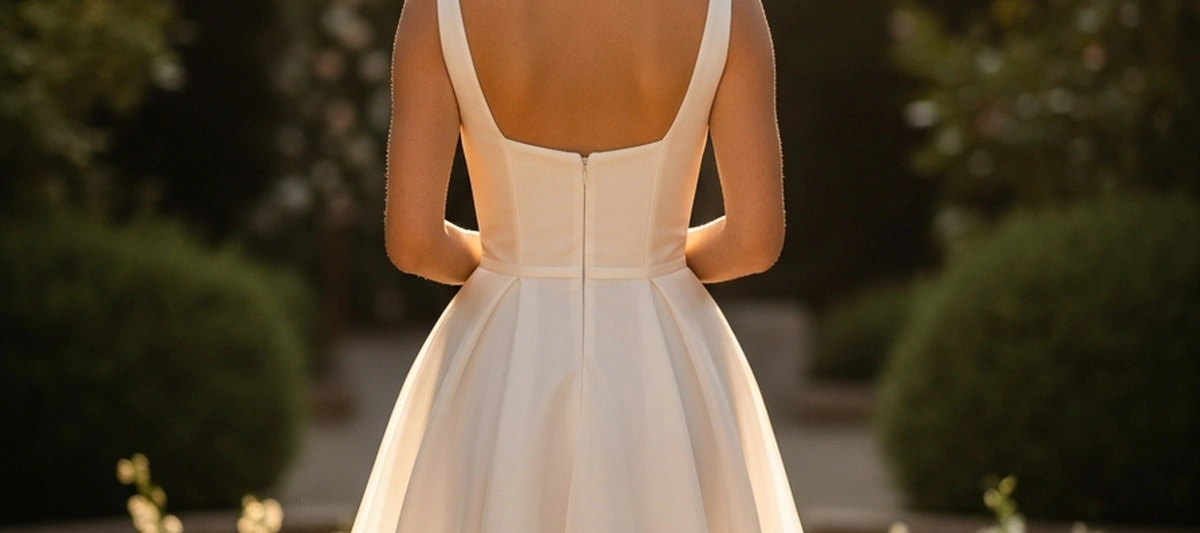
Civil ceremony in a small or urban space
A registry office, a town hall room, a loft, an intimate restaurant: these are reduced-scale spaces where a full-length gown with significant volume feels disproportionate. The short wedding dress — particularly in its midi version above the knee or to mid-calf — is the option that best respects the scale of the space without sacrificing bridal character.
Short works especially well when the space has parquet or stone floors (the sound of fabric dragging is a detail few brides anticipate), when the ceremony lasts under thirty minutes, or when the guest count is fewer than fifty. For a detailed style guide on what works for this type of ceremony, see the guide to wedding dresses for civil weddings.
Intimate wedding or elopement
For weddings with fewer than twenty guests or elopements, dress length loses almost all its symbolic weight. What matters is that the dress is coherent with the spirit of the celebration. If the wedding is an elopement on a mountain, a remote beach, or a notary's office followed by a private dinner, a short or midi dress is the most honest choice.
Urban wedding or modern venue
Modern venues — converted industrial spaces, rooftops, art galleries, design hotels — have an aesthetic that does not favour high-volume gowns. In these contexts, a short or midi dress with clean lines creates a visual coherence that the traditional long gown cannot replicate.
Second dress for the reception
This is perhaps the most common application of the short dress at weddings from 2024 onwards. The bride wears a long dress for the ceremony and changes into a short dress for the party. The advantage is clear: you get the symbolic weight of the long dress for photographs and ceremony moments, and gain full freedom of movement for dancing. If you are considering this approach, the article on how many dresses a bride needs covers all the practical considerations.
The dress change also creates a moment of visual surprise for guests that, well executed, becomes one of the most talked-about memories of the wedding.
When Long Is the Right Choice (Religious, Grand Ballroom, Sunset Beach)
The long dress has not lost its relevance. There are contexts where it remains the most appropriate option — not because of protocol, but because of aesthetic and symbolic coherence.
Religious ceremony in a large-scale space
A gothic nave, a basilica, a cathedral: these spaces are designed to impress through scale. The long dress, especially with a small train, engages with that scale in a way that the short dress cannot. The proportion between the space and the bride's figure is one of the factors that makes photographs from grand religious venues so memorable.
This does not mean the long dress is compulsory for every religious wedding, but in ceremonies held in large-scale spaces, it has an objective visual advantage.
Grand ballroom or gala banquet
For weddings with over a hundred guests in a ballroom or a finca with elaborate production, the long dress maintains coherence with the formality of the event. Short is not prohibited, but in large-format weddings, the long dress gives the bride a visual presence that the short dress does not replicate as easily.
Sunset beach wedding
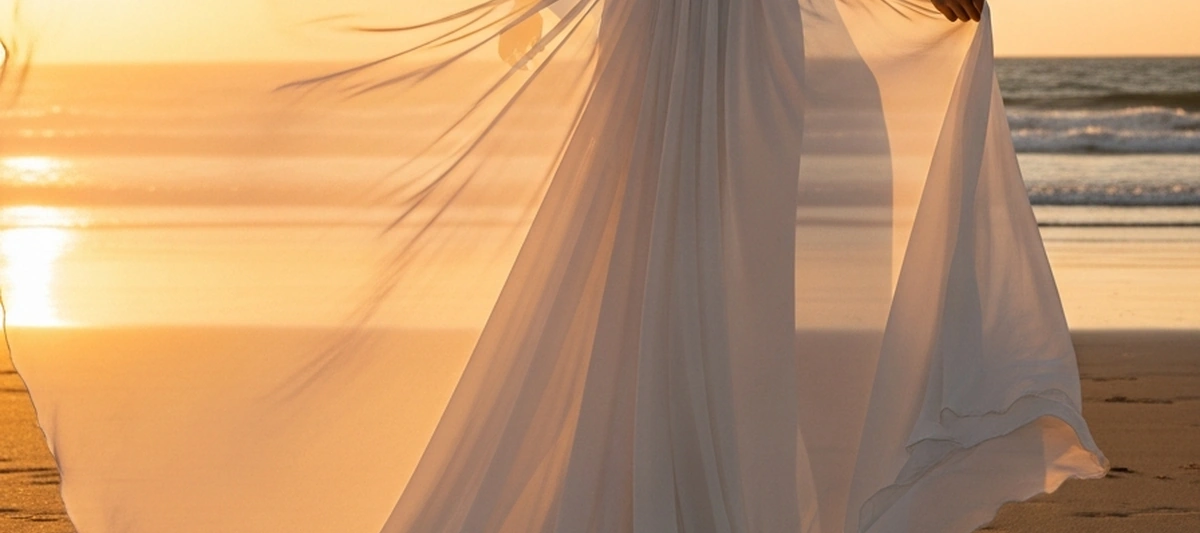
The beach is one of the few outdoor contexts where long works better than short. The reason is visual: a long dress in flowing fabric (chiffon, georgette, lightweight satin) moving in the breeze at a late-afternoon beach wedding is one of the most photogenic looks in the bridal world. You can find specific silhouette and fabric references in the guide to wedding dresses for beach weddings. The short dress at the beach can work, but it loses that element of movement and fluidity that the long dress exploits.
The key for the beach is fabric: it must be fluid, not structured. A floor-length gown in mikado or taffeta on the beach would be uncomfortable and visually rigid.
The Midi: The Third Option Many Brides Overlook
There is a third length that is neither short nor long and that in 2026 is arguably the most versatile in the bridal market: the midi.
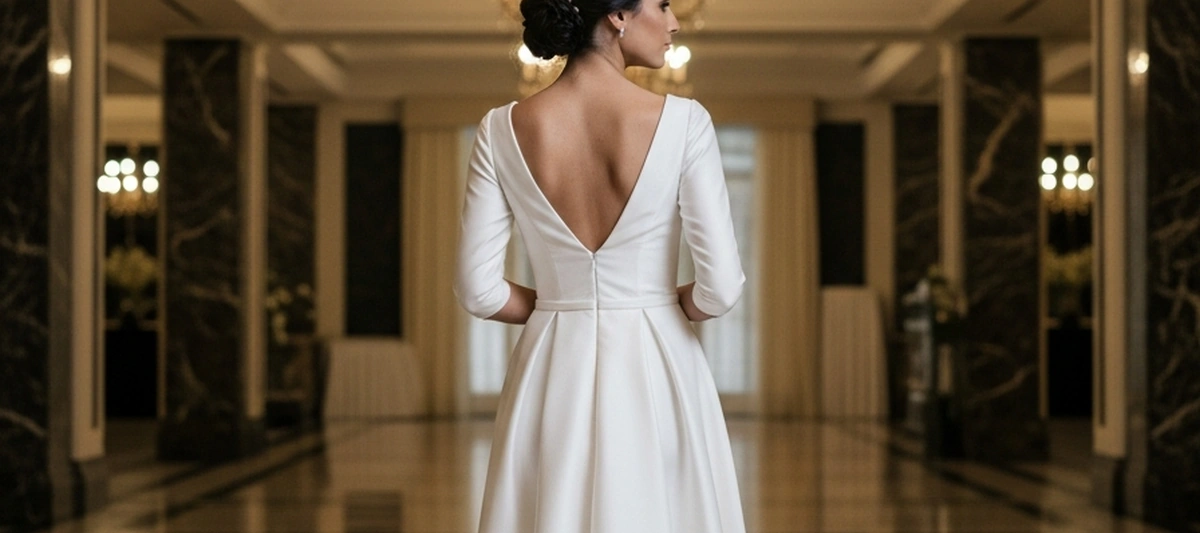
Bridal midi can range from the knee to the ankle, with variations including the tea-length (mid-calf), the maxi midi (ten centimetres from the floor) and the classic midi (below the knee but above the ankle).
Why the midi resolves the dilemma
The midi has the advantages of the short dress (freedom of movement, ease of dancing, appropriate for medium-scale settings) and some of the advantages of the long (greater visual presence than the short, coherent at ceremonies with some degree of formality). It avoids the most obvious disadvantages of both: it does not drag like a long dress on uneven ground, and it does not raise the uncertainty of the short dress in slightly more formal contexts.
For brides who are undecided between short and long, the midi is often the answer. Not because it is a tepid compromise, but because it is a silhouette with its own character that performs exceptionally well across most contemporary wedding contexts.
The midi in the 2026 market
The 2025-2026 collections of leading bridal brands have expanded their midi offering significantly. This reflects a shift in demand: more civil weddings, more intimate celebrations, more brides who do not want to manage a metre and a half of train but also do not want a dress that raises eyebrows. The midi has become the length of balance.
For a full breakdown of 2026 bridal trends including midi silhouettes, the guide on 2026 wedding dress trends and key silhouettes analyses which collections are investing in this length and which fabrics are leading.
All included
- Banquet venue
- Wedding Planner
- Marriage Paperwork
- Photographer
- Décor
- Flowers
- Master of Ceremonies
- Deejay
- Open Bar
The Practical Factor: Dancing and Moving Without Regret
One of the least considered factors in choosing dress length is the practical one: how much you are going to move during the day and what you are going to need to do with the dress.
Ceremony versus reception
The ceremony is a moment of relative stillness: walking down the aisle, standing during the rite, sitting briefly, walking back. For the ceremony, dress length matters little from a comfort perspective; what matters is aesthetics.
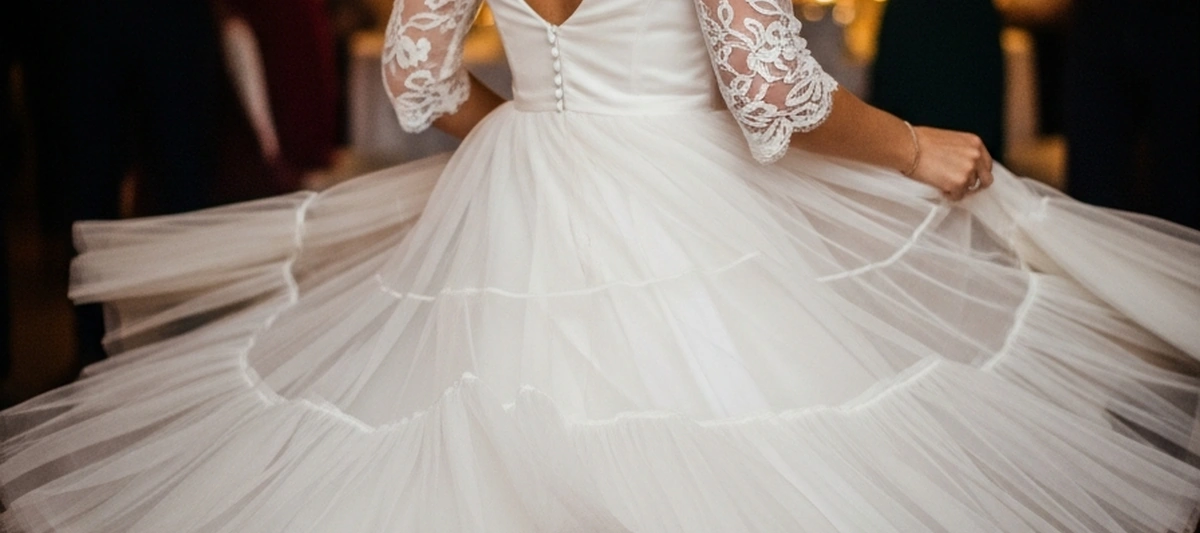
The reception is different. If you are going to dance for three hours, a long dress can become an obstacle: you have to gather it to dance, you risk stepping on it, it can get dirty. The short dress eliminates all of those problems. The midi, depending on the design, can be just as comfortable as the short dress for dancing.
Venue terrain and movement
The type of ground at the venue is a factor that is consistently underestimated. If there is gravel, grass, cobblestones or stairs, a long dress presents obvious risks: catching, getting dirty, impeding movement. The short or midi dress is far more functional at outdoor weddings on uneven ground.
The heat factor
For summer weddings, particularly in the hotter regions of southern and inland Spain, a long dress in heavy fabrics can be a genuine comfort issue. A short or midi dress in lightweight fabrics (georgette crepe, chiffon, broderie anglaise) is far better suited to extreme heat. Fabric choice matters as much as length; the guide to wedding dress fabrics explains which materials perform best in heat and movement. The bride wearing four layers of taffeta at an August wedding in Seville is not enjoying herself in the same way as the one in a lightweight midi crepe.
The detachable dress solution
Many brides resolve the dilemma with a practical solution that has become increasingly common: a long dress with detachable elements. A detachable train with hidden buttons or velcro converts a floor-length gown into a midi in minutes. To understand the different train types and what each one involves, the article on wedding dress train types covers it in detail. Other options include a detachable overskirt (which reveals a short dress underneath) and the separate short reception dress already mentioned.
If you are considering a long dress but worried about comfort during the reception, ask at the bridal boutique about models with these detachable systems before ruling out the long option entirely.
Quick Test: 5 Questions to Find Your Length
Answer these five questions by choosing the option that best fits your real situation. At the end, add up your answers to get your recommendation.
Question 1: What type of wedding are you planning?
- A) Civil ceremony at a registry office, town hall, private garden or urban venue
- B) Mixed or religious ceremony at a medium-scale space (chapel, country house, hotel)
- C) Religious ceremony in a church or large-scale space, or a gala banquet with more than 100 guests
Question 2: How many guests are you inviting?
- A) Fewer than 30 (intimate or micro-wedding)
- B) Between 30 and 80 guests
- C) More than 80 guests
Question 3: What is the ground like at your main venue?
- A) Irregular (lawn, gravel, cobblestones, natural outdoor setting) or small platform
- B) Mixed (partly indoors on hard floor, partly outdoors)
- C) Indoors on hard floor (marble, lacquered wood, ballroom carpet)
Question 4: How much are you going to dance and move during the reception?
- A) A lot — the party is as important as the ceremony, or more so
- B) Some — I will dance for a while but it is not the centrepiece of the event
- C) Not much — the wedding is mainly a dinner and celebration without a dance floor
Question 5: Which of these descriptions best defines you as a bride?
- A) Modern, practical, comfort and contemporary style matter to me
- B) Balanced — I want elegance but without giving up freedom of movement
- C) Classic — I want the traditional bridal reference, the photo in a long dress matters to me
Results:
Mostly A answers: Your length is a short or midi dress. Your celebration, personality and venue favour a silhouette above the ankle. Look for styles in crepe, lightweight mikado or lace with a clean neckline, and consider the tea-length midi as your first option to try.
Mostly B answers: Your length is a midi or flowing long dress. You have a balanced profile where the midi will give you freedom and elegance, but a long dress in a lightweight fabric (chiffon, georgette crepe, matte satin) can also work beautifully. Try both lengths before deciding.
Mostly C answers: Your length is a floor-length gown. Your wedding has the format, scale and level of formality that favour a long silhouette. You can explore from the most structured to the most fluid, and consider a detachable train if comfort during the reception is a concern.
Mixed answers (no clear majority): You are in midi territory. When the criteria do not point clearly in any direction, the midi is the length that loses the least. It is the safe bet of the bridal wardrobe.
Conclusion
The choice between a short and a long wedding dress is not a question of seriousness or budget: it is a question of coherence with the type of wedding you are organising, the space where it will be held and the level of movement you want throughout the day.
In 2026, all three lengths — short, midi and long — are completely legitimate options for any type of wedding. What changes is which length fits each context best. The test in this article gives you a starting point. The next step is to arrive at the bridal boutique with that answer clear, so that the appointments focus on the styles that genuinely make sense for your wedding.
Related Reading
This article was reviewed by our editorial team. How we create our content
Frequently Asked Questions
Not sure which one suits you?
Try every silhouette on your own photo with Wedded's virtual try-on. The first 5 try-ons are free.


