Wedding Dress Trains: Which One Suits You Best
The 7 types of wedding dress trains explained: how to choose by body type, height and venue. Cathedral, chapel, sweep, watteau and detachable trains.
Created with AI assistance and human review. Editorial standards
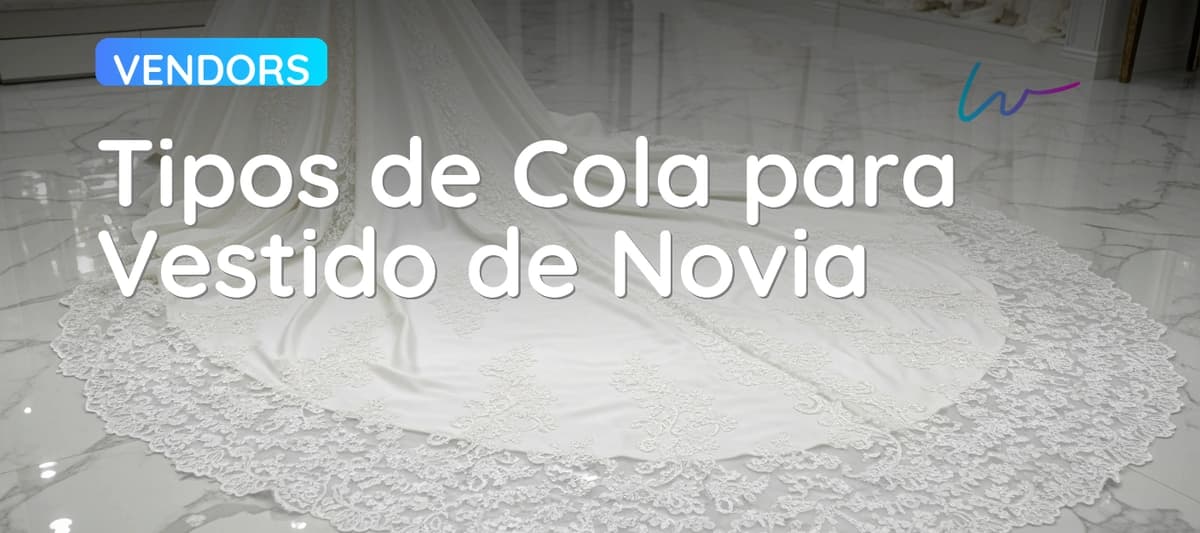
Wedding Dress Trains: Which One Suits You Best
The wedding dress train is one of the most symbolically loaded decisions in the entire planning process — and also one of the choices that most directly affects how comfortable you feel during the busiest hours of your wedding day. Choose well and you wear a dress; choose poorly and you spend the day managing one.
This article explains the seven main train types, how each affects your figure and height, what works by venue and when the smartest move is wearing two looks in a single dress.
The 7 Train Types: From Sweep to Royal
Train terminology is not fully standardised — every atelier uses slightly different names — but seven categories cover the full spectrum of lengths and formats that appear across international collections.
Sweep train
The shortest of the formal trains. It measures between 20 and 30 centimetres from the floor — just enough to brush the ground as you walk. It adds a bridal touch without the volume or the management challenges of longer trains. It is the most common option in civil wedding dresses and minimalist silhouettes where a longer train would distract from the cut. Perfect for brides who want practicality without giving up the classic bridal reference.
Chapel train
Measures between 100 and 150 centimetres from the waist. This is the standard train for medium-scale religious weddings and venues with generous aisles. It has enough presence to create a dramatic entrance effect without the logistical demands of longer trains. Most collection designs use the chapel as the default length because it balances aesthetics and function. It is the first option to consider when there are no specific reasons to go shorter or longer.
Semi-cathedral train
Sits between the chapel and the cathedral at roughly 180 to 200 centimetres from the waist. It does not appear as often in catalogues but is a very practical middle ground for brides who want more length than a chapel train without committing to the full logistics of a cathedral. Works well in medium-sized churches and estate venues with gardens.
Cathedral train
The visual reference point of traditional religious weddings. It measures between 220 and 300 centimetres from the waist and requires one to three people to manage it. Its presence in the aisle is unmatched: the effect as the bride enters a large nave with side light is what fills the high-budget wedding editorials. Outside that context it becomes difficult to handle and its visual impact diminishes. This train demands a high-scale space to justify itself.
Royal train
More than 300 centimetres. This is the territory of state ceremonies and weddings with very strict formal protocol. For a typical wedding, even inside a cathedral, it is excessive in most contexts. It is included here for completeness, but it remains a marginal option outside the world of haute couture bridal design.
Watteau train
Unlike every other type, the watteau train does not start at the waist or the hem. It falls from the upper back or shoulders, independently of the main silhouette. The result is a dress that is completely clean at the front and sides but has dramatic presence at the back. It is especially popular on princess-cut gowns and vintage-inspired designs. Its key advantage is that it can be removed without affecting the dress underneath.
Detachable train
This is not a length type but a construction method. Any train — chapel, cathedral, watteau — can be designed as detachable, attaching to the dress via covered buttons, press studs or hidden hooks. It allows the bride to wear the train for the ceremony and remove it for the reception, creating two distinct looks without changing dress. This is one of the fastest-growing options in bridal ateliers over the past three years.
By Body Type: What Each Train Does for Your Silhouette
A train is not a neutral accessory — it interacts directly with your silhouette. Some lengths elongate, others add visual weight. Knowing the effect before you try helps avoid surprises in the fitting room.
Hourglass (defined waist, proportioned hips)
Almost any train works well on this body type because the waist acts as a natural visual anchor. The chapel and cathedral trains amplify the dramatic entrance without disrupting the proportion. A watteau adds a surprise element without altering the frontal silhouette, which is already the strongest point. The sweep is the only option that can feel underwhelming — with such a defined figure, a very short train may not do it justice.
Pear (hips wider than shoulders)
The goal here is to balance the upper and lower proportions. Trains that originate at the waist and flow backward — chapel, cathedral — redirect attention to the centre and elongate the rear line without adding lateral volume. Avoid heavily structured tulle trains, which can add bulk exactly where it is not needed. The watteau is an excellent choice for this body type because it carries no volume at the hip.
Apple (fuller through the middle)
Long, fluid trains — chapel or cathedral in lightweight fabrics such as chiffon or crepe — create a vertical line that elongates without constricting. Avoid trains with volume at the lower back, which draw attention directly to the area being minimised. A mermaid or flared cut with a chapel train in a smooth fabric is one of the most effective combinations for this figure.
Rectangle (little difference between shoulders, waist and hips)
This body type benefits from trains with a little more volume — a semi-cathedral with gentle flare, or a watteau with a wide fall — because they create the curve that the natural silhouette lacks. A fabric with some structure (mikado, organza) helps achieve that effect. Trains that are too flat and fluid can make the overall look feel shapeless.
Inverted triangle (shoulders wider than hips)
Long, low trains — chapel, cathedral — visually balance the figure by adding weight at the bottom. The longer the train, the more the inverted triangle is completed. Very short trains or the sweep tend to leave the proportion as it is. A watteau that starts high on the back can in this case emphasise the shoulders; trains that originate at the waist are a better choice.
By Height: Golden Rules for Short and Tall Brides
Height is the second most relevant factor after body type, and the rules are quite clear.
For brides under 5 feet 5 inches (165 cm)
The general rule is: the longer the train, the harder it is to maintain proportion. Long trains have a shortening visual effect because the eye travels the full figure from top to bottom and registers additional horizontal distance. The most flattering options are the sweep and the chapel train in lightweight fabrics. If a longer train is wanted for aesthetic or venue reasons, the solution is to add at least a three-inch heel and choose fabrics that do not accumulate volume — crepe, chiffon, lightweight satin — rather than mikado or structured tulle.
One additional point: trains that attach high at the waist — just below the shoulder blades — create a longer leg illusion than those that originate from the hem of the dress.
For brides over 5 feet 7 inches (170 cm)
Height opens up virtually every option. The cathedral train looks especially strong on taller brides because there is the stature to carry it gracefully. The main consideration is not to choose a train so long that it becomes unmanageable: even with height, more than 250 centimetres of train requires constant assistance and can create awkward moments during the ceremony. The semi-cathedral and the longer chapel train are the sweet spot for most tall brides who want elegance without logistical complications.
By Venue: Beach, Estate or Church
The venue is, alongside body type, the most objective criterion. The physical environment imposes real limits that no design can override.
Beach wedding
The beach is the most challenging environment for long trains. Sand, wind and humidity are the direct enemies of any train over 50 centimetres. The sweep train is the maximum recommended for ceremonies on the shore. For weddings on an elevated terrace or covered beach venue, a chapel train can work but requires constant management. A detachable watteau is an elegant solution: wear the train for the ceremony, remove it for the rest of the day.
Estate or garden wedding
Estates offer more options because aisles tend to be longer and the surface is more controlled. The chapel train is the standard. The cathedral works well if the garden aisle is at least ten metres long and the grass is cut and dry. At rustic venues with stone or gravel floors, a detachable train is a smart choice: all the drama for the entrance, full comfort for the garden reception.
Church or palace wedding
This is the natural territory of long trains. A church offers long aisles, smooth floors and an architectural scale that calls for presence. Here the cathedral train makes every bit of sense. The watteau also works exceptionally well in grand interiors because the contrast between the clean frontal silhouette and the dramatic back fall is more striking under interior lighting. For palace ceremony rooms with high ceilings, the semi-cathedral is the most balanced option for brides who want elegance without excess.
Intimate or small-room wedding
For ceremonies in a registry office, loft, private terrace or small urban space, a long train loses its purpose. In those contexts, a sweep train or no train at all is the most coherent decision. A train-free dress in an intimate space reads as elegant; a cathedral train in the same space reads as staging.
All included
- Banquet venue
- Wedding Planner
- Marriage Paperwork
- Photographer
- Décor
- Flowers
- Master of Ceremonies
- Deejay
- Open Bar
Watteau and Detachable: Two Looks in One Wedding Day
These two formats deserve their own section because they address a need that has grown significantly over the past few years: the bride who wants visual impact for the ceremony and freedom of movement for the party.
The watteau as an independent element
The watteau train's great advantage is that it does not affect the rest of the dress. It can be removed at any point — typically after the formal photographs and before the dinner — and the dress looks exactly the same without it. This makes it the most versatile option for brides who are torn between a ceremonial look and a party look. The critical detail is that the attachment at the back must be completely invisible when the train is on and clean when it is off.
The conventional detachable train
Unlike the watteau, a conventional detachable train originates at the waist or hem, like any other. The difference is in how it fastens: covered buttons, press studs or a system of hooks designed specifically for the dress. Many ateliers offer the option of adding a detachable train to any silhouette in their collection, which opens the entire catalogue to this format.
Testing the detachable train during the fitting is as important as trying the dress itself: the attachment point must support the full weight of the train without distorting, and the bride should be able to remove it without help or with minimal assistance from the maid of honour.
For more ideas on how to build a complete bridal look, the guide to 2026 wedding dress trends covers the silhouettes and finishes that are defining this year's collections.
Summary Table: Body Type × Venue × Recommended Train
The table below shows the most flattering combinations for each profile. It is a starting point, not a fixed formula — always verify in the fitting room.
| Body type | Venue | Recommended train | Avoid |
|---|---|---|---|
| Hourglass | Church / palace | Cathedral, chapel | Sweep (underuses the figure) |
| Hourglass | Estate / garden | Chapel, watteau | — |
| Hourglass | Beach | Sweep, detachable watteau | Cathedral, semi-cathedral |
| Pear | Church / palace | Chapel, cathedral in crepe | Voluminous tulle at hip |
| Pear | Estate / garden | Chapel, watteau | Structured lateral volume |
| Pear | Beach | Sweep | Any long train |
| Apple | Church / palace | Chapel in chiffon or crepe | Volume at lower back |
| Apple | Estate / garden | Lightweight chapel, sweep | — |
| Apple | Beach | Sweep | — |
| Rectangle | Church / palace | Semi-cathedral with flare, watteau | Flat, unstructured trains |
| Rectangle | Estate / garden | Chapel with gentle volume | — |
| Rectangle | Beach | Sweep with slight flare | — |
| Inverted triangle | Church / palace | Cathedral, long chapel | High-back watteau |
| Inverted triangle | Estate / garden | Chapel | — |
| Inverted triangle | Beach | Sweep | — |
| Petite (under 165 cm) | Any venue | Sweep, chapel in lightweight fabric | Cathedral, voluminous semi-cathedral |
| Tall (over 170 cm) | Church / palace | Cathedral, semi-cathedral | — |
| Tall (over 170 cm) | Estate / garden | Chapel, watteau | — |
| Tall (over 170 cm) | Beach | Sweep, detachable | — |
Before You Decide: What the Catalogue Does Not Tell You
Atelier catalogues show trains on models who are typically 5 feet 9 inches with standardised proportions. The same train on a different real figure behaves completely differently. This is why the physical fitting remains irreplaceable.
A few things worth checking that rarely get mentioned:
The actual weight of the train. Long trains in mikado or layered tulle can be surprisingly heavy. After three hours, that weight is felt. Ask the atelier for the approximate weight and test wearing the train for at least twenty minutes during the appointment.
How easy it is to manage. Can you gather it on your own to climb stairs? What happens if someone steps on it? Do you have someone assigned to manage it during the ceremony?
How it behaves in motion. A train that falls perfectly when the bride is standing can behave very differently when she walks, turns or dances. Walk the full length of an aisle in the atelier before deciding.
The cost of alterations. Long trains are more difficult to adjust if the dress needs hem changes. Ask about the cost and timeline before committing to a length.
To explore silhouettes with and without trains on your own figure before your first atelier appointment, the Wedded virtual wedding dress try-on lets you visualise different options using a full-length photo of yourself.
Related Reading
This article was reviewed by our editorial team. How we create our content
Frequently Asked Questions
Not sure which one suits you?
Try every silhouette on your own photo with Wedded's virtual try-on. The first 5 try-ons are free.


