Winter Wedding Guest Dress: What to Wear in 2026 | Wedded
Fabrics, colours, lengths and coat or cape combinations for winter wedding guests in 2026. An editorial guide with the season key looks.
Created with AI assistance and human review. Editorial standards
Winter weddings, with their low light and intimate indoor spaces, call for a different approach to dressing than any other time of year. What works in summer is rarely the best option for the colder months. Fabric by fabric, colour by colour, these are the choices that matter for a winter wedding guest in 2026.
Puntos clave
- Fabric first. Velvet, crepe and wool are the materials of reference for a winter wedding.
- Jewel palette. Burgundy, bottle green, midnight blue and plum are the colours that work best in this season.
- The coat is part of the look. It should not compete with the dress.
- Midi or full-length are the most comfortable in winter; short looks great with opaque tights and closed-toe shoes.
- Seasonal accessories. A velvet or satin clutch and jewellery with coloured stones are the best fit.
Fabrics That Work at a Winter Wedding
It is essential to settle the fabric question before thinking about colour or length. Two dresses with the same silhouette can look completely different in winter depending on the material: velvet works in December, chiffon does not.
Velvet: the Season's Fabric
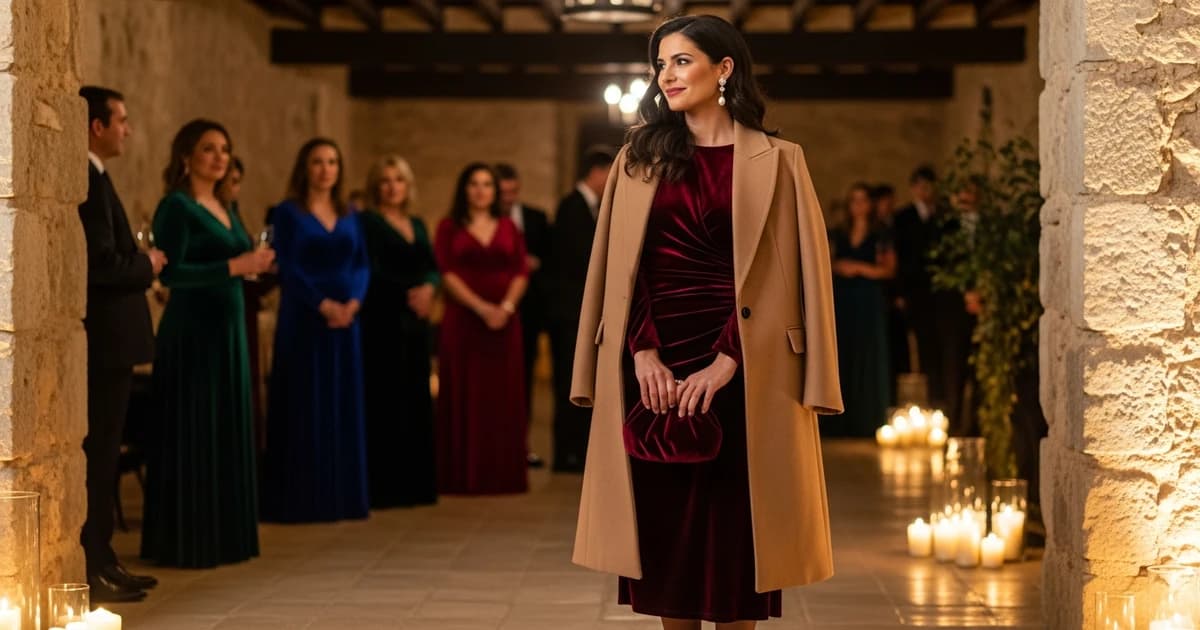
Velvet is the fabric most associated with winter weddings, and for good reason. Its lustre, which shifts with the angle of light, makes it especially photogenic in candlelit or warmly lit interiors. It provides warmth without adding visible bulk, making it a very practical choice when temperatures drop.
It looks great in every length, though midi and full-length cuts make the best use of its drape. For daytime weddings, velvet in jewel tones (burgundy or bottle green) is the most reliable choice. For evening weddings, black velvet with metallic accessories looks impeccable.
Crepe: Understated Elegance
Crepe offers a more restrained kind of elegance. Its matte texture and clean drape avoid any sense of excess. Many bridal fashion designers favour crepe for their autumn-winter guest collections precisely because it adapts to almost any silhouette.
A crepe dress in plum or midnight blue is a very solid choice for a formal winter wedding. Crepe also holds embroidery and beading well, which is why it appears frequently in more elaborate pieces.
Wool and Knit: the Contemporary Option
Quality wool and fine knit have moved firmly into the wedding guest wardrobe in recent years. A well-cut midi dress in camel or charcoal wool looks just as elegant as one in silk, provided the accessories are right. It provides genuine warmth without needing an additional lining. Indoors, it allows you to leave the coat at the cloakroom without a second thought.
Fine knit, in long-sleeved or modestly cut versions, is particularly suited to civil ceremonies in less formal spaces or midday celebrations. Chunky-rib knits are worth avoiding, as they read as too casual for most ceremonies.
Seasonal Colours: the Winter Palette That Works
The winter palette for wedding guests is one of the richest of the year. Jewel tones and deep neutrals work well together and offer many more options than are usually acknowledged.
Jewel Tones: the Colours That Work Best
Burgundy, bottle green, midnight blue and plum are the colours that look best at a winter wedding. They gain depth under artificial lighting and do not compete with the bride's white. Copper and dark garnet are less common alternatives that work equally well.
In the Spanish wedding calendar, November and December account for a notable volume of celebrations, as recorded by the INE in its marriage statistics. That makes the winter palette a very concrete concern for many guests each year.
Black: Valid, With Caveats
Black at weddings still prompts questions, although in Spain it has largely lost its association with mourning in a celebratory context. For an evening winter wedding, a black velvet or crepe dress with gold accessories looks entirely appropriate. A gold clutch or jewelled earrings prevent any ambiguity in the look.
More caution is warranted at very traditional religious ceremonies. If in doubt, a deep burgundy resolves the dilemma without sacrificing sophistication. For a full overview of what colours to avoid year-round, see the guide on colours to avoid as a wedding guest.
Metallics: for the Evening
Metallics, used in the right proportion, are a completely valid option for evening winter weddings. A midi dress in champagne or dark bronze looks particularly good in textured fabrics (lurex or metallic jacquard) that do not read as attention-seeking in daylight and come alive in the dark. The metallic midi is one of the most seen options in winter guest editorials, and it is a reliable choice at a nocturnal celebration.
How to Style a Coat or Cape With Your Dress
The coat is part of the look as much as the dress is. Grabbing the first one to hand when the dress has been planned down to the last detail is the most common mistake winter wedding guests make. The result, in the wedding photographs, is that the outfit clashes.
The Coat Rule
The coat should not compete with the dress. If the dress has a print or embroidery, opt for a plain coat in a neutral or tonal colour. For a plain dress, you can allow yourself something with more personality: a tweed or an interesting texture works very well.
A straight or A-line cut is the one that works best over dresses of any length without flattening the silhouette. The most practical colours are camel and black, though oxford grey and navy also work well with most jewel tones.
Capes and Stoles: the Elegant Alternative
For inside the venue, a wool cape or a velvet or cashmere stole works better than a conventional coat. A cape can be worn throughout the ceremony without looking informal, something a regular coat does not allow.
Velvet or jacquard fabric stoles are particularly suited to evening weddings: they cover the shoulders without hiding the dress and add a note of formality that fits the atmosphere of the celebration.
All included
- Banquet venue
- Wedding Planner
- Marriage Paperwork
- Photographer
- Décor
- Flowers
- Master of Ceremonies
- Deejay
- Open Bar
Appropriate Lengths for the Cold
Dress length in winter has real consequences beyond aesthetics. The choice between short, midi and full-length depends on the type of wedding and the venue, as well as how you plan to put the whole look together so you do not get cold.
Full Length: the Most Comfortable in Winter
A full-length dress in winter solves the cold problem without needing thick tights or a long coat. The drape of velvet or crepe to the floor also has a visual presence that fits perfectly with the more intimate atmosphere of winter weddings.
The risk with full-length in winter is the floor itself: if the wedding has any outdoor or garden areas, it is worth choosing a length that does not trail. An ankle-length hem, without a train, is more practical in these conditions.
Midi: the Most Versatile Length
The midi length, between knee and ankle, adapts best to winter. It works with 40-denier tights without them being too visible and looks great with heeled ankle boots or closed-toe courts. It works well for both daytime and evening weddings. For a deeper look at choosing between short and long, the guide on short or long dress for wedding guests explains all the criteria.
Short: Possible, With Conditions
A short dress in winter is entirely valid if styled correctly. Worth keeping in mind: the fabric needs weight (velvet or heavy crepe) and you need to pair it with opaque tights of at least 40 denier and closed-toe footwear. A short burgundy velvet dress with black opaque tights and heeled ankle boots is a completely appropriate look for an afternoon winter wedding.
Accessories to Complete the Winter Look
Winter accessories serve a double purpose: completing the look and managing the cold elegantly.
Footwear
Winter footwear for wedding guests moves between several options. The pointed-toe court shoe and the heeled ankle boot are the most common: the first is the most formal, the second is more practical if there is any walking involved. The strappy sandal is reserved for very well-heated interiors and evening weddings. The most suitable materials for the season are satin or velvet, and leather or faux leather in black, nude or gold.
Bag
The clutch remains the most elegant option for a wedding, including in winter. The most common seasonal materials are velvet and satin; textured faux leather is an equally valid alternative. The chain minibag is more practical and adapts well to less formal weddings.
Headpieces and Jewellery
For daytime weddings, a small fascinator or a discreet headpiece is appropriate. For evening weddings, jewellery takes the lead: earrings with semi-precious stones such as garnet or amethyst, or baroque pearls, fit the winter palette perfectly. For a full guide on choosing between a wide-brim hat and a fascinator, see fascinator or hat for wedding guests.
Conclusion
One aspect worth considering before choosing a colour is the setting of the wedding itself. Jewel tones work particularly well in interiors with dark wood or warm lighting and stone that characterise many of the venues where winter weddings are held. That coherence between dress and space is what makes some winter looks the most memorable of the whole event. Worth thinking about before you choose.
Related Reading
This article was reviewed by our editorial team. How we create our content
Frequently Asked Questions
Not sure which one suits you?
Try every silhouette on your own photo with Wedded's virtual try-on. The first 5 try-ons are free.