Wedding Guest Colors Guide: What NOT to Wear in Spain
Invited to a Spanish wedding and don't know what color to choose? Discover why you should avoid white, ivory, and (sometimes) black to be the perfect guest.
Created with AI assistance and human review. Editorial standards

You've received a wedding invitation and, after the initial excitement, the big question arises: "What should I wear?" Finding the perfect wedding guest look is an exciting challenge, but it can also raise doubts, especially when it comes to wedding etiquette.
Choosing the right attire goes beyond fashion; it's a way to show respect and love for the couple on their big day. And one of the most important golden rules has to do with colors. Believe it or not, certain tones are "forbidden," and knowing them will save you from any awkward moments.
If you want to be the perfect guest, don't worry. I'm here to guide you, like an older sister, and resolve all your doubts about which colors to avoid and which are a sure bet. Together we'll ensure your choice is impeccable and you only worry about enjoying the celebration.
White: The Bride's Sacred Color
Let's start with the most important and well-known rule in the wedding world: white is exclusive to the bride. This rule isn't just a Spanish tradition; it's widespread throughout most of Western culture. Wearing white to a wedding as a guest is considered the biggest protocol error you can make.
Why is this rule so important?
The white dress symbolizes the bride's protagonism. It's her day, the moment when all eyes should be focused on her. Wearing white, even unintentionally, can be interpreted as an attempt to steal that spotlight or, in the worst case, as a lack of respect toward her and her special moment.
Think about it: for months, the bride has dreamed of her dress, dedicated time and effort to finding the perfect design that will make her feel unique. By choosing the same color, you risk eclipsing her or creating confusion in photographs, where it might appear there are two brides. It's a simple gesture, but avoiding white is the clearest way to honor the bride and celebrate her happiness.
Even dresses with prints on a white background can be problematic. If white is the dominant color, it's better to discard them. The key is simple: when in doubt, choose another color. There's a rainbow of possibilities waiting for you, so there's no need to risk the tone that, by tradition and respect, belongs only to her.
Cream and Ivory: White's Close Cousins
You might think: "Okay, not white, but what about cream, ivory, beige, or champagne tones?" Dear friend, this is where it gets a bit more delicate. Although technically they're not pure white, these colors are so close that they fall into the same category of "better avoid."
Why are these tones also discouraged?
The main reason is visual perception. Under sunlight, celebration spotlights, or especially in photographs, a cream or ivory dress can appear completely white. Professional photographers often adjust light and color in editing, and a bone tone can easily transform into a bright white in the final image.
Imagine the situation: you're posing happily next to the bride and, when you see the photos weeks later, it looks like you're wearing a white dress. It would be an uncomfortable memory for both you and her. To avoid any misunderstanding, the unwritten rule extends to the entire range of colors that could be confused with the bride's.
Of course, there are nuances. A dark beige or sand tone isn't the same as pale ivory. Use your common sense: if when seeing the dress in the store your first doubt is "will it look white?", the answer is simple: leave it on the rack and look for another option. It's better to be cautious and opt for a color that doesn't generate any doubt.
Black: An Elegant but Controversial Color
Black is the epitome of elegance and a wardrobe staple. It's sophisticated, slimming, and gets us out of more than one bind. However, when it comes to weddings in Spain, its use generates debate and depends heavily on context.
Why can black be inappropriate?
Traditionally, in Spanish culture, black is the color of mourning. For decades, it's been associated with funerals and periods of grief, so wearing it to a wedding—the ultimate celebration of love and life—could be considered a bad omen or a sign of sadness.
Although this perception has changed a lot and fashion has normalized black for all types of events, the connotation of mourning still persists in the minds of older generations or at more traditional ceremonies. Therefore, for daytime weddings, black is still mostly discouraged. A morning or afternoon wedding calls for brighter, cheerful colors that reflect the light and festive atmosphere of the celebration.
Exceptions: When You CAN Wear Black
This is where etiquette becomes more flexible. Black can be a perfectly valid and elegant option if certain conditions are met:
- Evening weddings: At an evening wedding, the dress code becomes more formal and sophisticated. An elegant long black dress or designer jumpsuit can be a total success. The night embraces this color and gives it an indisputable gala air.
- Combined with vibrant accessories: If you decide to opt for black, the key is breaking up its sobriety. Combine your dress with brightly colored accessories: a fuchsia purse, electric blue shoes, a jeweled fascinator, or large colorful earrings. These touches of light will completely transform the look and distance any connotation of mourning.
- Special fabrics or patterns: A black dress with a colorful floral pattern, bright embroidery, or made in a textured fabric (like velvet or sequins for a winter wedding) is also an excellent option. The dress design itself already provides the necessary festive character.
In summary, don't discount black completely, but reserve it for evening weddings and make sure to bring it to life with appropriate accessories.
All included
- Banquet venue
- Wedding Planner
- Marriage Paperwork
- Photographer
- Décor
- Flowers
- Master of Ceremonies
- Deejay
- Open Bar
So, What Colors CAN I Wear?
Now comes the fun part! The color palette for wedding guests is huge and wonderful. Here are some ideas to inspire you and ensure success:
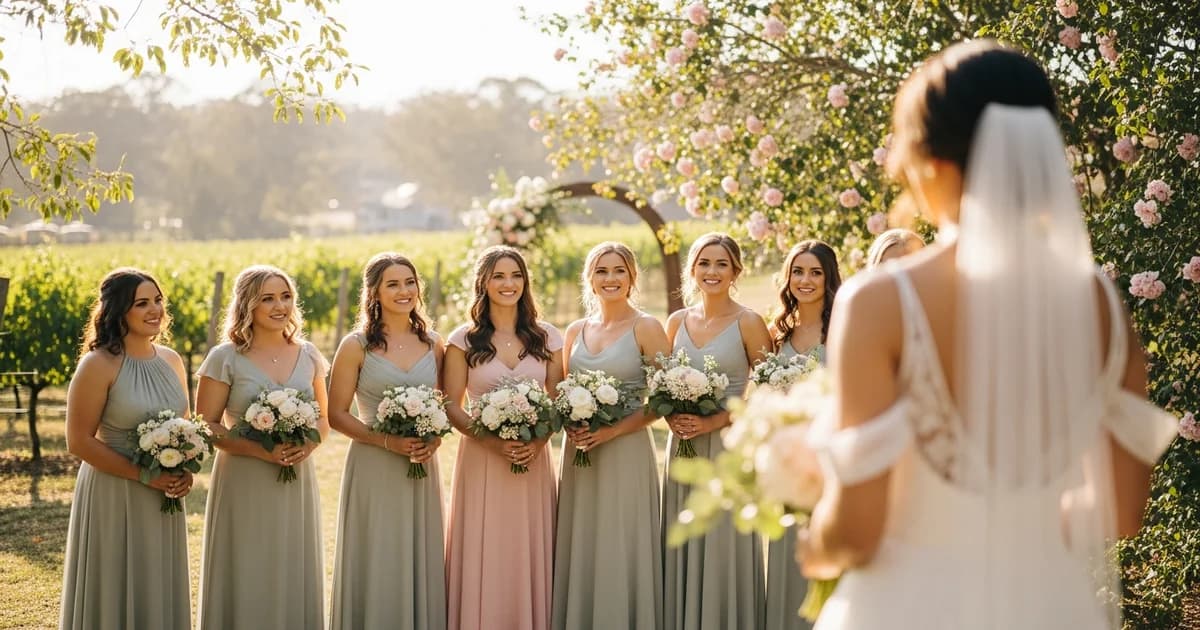
- Pastel tones: Rose quartz, serenity blue, mint green, or lavender are romantic, delicate options perfect for daytime weddings, especially in spring and summer.
- Vibrant colors and jewel tones: If you're more daring, bet on fuchsia, Klein blue, emerald green, or passionate red. They're colors full of energy and joy that always work. Watch out with red! Although accepted, if it's too flashy, make sure the rest of the look is discreet so as not to steal attention.
- Floral and geometric prints: Prints are a fantastic option for daytime weddings. They bring freshness, dynamism, and allow you to play with color combinations.
- Earth tones and metallics: Colors like terracotta, mustard, or rust are very elegant, especially for autumn weddings. Metallics like gold, silver, or copper are ideal for evening weddings, as they add a touch of glamour and sophistication.
Don't Forget Accessories and Style
Choosing the color is only the first step. Accessories are essential to elevate your look and adapt it to wedding etiquette:
- Fascinators and pamelas: At daytime weddings, a fascinator or pamela (wide-brimmed hat) isn't only allowed, it's a sign of elegance. If you want to know more about when to wear a pamela or fascinator, check our complete guide.
- Shoes and purse: Play with them to create contrast. A solid-color dress can be completely transformed with shoes and a purse in a complementary tone.
- Jewelry: Choose pieces that harmonize with your look. For simple dresses, you can afford more eye-catching jewelry. If the dress already has a lot of weight (due to color, fabric, or pattern), opt for something more discreet.
Are There Regional Differences?
Spain is a country of very diverse traditions, and weddings are no exception. Although the rules about white and black are fairly universal, you can find small regional variations.
- In Andalusia, for example, weddings tend to be very colorful and festive. Guests don't fear bright colors and eye-catching accessories like Manila shawls or large flowers in their hair.
- In northern Spain, such as the Basque Country or Galicia, the style tends to be a bit more sober and minimalist, though always elegant.
My advice is to pay attention to the couple's style and the celebration venue. A wedding at a rustic estate in Extremadura isn't the same as a ceremony at a luxury hotel in Madrid. Context always gives you clues.
Your Guide to Being the Perfect Guest
I know all this information can seem overwhelming, but deep down, it's very simple. The golden rule is to use common sense and, above all, think of the bride. Your goal as a guest is to accompany her, celebrate her love, and contribute to making her day unforgettable for the right reasons.
In summary, here's your cheat sheet to not fail:
- Say NO to white and its derivatives like ivory or cream.
- Reserve black for evening weddings and always combine it with accessories that bring it to life.
- Bet on the joy of color: pastels, vibrant tones, prints... Choose what suits you best and reflects your personality.
I hope this guide has helped you feel more confident and prepared for your next event. Remember that being an elegant guest isn't about following rules to the letter, but understanding their meaning: showing respect, love, and joy. Now all you have to do is enjoy the party!
For more advice on how to dress as a wedding guest, check our guide on short vs. long dress etiquette to complete your perfect look.
This article was reviewed by our editorial team. How we create our content
Frequently Asked Questions
Not sure which one suits you?
Try every silhouette on your own photo with Wedded's virtual try-on. The first 5 try-ons are free.