Wedding Guest Dress Length Guide: Short vs. Long Dress
Day or evening wedding? Learn the guest protocol and discover when to wear short or long dress to always get your look right.
Created with AI assistance and human review. Editorial standards

Receiving a wedding invitation is always cause for joy. How exciting! But let's be honest, after the initial happiness, the big question often arrives: "Now what do I wear?" Understanding the dress code can be a real headache, especially when trying to figure out whether you should wear a short or long dress.
If you feel a bit lost, don't worry, it's completely normal. You're in the right place. In this guide, we'll resolve all your doubts so you feel confident, radiant, and above all, appropriate for the occasion. We'll analyze the differences between day and evening protocol, give you practical advice, and show you examples so your only concern is enjoying the celebration.
A Bit of History: Why Do We Distinguish Between Day and Evening?
The idea of having different attire for day and evening isn't new. Historically, this distinction arose in European upper classes during the 18th and 19th centuries. Daytime activities, like walks or social visits, required more practical and simple garments made with lightweight fabrics. In contrast, evening was reserved for more formal events, like dinners, balls, and operas, where people were expected to showcase their most spectacular finery with luxurious fabrics, jewelry, and more elaborate designs.
This custom, which at the time was a status symbol, has evolved into the etiquette standards we know today. Although the rules have become more flexible, the essence remains: daylight invites naturalness and freshness, while evening gives us permission to shine with more intensity and sophistication. Understanding this is the first step to always choosing the perfect outfit.
Day Protocol: Elegance Under the Sun
Daytime weddings, which typically take place in the morning and extend into the afternoon, have a more relaxed and luminous atmosphere. This is directly reflected in the dress code.
Short or Long Dress?
The golden rule for daytime weddings is clear: the dress should be short or midi. A floor-length dress is considered inappropriate for a guest during the day, as this style is traditionally reserved for evening and, in some cases, for the godmother.
- Short length: We're referring to a length just above or at knee height. It's a classic, comfortable, and always appropriate option.
- Midi length: This style, which reaches below the knee to mid-calf, has gained immense popularity. It's incredibly sophisticated, flatters the figure, and is perfect for those seeking something different without breaking protocol.
Fabrics, Colors, and Styles for Daytime
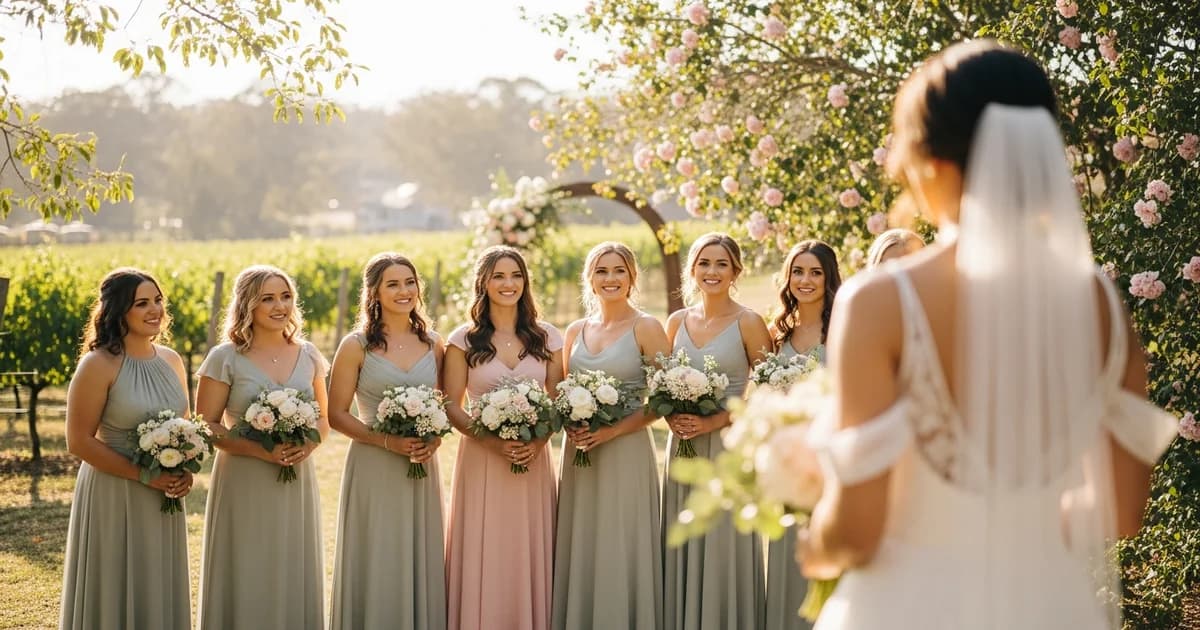
- Fabrics: Opt for lightweight, flowing fabrics like crepe, chiffon, linen, or silk satin. These materials are fresh and look beautiful in natural light.
- Colors: Daytime is for color! Dare with vibrant tones like fuchsia, emerald green, Klein blue, or yellow. Floral, geometric, or abstract prints are also an excellent choice. Pastel tones like rose quartz or serenity blue are always a hit for their romanticism. Avoid very dark colors like black or deep navy blue, and of course, white and its derivatives (ivory, cream, beige), which are reserved exclusively for the bride.
- Styles: Dresses with simple cuts, elegant jumpsuits, or jacket and trouser suits are fantastic options. Details like subtle ruffles, puffed sleeves, or bows add a special touch. As for accessories, fascinators and pamelas (wide-brimmed hats) are the stars of daytime weddings. A clutch purse and comfortable heeled shoes will complete your look.
Evening Protocol: Time to Dazzle
When the sun sets, formality increases. Evening weddings have an aura of magic and glamour that allows us to play with more dramatic and sophisticated looks.
Short or Long Dress?
This is where the long dress becomes the undisputed king. If the invitation indicates "black tie" or it's a gala wedding, a long dress is mandatory.
- Long: A floor-length dress is the most elegant and traditional option for an evening wedding. It visually elongates the figure and brings an air of solemnity and sophistication.
- And short?: Does this mean short dresses are forbidden at night? Not necessarily. For evening weddings that aren't galas, an elegant cocktail dress (knee-length or midi) may be acceptable, especially if made from rich fabrics with festive details. When in doubt, a long dress will always be the safest and most respectful choice.
Fabrics, Colors, and Styles for Evening
- Fabrics: Evening calls for fabrics with more body and shine. Velvet, mikado, brocades, sequins, heavy satin, and metallic details are perfect.
- Colors: Deep, dark tones like midnight blue, burgundy, bottle green, or even black (yes, it's allowed for evening guests) are very elegant. You can also opt for jewel colors like ruby, sapphire, or amethyst. Metallic finishes in gold, silver, or copper are a trend that never fails.
- Styles: It's time for more pronounced necklines (always with elegance), bare backs, skirt slits, and rhinestone details. Forget pamelas and hats; at night, hair accessories are more discreet: jeweled headbands, sparkling hair clips, or a spectacular hairstyle are enough. Combine with thin-heeled sandals and a jeweled clutch.
All included
- Banquet venue
- Wedding Planner
- Marriage Paperwork
- Photographer
- Décor
- Flowers
- Master of Ceremonies
- Deejay
- Open Bar
Exceptions That Prove the Rule
As with everything, there are special situations where rules can be more flexible.
- Beach or countryside weddings: In these more informal settings, the dress code relaxes. A long bohemian-style dress with flowing fabric can be perfect for a daytime beach wedding. Similarly, a midi dress might work for an evening wedding in a rustic setting.
- Specific dress codes: Always read the invitation carefully. Sometimes couples specify a specific dress code, like "Ibiza style," "tropical chic," or "gala." In these cases, their wishes prevail over traditional protocol.
- Cultural differences: Traditions vary greatly from one country to another. If attending a wedding in a culture different from yours, research their customs to show respect.
Practical Tips to Always Get It Right
- Analyze the invitation: It's your first clue. The design, language, and information it contains will give you an idea of the formality level.
- Research the celebration venue: A wedding at a luxury hotel isn't the same as one at a rustic estate. Google the venue to familiarize yourself with the atmosphere.
- Prioritize your comfort: You'll spend many hours in that look. Choose garments and shoes that allow you to move, dance, and enjoy without suffering.
- Be true to your style: Protocol is a guide, not a prison. Find ways to adapt the rules to your personality so you feel like yourself.
- When in doubt, err on the side of elegant: If you're between two options, always choose the more formal one. It's better to be slightly overdressed than to feel you're not up to par.
Your Guide to Being the Perfect Guest
Choosing attire for a wedding is much more than simply getting dressed; it's a way to show respect and love for the couple on their big day. Knowing the basic protocol rules will give you confidence to make the right decision, allowing you to shine with your own light without eclipsing the true star.
Remember that these standards are a frame of reference to help you. What's most important is that you feel comfortable, beautiful, and happy to share such a special moment. So, next time you face the dress dilemma, take a deep breath, review this guide, and prepare to be the perfect guest.
To complete your perfect guest look, check our guides on forbidden colors and pamela vs. fascinator for appropriate headwear.
This article was reviewed by our editorial team. How we create our content
Frequently Asked Questions
Not sure which one suits you?
Try every silhouette on your own photo with Wedded's virtual try-on. The first 5 try-ons are free.