Beach Wedding Dress Guide: Silhouettes, Fabrics & Tips
Find the perfect beach wedding dress: best silhouettes, heat-resistant fabrics, ideal length and accessories for a flawless look by the sea.
Created with AI assistance and human review. Editorial standards
The Complete Guide to Choosing Your Beach Wedding Dress
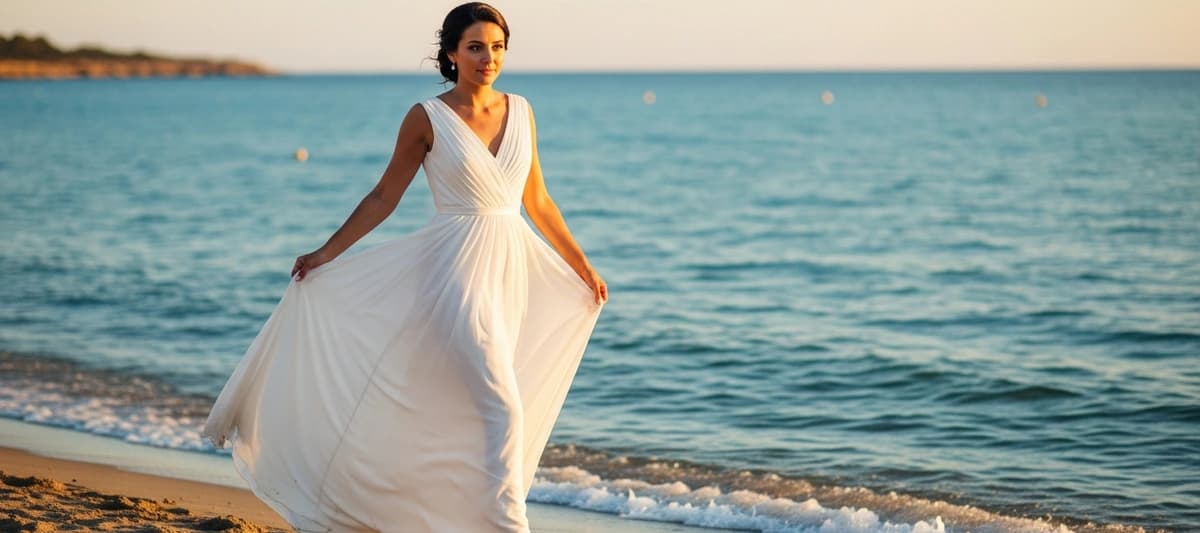
For a beach wedding, the most suitable silhouette is the A-line without a train, the column or the bohemian style, in lightweight fabrics such as chiffon or georgette. Midi or ankle length is the most practical on sand, and natural accessories — a flower crown, flat sandals or bare feet — complete the perfect look by the sea.
Getting married on the beach is one of the most romantic and unique settings imaginable, but it is also one of the most demanding for bridal fashion. Wind, sand, humidity and direct sunlight impose completely different rules to those of an indoor church or estate wedding. Choosing the wrong dress can turn your big day into a constant battle with a wet hem, heels sinking into sand and sweat trapped under layers of rigid tulle.
The good news is that, chosen well, a beach wedding dress can be the most beautiful, the most comfortable and the most photogenic of all. This guide gives you everything you need to make the right choice.
The Best Silhouettes for a Beach Wedding
The silhouette of the dress is the first and most decisive choice. Not all shapes behave the same way on sand, in the wind and under the sun.
A-Line Without a Train: The Most Versatile Option
The A-line silhouette — which flares gently from the hips, like a very soft A — is the most popular for outdoor weddings and for good reason. It flatters practically every body type, allows freedom of movement and, without a train, collects no sand or moisture. Add a fluid finish to the hem and the sea breeze turns it into a perfect photogenic ally.
Why it works on the beach:
- No train means no dragging or dirt
- The open skirt makes movement on sand easy
- Falls beautifully with flat sandals or bare feet
Column or Soft Mermaid: For Brides Who Want Impact
The column silhouette — completely straight from bust to hem — is the choice for brides who want a sophisticated and minimalist look by the sea. A soft mermaid (fitted to the knee and flaring slightly below) also works very well, as long as the fabric is fluid and the hem is not stiff.
What to avoid in the mermaid cut is a very fitted section across the thighs, which makes walking on soft sand difficult. A mermaid with a zip at the hem or a slit at the back solves this problem elegantly.
Bohemian Style: The Most Fitting Choice of All
The bohemian style — with delicate lace, bell sleeves, floral embroidery and a flowing silhouette — was practically designed for beach weddings. The romantic informality of this style pairs perfectly with the natural setting, and the fabrics typically used (chiffon, soft organza, lightweight bobbin lace) are ideal for heat and sea breeze.
If you dream of an intimate and natural wedding by the sea, the bohemian style is the one that will best complement that atmosphere.
Fabrics: What Handles Heat, Humidity and Sea Breeze
The fabric is almost more important than the silhouette when it comes to a beach wedding. The heat and humidity of the marine environment can ruin the wrong fabric within a matter of hours.
The Best Fabrics for Beach Weddings
| Fabric | Why It Works | Heat Level |
|---|---|---|
| Chiffon | Lightweight, flows with the wind, breathable | Very low |
| Georgette | Similar to chiffon but with more body | Low |
| Lightweight crepe | Holds the silhouette without stiffness | Low-medium |
| Organza | Ethereal volume without weight | Low |
| Lightweight mikado | Elegant without excessive structure | Medium |
Fabrics to Avoid
- Taffeta: stiff, retains heat and creases with humidity
- Thick lace with interlining: traps heat and loses shape with sweat
- Heavy mikado: beautiful indoors, stifling under direct sun
- Untreated natural silk: stains easily with salt water
Practical tip: Ask the atelier for a fabric swatch and hold it under the sun for a few minutes. If you notice the interior becomes very warm, rule it out. The fabric test is essential for outdoor weddings.
The Ideal Length: Balancing Practicality and Aesthetics
The length of the dress is another key factor that should be decided with your head as well as your heart.
Midi and Ankle Length: The Most Recommended
Midi length — falling between the knee and the ankle — is the smartest choice for a beach wedding. It has all the advantages:
- Does not brush against sand or get wet from waves
- Allows you to walk without needing to lift the skirt
- Works beautifully with flat sandals or bare feet
- Looks stunning in photos with the sea horizon as a backdrop
Ankle length (finishing just above the ankle) is equally practical and slightly more formal than midi, making it ideal if you want to balance the formality of the wedding with the informality of the setting.
Full-Length Dress: Yes, but with Conditions
If you insist on a classic full-length gown, choose a very fluid bias-cut skirt that moves with the wind without dragging. Many brides opt for a dress with a detachable hem: they wear the train for formal photos and remove it for the reception and dancing. This solution is increasingly popular at ateliers specialising in outdoor weddings.
If you choose a full-length dress for a beach wedding, bear in mind that you will need someone to help you throughout the ceremony. That reduces spontaneity in such a dynamic setting as the shoreline.
Colours: Beyond Pure White
The beach allows — and flatters — more colours than many brides dare consider.
Pure White Under Mediterranean Sun
Pure white is spectacular under direct sunlight, but can appear overly contrasted in some photographs. If you have very fair skin, off-white or ivory may be more flattering.
Tones That Work Especially Well by the Sea
- Ivory and champagne: timeless, flattering for all skin tones and they photograph beautifully
- Blush (very pale pink): romantic and delicate, creates a lovely contrast with the blue sea
- Off-white with nude details: sophisticated and modern
- Ecru or sand: bold but spectacular, especially at sunset
Some brides incorporate colour details — sky-blue embroidery, gold ribbons, coral-toned applied flowers — that harmonise very naturally with the marine setting without losing the bridal essence.
All included
- Banquet venue
- Wedding Planner
- Marriage Paperwork
- Photographer
- Décor
- Flowers
- Master of Ceremonies
- Deejay
- Open Bar
Accessories for the Beach Bride
Accessories are where you can truly personalise the look and distinguish it from an indoor wedding.
Footwear: The Most Practical Decision
Forget stilettos. They not only sink into sand but are uncomfortable from the very first step. These are the best options:
- Barefoot: the most natural, photogenic and comfortable option. If the ceremony is on the shoreline or over a wooden walkway, going barefoot is perfectly elegant.
- Flat leather sandals: elegant, versatile and perfect for walking on sand. There are bridal models with rhinestones or pearls that are beautiful.
- Low-wedge espadrilles: if you want some height without sinking, a cork or esparto wedge is the most sensible solution.
- Low, wide-heeled shoes: if you cannot give up a heel, keep it low (maximum 5 cm) and with a wide base. Some models with a thin 1–2 cm platform are viable on firm sand or wooden boards.
Jewellery: Simple and Natural
The beach calls for simplicity. Voluminous or very formal jewellery can feel out of place. These are the most fitting choices:
- Natural or freshwater pearl earrings
- Delicate necklace with a single stone or marine element (coral, mother-of-pearl)
- Fine gold or silver bracelet
- Avoid very structured headpieces: a flat hair piece or a wildflower crown fits far better
The Veil: Light or Without One
If you want a veil, make it light tulle or chiffon, not rigid organza. Long and voluminous veils become a serious complication in the sea wind. An elegant alternative is a light mantilla or a natural flower headpiece that will not blow about in the breeze.
Many beach brides simply decide not to wear a veil and choose instead a flower crown, decorated braids or an updo with natural flowers. The result is very suited to the setting and requires far less maintenance throughout the day.
How to Match the Dress to the Wedding Style
The dress does not exist in isolation: it must dialogue with the setting, the décor and the overall style of the celebration.
To learn more about dress types according to wedding format, see our complete guide to types of wedding dress, where you will find detailed information about silhouettes, necklines and finishes for each type of ceremony.
Formal or Semi-Formal Beach Wedding
If yours is a large-guest-count wedding with a complete ceremony and elegant reception against a sea backdrop, the dress should maintain a degree of formality. A crepe column silhouette or a lace A-line both work well for this type of celebration. Accessories can be slightly more elaborate: statement earrings, a softly structured headpiece and a platform or fine wedge shoe.
Intimate or Bohemian Beach Wedding
For a small, informal wedding with a shoreline ceremony and a sunset dinner, the bohemian style reigns. A dress with bell sleeves, floral embroidery and an irregular hem is perfect. Accessories follow suit: a crown of dried or fresh flowers, bare feet or artisan sandals and a wildflower bouquet wrapped in linen ribbon.
Practical Tips for Your Beach Wedding Day
Beyond the dress, there are logistical details that make all the difference at a beach wedding:
- Practise walking on sand in your dress: before the wedding, rehearse how you walk on sand while wearing the dress. You will be surprised how differently the skirt moves and how that affects the whole look.
- Carry a small emergency bag: with safety pins, double-sided tape for the neckline, tissues, a nail file and a small mirror. Sand and wind create unexpected situations.
- Coordinate with your photographer: a good beach wedding photographer knows at what times of day the light is most flattering and where to position themselves so the wind works in your favour. Coordinate the timing of movement shots together.
- Confirm the ceremony time relative to sunlight: beach weddings at sunset are spectacular, but require extra organisation for guests and suppliers. A light-coloured dress looks especially beautiful in the golden light of late afternoon.
- Store the dress in a cloth bag, not plastic: the marine environment has more humidity than usual. A breathable cloth bag preserves the dress better before the wedding and afterwards.
Conclusion: The Perfect Dress for Your Wedding by the Sea
Choosing a beach wedding dress is not a compromise — it is an opportunity. The marine setting allows you to wear a dress that in any other context might seem too informal and turn it into the most photogenic and personal choice you could make.
The key is to respect three principles: lightweight fabric that handles heat and breeze, a train-free silhouette that lets you move freely, and natural accessories that fit the setting. Everything else — colour, length, decorative details — is yours to decide.
A beach wedding is, above all, a celebration of nature and love. Your dress should reflect exactly that: free, luminous and authentic.
Related Reading
This article was reviewed by our editorial team. How we create our content
Frequently Asked Questions
Not sure which one suits you?
Try every silhouette on your own photo with Wedded's virtual try-on. The first 5 try-ons are free.


