Boho Wedding Dress: Complete Guide 2026
Boho wedding dresses: fabrics, necklines, details and ideal settings. A practical guide to choosing your bohemian dress in Spain.
Created with AI assistance and human review. Editorial standards
Key points
- The boho wedding dress is defined by fluid silhouettes, natural fabrics (chiffon, lace, silk) and artisan details that prioritise comfort without sacrificing romance.
- It is the most versatile option for outdoor weddings: estates, gardens, beaches and vineyards.
- The average price in Spain is between €1,200 and €2,200, with options from €600 and bespoke designs exceeding €3,000.
- The most common necklines are the deep V, the halter and the square neckline with strap details.
- Book your atelier appointment 8 to 12 months in advance, especially in peak season.
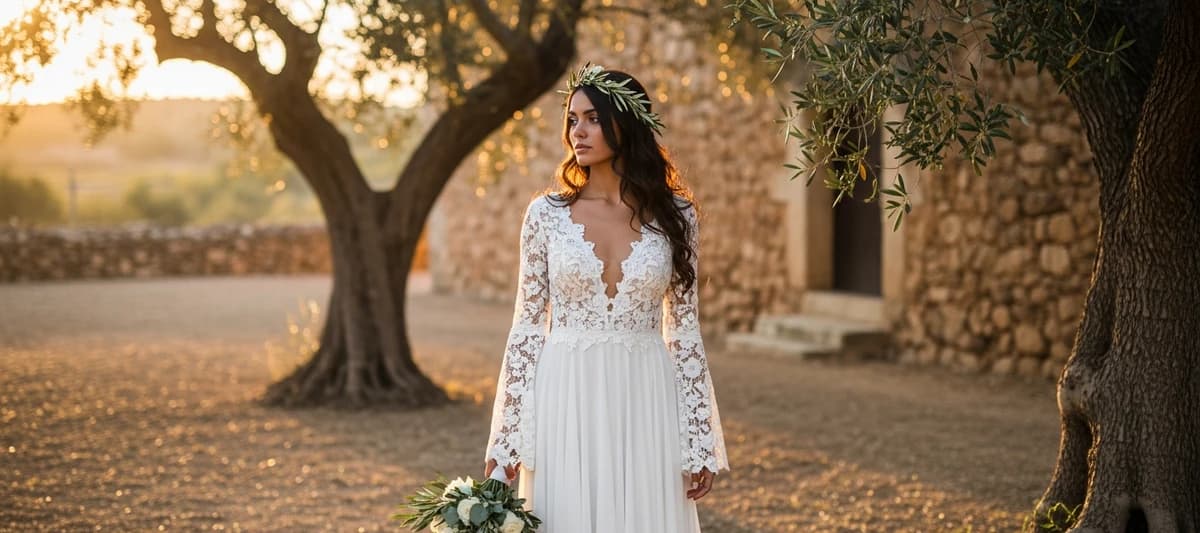
The boho wedding dress is today one of the most sought-after bridal silhouettes in Spain. Its blend of ethereal fabrics, artisan lace and corset-free silhouettes has made the boho style synonymous with the modern, self-assured bride who has stepped away from classical protocol. If you are considering this direction for your wedding, this guide gives you all the information you need: which fabrics to choose, which necklines suit you, which wedding settings it shines in and how much you should budget.
What defines the boho wedding dress
The boho silhouette in five characteristics
The bohemian style is not simply an unstructured dress. It has a very clearly defined aesthetic that sets it apart from other bridal silhouettes:
- Fluidity and movement: The skirt must flow in the breeze. No crinolines, no boning. The fabric falls naturally over the body and movement becomes part of the look.
- Artisan details: Hand embroidery, macramé, fringe, relief flowers or irregular pearl inlays give each dress a unique, almost handmade character.
- Layers and sheerness: Overlays of tulle or chiffon over silk or satin underdresses create visual depth without adding weight. Sheer details at the back or on the sleeves are a hallmark of the style.
- Lace as the star: Unlike other styles where lace is a secondary detail, in boho dresses lace can cover the entire bodice or even the full dress, delivering romance without stiffness.
- Wide sleeves: Bell sleeves, sleeves with a forearm opening or long billowy bubble sleeves are iconic bohemian elements and give the look a sought-after seventies feel.
Differences from other bridal styles
The boho dress is often confused with the romantic or rustic style. The key distinction is that the bohemian aesthetic carries a clear cultural charge (an artistic movement, individual freedom, connection with nature) while the romantic style is primarily about ruffles, bows and satin. Boho can be rustic but does not have to be: a natural silk dress with luxury embroidery can be deeply bohemian and simultaneously elegant.
Fabrics for the boho wedding dress
Choosing the right fabric is perhaps the most important decision when looking for a boho dress. Each material offers a different drape, sheen and texture that completely changes the final result.
Chiffon: king of movement
Chiffon is the fabric most associated with bohemian bridal style. Lightweight, semi-transparent and with exceptional drape, it creates the sensation that the dress "flies" with the slightest movement. It is typically used for skirts and sleeves, and in some versions also for the bodice over a silk or satin lining.
Advantages: Very lightweight, comfortable in summer, photogenic in natural light. Drawback: Delicate, can snag easily and requires a lining to avoid being excessively transparent.
Lace: artisan romance
Lace in its various forms (Calais lace, guipure, Chantilly) is the other defining fabric of the boho dress. In bohemian silhouettes it typically appears on the bodice, the sleeves or as an overlay on the skirt. Guipure, with its raised floral motifs and no background, is especially popular because it adds texture without adding weight.
Advantages: Visually rich, gives structure to the bodice without a corset, wide variety of patterns. Drawback: Quality lace is expensive and alterations on lace can be complex and costly.
Natural silk: boho luxury
Natural silk chiffon is the most luxurious material within the bohemian spectrum. It has a fluid drape that no synthetic fabric can replicate and a soft sheen that is extraordinarily photogenic. Unlike polyester chiffon, silk regulates body temperature better — an important advantage at outdoor summer weddings.
Advantages: Exceptional drape, breathable, sustainable when sourced from certified producers. Drawback: High price and requires special care for cleaning and storage.
Crepe georgette: the middle ground
Crepe georgette is more opaque and slightly more structured than chiffon, making it a good option for brides who want the boho look but prefer a little more support and opacity. It is widely used in minimalist versions of the bohemian style.
Soft tulle: volume without weight
Multi-layer tulle, especially silk tulle, can create a skirt with ethereal volume that feels almost weightless. It is the perfect choice for those who want movement and volume without the structure of the stiff tulle used in princess skirts.
Most popular necklines and silhouettes in boho style
The neckline largely determines the character of a boho wedding dress. Here are the most popular options in 2026:
Deep V-neckline
The V-neck, both at the front and at the back, is the one most associated with boho style. The front version elongates the torso and adds understated sensuality. The back version, which can reach the waist or even lower, is one of the standout features in contemporary wedding photography. Many dresses combine both.
Halter and bardot neckline
The halter neckline, with straps that wrap around the neck, gives the dress a more seventies character and is especially flattering for summer weddings. The bardot neckline (bare shoulders with a straight neckline) is a softer alternative that pairs very well with bell sleeves or off-shoulder styles.
Square neckline with lace
The square neckline framed in lace is a more recent option gaining popularity in modern boho style. It has a vintage feel and is very flattering for different body types because it allows precise framing of the neckline.
Open-back or lace-up back
The back is often the differentiating element in a bohemian dress. Designs with an open back, silk lace-up ties or macramé details at the lumbar are widely photographed and distinguish the dress from more conventional choices.
All included
- Banquet venue
- Wedding Planner
- Marriage Paperwork
- Photographer
- Décor
- Flowers
- Master of Ceremonies
- Deejay
- Open Bar
Finishing details that define the style
Beyond fabric and neckline, the finishing details are what determine whether a dress is authentically bohemian or simply a flowing dress without further character:
- 3D floral appliqués: small fabric flowers sewn at the neckline, waist or hem add an artisan boho touch.
- Fringe at the hem: silk or lace fringe at the bottom of the skirt adds extra movement and a nod to vintage boho.
- Cord or macramé belt: many boho dresses have a straight bodice and are defined at the waist with an interchangeable belt, giving flexibility to wear the same dress with different looks throughout the day.
- Detachable sleeves: a popular practical solution for mixed venues (ceremony indoors + reception outdoors): the dress has sleeves for the ceremony and transforms for the reception.
- Embroidery in neutral or gold tones: pieces with embroidery in cream, beige or gold silk thread on a white or ivory background are the most sought-after in the premium boho segment.
To understand how the boho dress differs from other bridal options depending on the wedding moment, see our guide on types of wedding dress by occasion, where we analyse when to wear a ceremony dress, a reception dress and a party dress.
Ideal weddings for bohemian style
The wedding venue and the dress must speak the same visual language. The bohemian style has settings in which it shines naturally and others where it can feel out of place.
Rural estates and farmhouses
The Spanish rural estate is the perfect setting for a boho dress. The rustic architecture, stone or earth floors, olive trees and the light of sunset create a backdrop that brings out the fluid aesthetic of the dress to the full. If your wedding is at an estate, boho is probably the most coherent bridal style you can choose.
Garden and vineyard weddings
A garden with natural vegetation or an Andalusian or Catalan vineyard are also excellent settings. The key here is to think about the ground surface: dresses with long trains and delicate fabrics do not pair well with gravel paths or uneven terrain. Ankle-length or midi boho silhouettes with an asymmetric hem are more practical in these environments.
Beach or seaside ceremonies
The boho wedding dress and the beach wedding are a classic combination. However, bear in mind that sand and sea salt are not friends of delicate fabrics. Opt for good-quality chiffon and avoid very open lace that could snag. A detachable skirt or a midi-length dress may be more functional on sand.
Intimate weddings in private homes or unique spaces
For small celebrations (fewer than 50 guests) in characterful spaces, the boho dress allows the bride to be the visual centrepiece without needing monumental bridal architecture. The simplicity of the boho style fits very well with the intimacy of these celebrations.
What about church weddings?
The boho dress can work at a religious wedding if chosen carefully. A modest neckline, covered shoulders (long sleeves or a cape) and floor length are generally required. A lace dress with an illusion neckline, long bell sleeves and a short train can be perfectly bohemian and at the same time appropriate for a church.
Budget and planning
Price ranges in Spain (2026)
| Tier | Price range | What it offers |
|---|---|---|
| Entry | €600 – €1,100 | Accessible bridal fashion collections, synthetic fabrics, few artisan details |
| Mid-range | €1,200 – €2,200 | Multi-brand ateliers, mixed fabrics (polyester + lace), 2–3 fitting appointments |
| Premium | €2,300 – €3,500 | Calais lace, natural silk, embroidered details, personalised service |
| Haute couture | €3,500+ | Exclusive design, bespoke pattern, premium materials |
Always budget for alterations separately: between €150 and €500 depending on complexity.
When to start your search
The general rule is to begin 8 to 12 months in advance. Studios specialising in boho style work to order and production timelines are similar to those of any bridal atelier. If you know you want a dress with hand embroidery or artisan lace details, extend that window further.
A tool like Wedded can help you manage deadlines, save favourites and coordinate atelier appointments in your wedding calendar, so you never miss a key date.
How to care for your boho dress before and after the wedding
Proper care for a boho dress begins well before the big day:
- Storage before the wedding: hang the dress in its breathable fabric garment bag, never in plastic. Humidity can damage lace and embroidery.
- Transport: boho dresses with a lot of volume should be transported without folds where possible. If folding is necessary, use acid-free tissue paper.
- Wedding day: avoid perfumes and body creams on areas of delicate fabric before putting on the dress. Oils and setting sprays can permanently stain chiffon and lace.
- Cleaning afterwards: dry-cleaning a boho wedding dress in Spain costs between €150 and €300. Always entrust it to a dry cleaner specialised in bridal textiles.
- Long-term preservation: if you want to keep the dress for the future, museum-box preservation with acid-free tissue paper in a dry, dark place is the recommended method.
Checklist before buying
Before signing at the atelier, make sure you have reviewed these points:
- Does the fabric feel the way you expected when touched and in movement?
- Do the neckline and back suit your type of celebration (outdoor / indoor / religious)?
- Are the necessary alterations budgeted and does the atelier offer them?
- Does the delivery deadline fit your wedding date with enough margin for two fittings?
- Have you asked which accessories (veil, headpiece, belt) are included or can be added?
- Do you have a clear plan for caring for and cleaning the dress?
Choosing a boho wedding dress means betting on comfort, nature and movement without giving up romance. With the right information about fabrics, necklines and planning, taking that step with confidence is much easier. Wedded can help you manage all the logistics of vendors, appointments and deadlines in one place so the process is as light as your chiffon dress.
This article was reviewed by our editorial team. How we create our content
Frequently Asked Questions
Not sure which one suits you?
Try every silhouette on your own photo with Wedded's virtual try-on. The first 5 try-ons are free.


