Wedding Dress by Season: What Works and When
How to choose your wedding dress by season: fabrics and silhouettes for spring, summer, autumn and winter. Complete guide with season × fabric × silhouette summary table.
Created with AI assistance and human review. Editorial standards
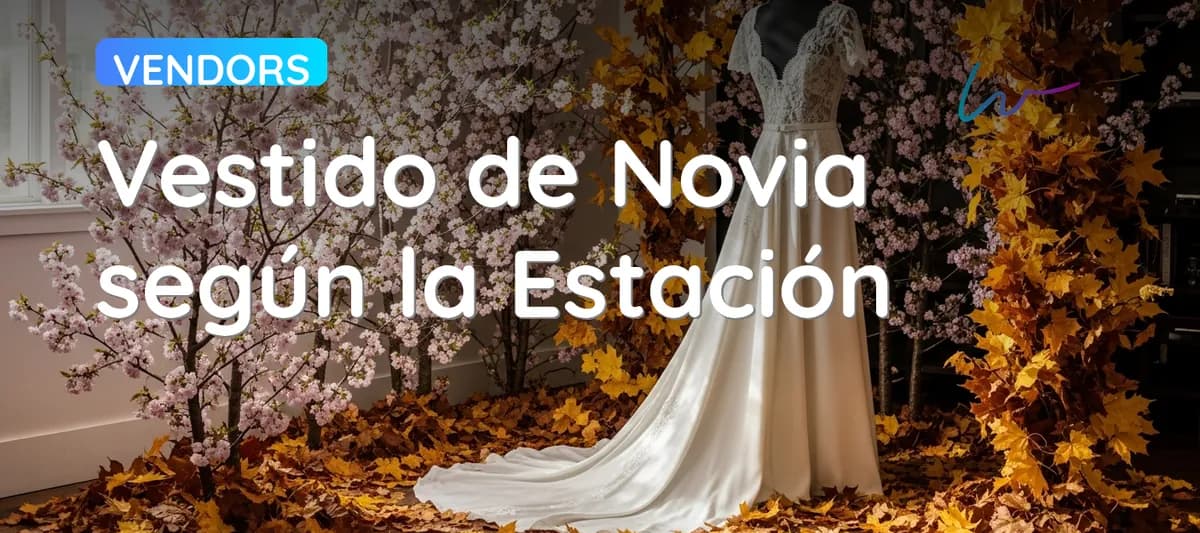
Wedding Dress by Season: What Works and When
Some brides regret their dress. Not the design, but the fabric. The August bride who chose a double-lined A-line because it felt perfect in an air-conditioned boutique. The December bride who insisted on a bare-back gown because it was beautiful and did not listen to herself when she thought she might be cold. A wedding dress that does not work with the climate of the day is not just uncomfortable: it shows in the photographs, in posture, in expression.
Spain has one of the most climatically diverse landscapes in Europe. Average temperatures in August in Seville exceed 35°C. January in Madrid drops below 5°C. A June wedding in Galicia can involve 18°C with wind; the same week in Murcia can pass 30°C. Choosing a fabric and silhouette without accounting for season and geography is one of the most common mistakes in bridal planning.
Why Season Matters More Than Style
The issue is not aesthetic, it is physical. A wedding dress that is wrong for the temperature of the day creates sustained discomfort across six, eight or ten hours of celebration. And unlike an aesthetic detail that might look off in a photograph, discomfort affects mood, energy and the entire experience of the day.
The most common advice is to choose the silhouette first and then find a fabric that works. The more effective approach is the reverse: determine which fabrics are right for your season and location, then find the silhouette you love within those constraints. This guide is structured in that order.
Spring (March–May): Light Fabrics, Florals and Soft Colour
Spring is the second most popular season for weddings in Spain after autumn. Average temperatures range from 12°C in March in inland areas to 20°C in May on the Mediterranean coast. In terms of dress selection, it is the most forgiving season: fabrics can be light without cold being a real concern, and heat has not yet become a limiting factor.
Fabrics that work in spring
Chiffon is the quintessential spring fabric: lightweight, fluid and with a romantic drape that responds beautifully to gentle breezes. Multi-layer chiffon skirts create a visual effect that translates exceptionally well in outdoor garden settings.
Silk organza and tulle provide light structure and volume without weight. They are the base fabrics for many gowns with moderate full skirts that work perfectly in spring: the volume moves, breathes and holds its shape without becoming uncomfortable.
Guipure lace has its natural season in spring. The botanical and floral motifs of guipure connect with the surrounding environment almost inevitably. A three-quarter sleeve gown in guipure lace over a fine knit lining is comfortable at temperatures between 14 and 18°C.
Recommended silhouettes for spring
The A-line in lightweight fabrics is the most versatile choice for spring: it combines ease of movement with elegance, works indoors and outdoors, and photographs beautifully in soft spring light. Bardot necklines and silhouettes with ruffled skirts or cascading layers also suit spring well, where temperatures invite showing some skin without requiring maximum exposure.
Summer (June–August): What Survives 35°C with Dignity
Summer is the most challenging season for choosing a wedding dress in Spain. Not because options are limited, but because constraints are more severe and the difference between an appropriate and an inappropriate fabric becomes immediately apparent and sustained.
The real temperatures
In July and August, temperatures during typical wedding hours regularly exceed 30°C across most of the country:
- Andalusia: 35-40°C in Seville, Córdoba and Jaén
- Murcia and Valencia: 33-38°C
- Castile-La Mancha and Extremadura: 35-40°C
- Madrid: 30-35°C
- Mediterranean coast: 28-32°C with added humidity
- Galicia and the north: 20-25°C, the only region where summer heat is not a primary concern
Fabrics that work
Chiffon is the most effective option for extreme heat. It is near-transparent, virtually weightless and allows air circulation. A chiffon gown without lining, or with minimal lining only in structural zones, can remain comfortable even at 35°C.
Muslin has similar properties: fluid drape, negligible weight, good breathability. It is less common in bridal fashion but growing in popularity for summer brides.
Lightweight washed satin without internal structure or heavy lining also works in summer if the fabric quality is high and the weight kept low. Heavy satin or duchesse satin is a poor choice for a July wedding in Seville.
The most common summer mistakes
Double lining: Many A-line or mermaid gowns include a crepe or taffeta lining that adds opacity but also traps heat significantly. For summer, always ask the boutique explicitly whether the dress can be made with minimal or breathable lining (modal, bamboo).
Dense lace sleeves: Long or three-quarter lace sleeves can be beautiful in photographs but generate intense heat on the arms. If you want sleeve detail in summer, very fine transparent layers or strap details in lace are the practical options, not full sleeves.
Boned corsets: The internal structure of a gown with metal boning retains body heat efficiently. In summer, dresses with light boning or no internal structure are incomparably more comfortable.
Multi-layer tulle: A tulle skirt with multiple layers may appear light but accumulates warm air volume around the body. If you want a tulle skirt in summer, look for single or double-layer versions over a chiffon base.
Summer silhouettes that work
A fluid A-line in chiffon or gauze without internal structure is the most frequent solution. A mermaid in lightweight fabric with a bare back and without a structured corset works well up to approximately 30°C. The slip dress in washed satin is the coolest of all options and has been a consistent trend over the past two years.
Autumn (September–November): Velvet, Sleeves and Layers That Work
Autumn is the most popular season for weddings in Spain, with September, October and November concentrating the largest number of ceremonies. Temperatures vary considerably by month and region: September can reach 27-30°C in Andalusia and Valencia, while November in inland areas can fall below 8°C.
This variability makes autumn the most versatile season for the wedding dress, but also the one that requires the most attention to the specific month and geography.
September: still warm across most of the country
September in Spain is not thermally autumn in most regions. In Seville, Valencia, Málaga or Murcia, average temperatures exceed 25°C and maximums can reach 30-33°C. For weddings in these areas in September, summer fabrics remain valid and velvet is a poor idea.
However, September in Galicia, Asturias or mountain areas of the interior offers temperatures of 16-22°C, where more structured options become comfortable.
October and November: the peak of bridal fabric richness
October and November are the months when a wedding dress can be most richly constructed without heat being a constraint. This is the window in which velvet, mikado, double crepe and duchesse satin make complete sense.
Velvet is the most characteristic fabric of late autumn weddings. It provides warmth, has a noble drape and reads exceptionally well in photography due to how it absorbs and reflects light. The most common silhouette for velvet is a mermaid or A-line with long or three-quarter sleeves.
Mikado is the most structured autumn fabric: it has body, holds volume without losing shape and produces an impeccably clean, formal result. It is ideal for autumn weddings in elegant interior spaces.
Double crepe is the most versatile option: warmer than the lightweight summer crepe, more wearable than mikado, with a fluid and elegant drape that works in both fitted and A-line silhouettes.
Sleeves and layers for autumn
From October onwards, long or three-quarter sleeves move from purely aesthetic to genuinely functional. The most used options are long sleeves in transparent lace, puffed sleeves in organza or tulle (a consistent trend in the 2024-2026 collections) and long sleeves in the same fabric as the gown body.
Bolero jackets in lace, short capes in tulle and over-dresses in organza also work well in October-November: they add coverage for outdoor moments and transfers between venues, but can be removed for the reception without altering the dress itself.
All included
- Banquet venue
- Wedding Planner
- Marriage Paperwork
- Photographer
- Décor
- Flowers
- Master of Ceremonies
- Deejay
- Open Bar
Winter (December–February): When the Bridal Coat Is Not Optional
Winter weddings represent the smallest share of the Spanish bridal calendar, but they have a distinctive and highly recognisable aesthetic: golden light, warm interior spaces, photography with richer tonal depth. The winter wedding dress can be more structured, more voluminous and more elaborate than in any other season, because heat is simply not a constraint.
Winter temperatures in Spain
- Madrid: 3-9°C in January
- Barcelona: 5-12°C in January
- Seville: 7-16°C in January
- Bilbao and the north: 4-12°C in January
- Valencia: 9-15°C in January
Even in Spain's warmest regions, winter temperatures mean that any outdoor moment, the garden photo session or the walk from the car to the venue require real coverage.
Heavy fabrics that excel in winter
Heavy mikado is the defining fabric for a winter wedding dress: structure, warmth and a photographic result that is consistently impeccable. It works across full-skirt, A-line and mermaid silhouettes with equal success.
Structured taffeta finds its best context in winter: the fabric holds volume without losing its shape, has a subtle sheen and creates a ceremonial feel that suits the seriousness of the season.
Duchesse satin in heavier weights provides an intense sheen and a superb drape. It is one of the most photogenic winter fabrics under the warm light of candles and interior spaces.
Lace over dense lining allows gowns that feel warm against the skin while appearing visually rich from outside.
The bridal coat: part of the look, not an emergency fix
The most common mistake for winter weddings is treating the bridal coat as a last-minute accessory: bought in an approximate colour, or wearing a regular coat over the dress. A bridal coat or cape planned from the beginning as part of the look can be one of the most elegant elements of the entire ensemble.
The most widely used formats are a long wool or cashmere cape, a straight coat with clean masculine tailoring in white or cream (a consistent trend from 2024 to 2026) and a faux fur coat in white or champagne for brides who want a more dramatic silhouette.
The practical rule: if the ceremony includes any outdoor moment, a coat or cape is not optional in December, January or February in any part of Spain outside the Canary Islands.
Summary Table: Season × Fabric × Silhouette × Accessories
| Season | Avg. temp. (Spain) | Recommended fabrics | Fabrics to avoid | Silhouettes | Accessories |
|---|---|---|---|---|---|
| Spring (Mar–May) | 12–20°C | Chiffon, lightweight organza, guipure lace, tulle, fine crepe | Velvet, heavy mikado | Fluid A-line, bardot, evasé with ruffle | Floral hair pieces, light headpiece, strappy sandals |
| Summer (Jun–Aug) | 22–38°C by region | Chiffon, muslin, unlined organza, fine washed satin | Double lining, boned corsets, multi-layer tulle, dense lace | Slip dress, unstructured A-line, mermaid with open back | No long veil, updo, open sandals |
| Autumn (Sep–Nov) | 10–27°C by month/region | Velvet (Oct–Nov), mikado, double crepe, duchesse satin, lace with sleeve | Unlined chiffon in Nov, unstructured fabrics in Nov | Long-sleeve mermaid, A-line with cape, over-dress | Lace bolero, short cape, closed-toe shoes |
| Winter (Dec–Feb) | 3–16°C | Heavy mikado, taffeta, duchesse satin, densely lined lace, velvet | Chiffon, muslin, unlined organza, summer-weight sheer fabrics | Full A-line, princess, long-sleeve mermaid | Bridal coat/cape, gloves, faux fur |
How to Apply This Guide
The table above is a starting point, not a set of prohibitions. A summer bride in Galicia can wear lace without difficulty, and a September bride in Seville may need the same precautions as in July. The practical process:
- Find the historical average temperature for your wedding location and month (a simple search using national meteorological data).
- Identify the range of appropriate fabrics for that temperature.
- Within those fabrics, look for the silhouettes you love.
- Before confirming the dress, ask the boutique whether the lining can be adjusted for the season.
For a full overview of what silhouettes and fabrics are defining bridal fashion right now, the guide to 2026 wedding dress trends covers the collections in detail, including what Spanish and international designers are bringing to the season across all fabric categories.
Related Reading
This article was reviewed by our editorial team. How we create our content
Frequently Asked Questions
Not sure which one suits you?
Try every silhouette on your own photo with Wedded's virtual try-on. The first 5 try-ons are free.


