Wedding Dress Fabrics: The Complete Guide to Choosing Right
Chantilly lace, organza, crepe, silk, mikado or tulle: which is the best fabric for your wedding dress by season, ceremony type, and budget.
Created with AI assistance and human review. Editorial standards
Quick Answer: Which Fabric Should You Choose?
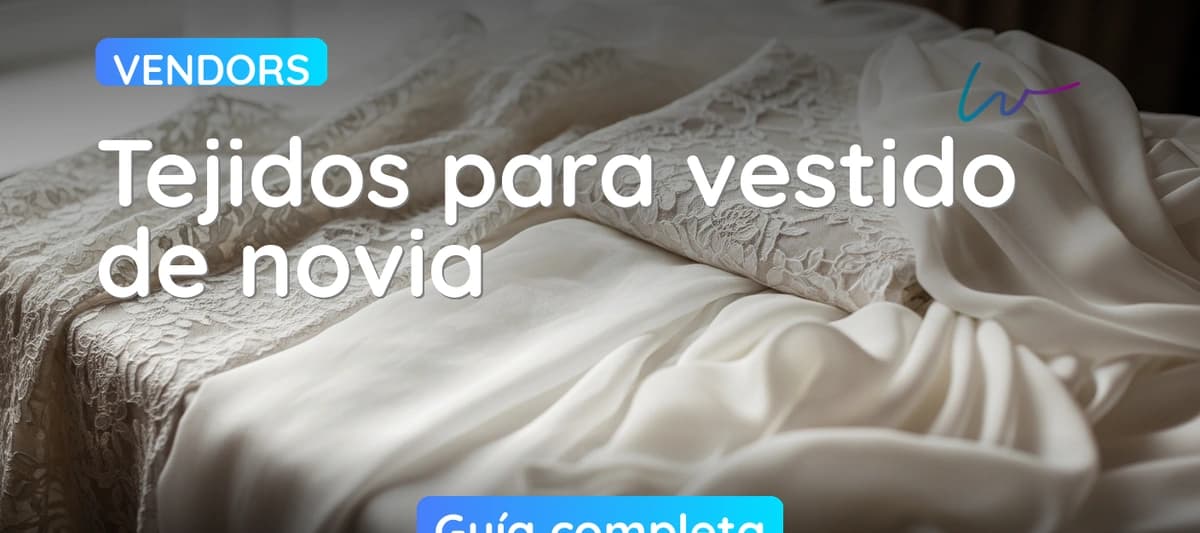
Your wedding dress fabric is not just an aesthetic detail — it defines the silhouette, comfort throughout hours of celebration and a significant portion of the final price. Chantilly lace brings romance and artisan detail; mikado gives structure and controlled volume; crepe flatters almost every figure with a clean, timeless line; organza and tulle add lightness and movement; natural silk is the epitome of luxury. The right choice depends on your ceremony type, the season, and your budget.
If you are still deciding on the overall silhouette before thinking about fabrics, read our complete guide to wedding dress styles to get a full picture before stepping into the atelier.
The Six Main Fabrics and What Each One Offers
Chantilly Lace: Romance with an Artisan Touch
Chantilly lace is one of the most recognisable bridal fabrics. Its very fine net background and needle-worked floral motifs create a delicate transparency that no other fabric can replicate. The original comes from the French city of the same name and is made with silk, although the bridal market most commonly offers high-quality synthetic versions.
What makes it special: The visual depth of Chantilly lace creates a three-dimensional effect on the body that changes with the light. Depending on the inner lining, it can range from very suggestive (with a nude base) to completely opaque (with a white or cream base).
Best for: Indoor religious weddings, intimate celebrations and autumn-winter. Its moderate weight and lack of rigidity make it ideal for A-line or mermaid silhouettes.
Approximate price: Quality mid-range Chantilly lace dresses start at around €1,800 at multi-brand ateliers. Versions with handmade or French-imported lace can exceed €4,000.
Care: Avoid rough surfaces (stone, unfinished wood) that can snag the threads. It is not the best choice for outdoor summer weddings.
Organza: Ethereal Volume without Extra Weight
Organza is a very fine, stiff and translucent fabric obtained by weaving silk or synthetic threads with a very tight twist. Unlike tulle, which is a mesh, organza has its own structure — it maintains shape without multiple layers and creates swirls and volumes that appear to float.
What makes it special: When light passes through organza, the dress seems luminous from within. That elegant, structured "cloud" effect is hard to achieve with other fabrics.
Best for: Skirts with pronounced volume, princess-cut dresses, spring weddings and outdoor venues. It pairs beautifully with lace or crepe bodices.
Approximate price: Polyester organza is one of the most affordable fabrics on the bridal market. Quality organza skirt dresses start from €900–1,200. Natural silk organza increases the price by 30–50%.
Care: Organza wrinkles relatively easily. It needs gentle steaming to recover — never direct ironing.
Crepe: Structured Elegance for Every Figure
Crepe is probably the most versatile fabric in the bridal wardrobe. It is made with a special twist weave that gives it a slightly granular texture, a consistent body and a clean drape. It does not shine excessively, does not wrinkle easily and embraces the body without being restrictive.
What makes it special: Crepe is the fabric that least "betrays" the figure. Its even drape smooths irregularities and creates a continuous silhouette from shoulder to hem. It is the favourite of brides looking for a sophisticated, timeless look without large volumes.
Best for: Minimalist silhouettes, straight-cut, mermaid or understated A-line dresses. Ideal for modern civil weddings, destination weddings and any season of the year.
Approximate price: Crepe sits in the mid-price range — quality crepe dresses start from €1,200 upwards. Natural silk crepe raises the price considerably.
Care: Dry clean only. Holds up well to movement and dancing without losing its shape.
Natural Silk: The Gold Standard of Bridal Luxury
Natural silk is the historic fabric par excellence for wedding dresses. It is obtained from the silkworm cocoon and comes in multiple variants: silk satin (shiny and luxurious), dupion silk (irregular, matte texture), charmeuse silk (very fluid and soft) and silk mikado (more structured, see next section).
What makes it special: Natural silk regulates body temperature better than any synthetic fabric — it keeps you cool in summer and warm in winter. Its sheen is also extremely difficult to replicate artificially.
Best for: High-end weddings, exclusive venues, brides who prioritise quality above all else, and spring or autumn celebrations.
Approximate price: A natural silk dress sits at the top end of the market — from €2,500 to over €8,000 depending on the design and atelier. It is the fabric that raises the final price the most.
Care: Natural silk is the most delicate of all: it stains with water, cannot tolerate prolonged perspiration and requires specialist cleaning. It is not the most practical option for an active summer wedding.
Mikado: Clean Structure for Modern Looks
Mikado is a silk variant with a more compact and slightly thicker weave. It has a satin surface on the right side and a matte finish on the reverse, giving it an elegant look without being excessively shiny. It is the reference fabric for designs with clean, structured and contemporary lines.
What makes it special: Mikado holds its shape with precision — ideal for dresses with a fitted bodice and a flared skirt. It does not mould to the body as fluidly as crepe, but it creates very defined and photogenic silhouettes.
Best for: Princess-cut dresses with a fitted bodice, modern bridal looks with midi or tea-length skirts, and autumn-winter or spring weddings. It is also the favourite fabric for reception dresses or a change of look.
Approximate price: Polyester mikado is affordable, allowing dresses under €1,500. Natural silk mikado increases the price by 40–60%.
Care: Holds up well to creasing and movement. Dry cleaning is the safest option.
Tulle: The Essential Foundation of Volume
Tulle is a very fine, hexagonal and transparent mesh that on its own provides lightness but almost no opacity. For this reason it is usually used in multiple layers and almost always over another base fabric. It is the main ingredient of princess-style puffy skirts and the overskirts added over fitted silhouettes.
What makes it special: Its lightness is unmatched. Layers and layers of tulle weigh far less than the same amount of organza or mikado. That makes it the go-to fabric for high-volume dresses that do not want to feel heavy during hours of dancing.
Best for: Princess skirts, veils, layers over fitted dresses, spring and summer weddings. It is also the most used fabric for the most accessible wedding dresses on the market.
Approximate price: Synthetic tulle is the most economical of all. Quality tulle skirt dresses can be found from €600. Silk tulle is rarer and more expensive, reserved for haute couture collections.
Care: Snags easily, especially on jewellery or rough surfaces. Hand wash with extreme care or dry clean.
How to Choose Your Fabric by Season
Temperature and humidity directly affect how a fabric performs during hours of celebration.
Spring (March–May)
Spanish spring can be unpredictable — cool evenings and warm middays. Ideal fabrics are organza, georgette crepe and fine tulle, which adapt to temperature changes without becoming stifling. Chantilly lace also works well for indoor ceremonies.
Summer (June–August)
Absolute priority: breathability and lightness. Chiffon, georgette crepe, fine organza and low-density tulle are your best allies. Avoid silk satin, taffeta and thick mikado, which trap heat. If you want lace, look for very open-weave versions over a fine tulle base.
Autumn (September–November)
The most popular season for weddings in Spain. More freedom of choice: mikado, crepe, satin and Chantilly lace all work very well. Medium weights are perfect for the mild temperatures of early autumn, and more structured fabrics suit November weddings.
Winter (December–February)
Structured mikado, silk satin and heavy lace over an opaque base are the most appropriate fabrics. Fine tulle in layers is also a surprisingly effective insulator. A bridal cape, bolero or jacket can complete any look in a lighter fabric.
Fabric Comparison Table
| Fabric | Ideal Season | Silhouette | Relative Price | Durability |
|---|---|---|---|---|
| Chantilly Lace | Autumn-Winter | Mermaid, A-line | High | Medium |
| Organza | Spring | Princess, ball gown | Medium | Medium |
| Crepe | All year | Mermaid, A-line, straight | Medium | High |
| Natural Silk | Spring-Autumn | Any | Very high | Low |
| Mikado | Autumn-Winter | Princess, modern A-line | Medium-High | High |
| Tulle | Spring-Summer | Princess, overlay | Low | Medium |
All included
- Banquet venue
- Wedding Planner
- Marriage Paperwork
- Photographer
- Décor
- Flowers
- Master of Ceremonies
- Deejay
- Open Bar
The Role of Fabric in the Final Price of Your Dress
Fabric can account for between 30% and 60% of the total manufacturing cost of a wedding dress. That is why the same silhouette in polyester crepe can cost €1,200 while natural silk pushes the same design to €3,500.
Some tips to optimise your budget without sacrificing appearance:
- Choose high-quality synthetic over natural fabric: The difference in photographs is minimal; the price difference is enormous. A good polyester mikado can look identical to silk in wedding photos.
- Concentrate premium fabric where it is most visible: A quality lace bodice with a synthetic tulle skirt is a classic combination that optimises the budget.
- Ask about the actual weight of the fabric: A denser tulle (higher GSM) lasts longer and drapes better than a very fine one. Not everything that is lighter is more economical in the long run.
- Factor cleaning into your budget: Natural fabrics and handmade lace require specialist cleaning that can cost between €200 and €600.
Tips for the Atelier Fitting
When you go to try on dresses, keep these fabric-related points in mind:
- Ask to touch and pull the fabric: A good fabric returns to its original position after being stretched. If it creases or deforms, it may be a sign of low quality.
- Test with real movement: Sit down, climb stairs, move your arms. Crepe and mikado hold up well; tulle and organza are more sensitive to sharp movements.
- Ask about the lining: Most lace or organza dresses have an inner lining. The quality of the lining directly affects comfort over hours.
- Observe under different lights: Satin and organza change considerably between natural and artificial light. Ask to see the dress next to a window and under the atelier's lighting.
- Check maintenance before you buy: Some fabrics do not tolerate the ambient humidity of a beach or garden wedding. Make sure your chosen fabric is compatible with your venue.
Conclusion
Fabric is one of the invisible pillars of your wedding dress — nobody in the room will name the crepe or the mikado, but everyone will notice if the dress falls well, if you look comfortable and if the silhouette has the elegance you imagined. Taking time to understand what each fabric offers before stepping into the atelier will give you a real advantage when communicating what you are looking for and evaluating whether the price is fair.
If you are still deciding which silhouette you want, we recommend starting with our guide to wedding dress styles to arrive at the atelier with clearer ideas.
Related Reading
This article was reviewed by our editorial team. How we create our content
Frequently Asked Questions
Not sure which one suits you?
Try every silhouette on your own photo with Wedded's virtual try-on. The first 5 try-ons are free.


