How to Plan a Budget Wedding in Spain
A budget wedding in Spain is possible without sacrificing style: key cost categories, real prices and the decisions that make the biggest difference.
Created with AI assistance and human review. Editorial standards
Key Takeaways
- The average cost of a wedding in Spain in 2025 was €25,183, yet memorable weddings happen for under €9,000.
- The number of guests is almost always the single decision with the greatest impact on the budget, far more so than any decorative choice.
- Choosing a weekday or an off-peak date can translate into meaningful discounts on the venue (some venues report reductions in the 20% to 40% range, though figures vary by provider and season).
- Concentrating the floral budget on one or two visual focal points, and opting for a catering format other than a conventional sit-down banquet, are among the most effective adjustments you can make.
- Wedded's wedding budget calculator lets you allocate spending by category before speaking to a single supplier.
The average cost of a wedding in Spain reached €25,183 in 2025. That is a significant sum, particularly for couples who have recently bought a home, are managing a mortgage, or simply have better things to do with that money. The good news is that this average is just a reference point: there are genuinely memorable weddings that cost half as much, or less. Below, we go through the categories that carry the most weight in the budget, what can be trimmed without it showing, and which structural decisions change the entire financial picture.
The Number of Guests Is One of the Most Powerful Levers You Have
The number of guests shapes the budget before you have even chosen a venue, a menu, or a photographer. The per-head cost in Spain ranges from around €60 to €150 depending on the region and the style of service, as covered in detail in this article on per-head costs at Spanish weddings. A wedding of 120 guests at €90 per head comes to €10,800 on catering alone. Bringing that down to 60 guests at the same rate reduces the catering bill to €5,400, a saving that could go a long way toward covering photography.
Reducing the numbers is uncomfortable. Nobody wants that conversation with distant cousins or work colleagues. But it tends to be the decision with the highest financial return of anything you will do during the planning process. For practical guidance on how to approach it, with concrete criteria, see the guide to planning your wedding attendance.
Savings Through Date and Day of the Week
Saturday evenings in June, September, and October are the most sought-after slots of the year at virtually any venue with wedding capacity. That demand has a price. Choosing a Friday evening or a Sunday can unlock meaningful discounts on the standard venue rate. A Tuesday is a different world entirely.
The time of year matters too. January, February, and November are low-demand months across most Spanish provinces. Some venues in Castile, Extremadura, or Murcia offer noticeably lower rates during these months, with the added benefit that photographers, caterers, and other suppliers tend to have greater availability and, occasionally, more flexibility on price.
The Venue: Estate, Restaurant, or Something Else Entirely
Private Estate or Restaurant with a Private Room
Event estates typically charge a venue hire fee on top of catering costs. In many cases, catering is compulsory through the estate's own provider, which removes any possibility of negotiating separately. A restaurant with a private room, by contrast, can offer a set menu at a more competitive per-head price with no additional hire fee.
For weddings of fewer than 80 guests, a restaurant with a garden or terrace is generally more cost-effective than an estate, and the visual result can be just as considered.
Alternative Spaces
Some couples choose family farmhouses or rural properties with an events licence. The savings on hire can be considerable, but you need to factor in the cost of furniture, a marquee if required, public liability insurance, and in most cases an external catering service. A free venue does not guarantee an affordable wedding: it is worth working through all the figures carefully before committing.
All included
- Banquet venue
- Wedding Planner
- Marriage Paperwork
- Photographer
- Décor
- Flowers
- Master of Ceremonies
- Deejay
- Open Bar
How to Get the Most from Your Catering Budget
The conventional wedding menu (aperitivo, starter, main, dessert, and open bar) is the most expensive format available. There are alternatives that work beautifully for intimate or budget-conscious weddings.
Wedding brunch. A midday celebration in a brunch format reduces the per-person cost because the ingredients are less elaborate and the service is more relaxed. Prices can drop to around €45 to €60 per person in many cities.
Standing cocktail reception. No banquet tables, no full table service. This works well for weddings of fewer than 60 guests where an informal atmosphere is part of the vision. Per-person costs can sit between €50 and €80.
Capped bar service. Replacing a five-hour open bar with two hours of wine and beer can save between €10 and €20 per person. It is one of the least noticeable adjustments for guests and one of the most effective for the budget.
Photography: Spend Wisely, Not Necessarily More
Photography is the one category where cutting back indiscriminately rarely pays off. The images are what remain. That said, there is a real distinction to be made between a photographer with ten years of wedding experience charging €3,500 and one who is three years into their career charging €1,400: the latter can be equally talented if their portfolio supports it.
A few practical considerations:
- Booking photography only, without video, reduces the total cost. Wedding films are beautiful, but if the budget is tight, they are dispensable.
- Asking for coverage of the ceremony and reception only, without the pre-ceremony preparations, can reduce the hours of work required, which some photographers will reflect in a lower fee.
- Photographers who are actively building their wedding portfolio, with solid training but fewer weddings documented, often offer lower rates in exchange for creative freedom. It is a calculated risk, but one that can pay off handsomely.
The Wedding Dress: Price Does Not Define the Outcome
The bridal wear market in Spain spans an enormous range, from around €300 for some accessible bridal fashion labels to €6,000 or more at haute couture ateliers. A dress works when it is right for the person wearing it and for the celebration they have planned. The price is a secondary consideration.
Before stepping into any boutique, it is worth exploring styles using Wedded's dress recommender and trying the virtual wedding dress fitting tool with a full-length photo to get a clear visual sense of what suits you, without committing to any shop or any price point. Reference prices by dress style and region across Spain are covered in the guide to wedding dress prices in Spain.
One option that more and more brides are considering seriously: the second-hand market. Platforms like Vinted and specialist groups on social media carry wedding dresses from well-known labels in perfect condition for between €200 and €800. The savings can be substantial.
Flowers and Décor: The Art of Focus
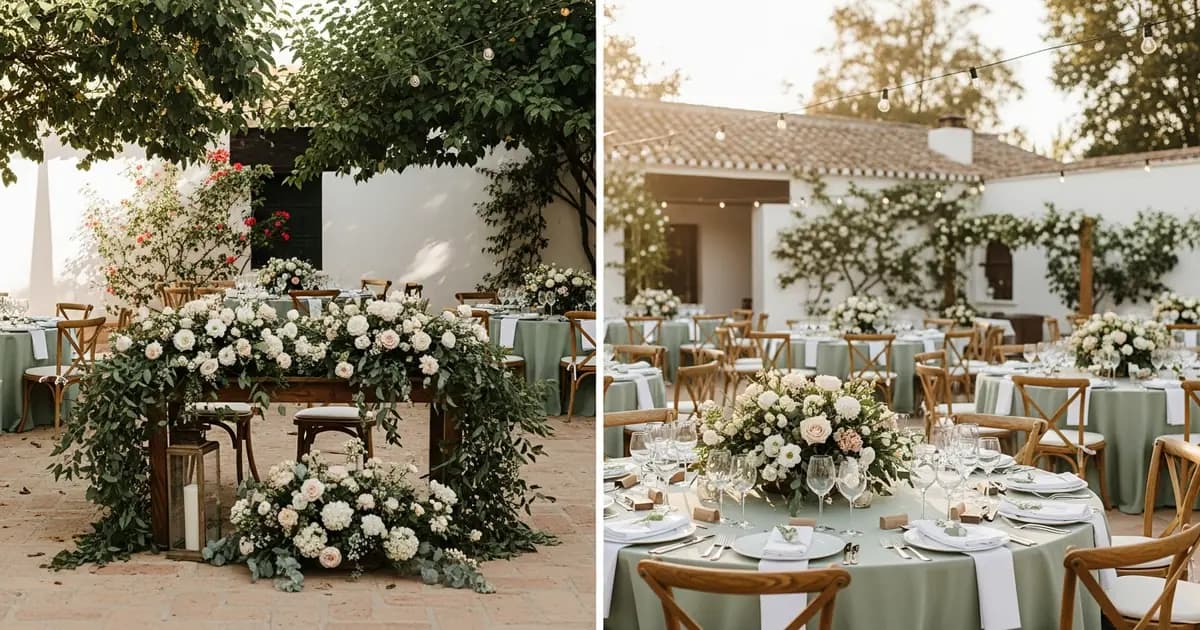
Flowers are one of the categories where overspending comes most easily. A floristry budget for an average-sized wedding can range from €800 to €3,000 depending on scale and complexity. To bring that figure down without the décor feeling sparse, the key is to concentrate the visual impact on one or two focal points: the altar or ceremony backdrop and the couple's table. The remaining tables can be dressed with simpler elements, such as candles or low-cost greenery.
Another approach is to work with seasonal, locally sourced flowers. A bridal bouquet of peonies in May or dahlias in September can be just as beautiful as one built around imported blooms, and considerably more affordable.
Suppliers: How to Negotiate Without Compromising on Quality
Requesting quotes from several suppliers for the same category
This article was reviewed by our editorial team. How we create our content
Frequently Asked Questions
Not sure which one suits you?
Try every silhouette on your own photo with Wedded's virtual try-on. The first 5 try-ons are free.


