Wedding MC: do you need one at your wedding?
A wedding MC can mean the difference between a seamless celebration and one full of awkward silences. Find out when to hire one and what they do.
Created with AI assistance and human review. Editorial standards
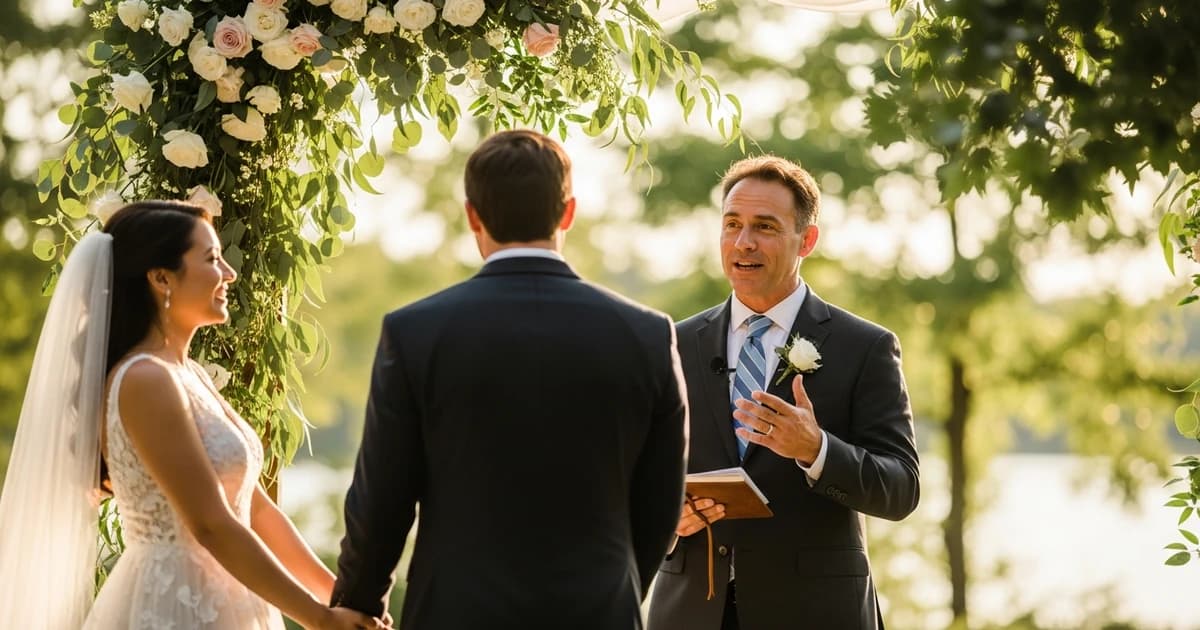
Have you ever been to a wedding where something just did not quite work, even though everything looked perfectly organised on paper? Guests glanced around not knowing where to go, the mother of the bride had been asking for ten minutes when the canapés were coming out, and the photographer was searching for the groom for the third time. That gap, at so many weddings, is filled by a master of ceremonies. Or left unfilled, which also happens.
Here is a clear look at what an MC actually does, when their presence is genuinely essential and when you can do without one entirely without anyone noticing.
Puntos clave
- A wedding MC hosts the day in front of your guests: the welcome, introductions, toasts, cake cutting and the overall pace of the evening.
- They are particularly valuable at weddings of more than 80 to 100 guests or with a structured programme of events.
- At intimate weddings with no formal structure, an MC can be perfectly unnecessary.
- Fees in the UK typically range from £600 to £2,000 depending on experience and whether the civil ceremony is included.
- Booking six to nine months in advance is ideal; leaving it to fewer than three months during peak season carries a real risk of finding no one available.
- Always ask for raw footage from a real wedding and insist on a pre-event coordination meeting with the catering team, photographer and DJ.
What a wedding MC does (and what they do not)
The master of ceremonies, also known as the MC or wedding host, is the person who guides the day in front of your guests. Their work begins when the couple arrives at the drinks reception and ends, generally, when the dance floor opens.
Their specific responsibilities include welcoming guests, introducing the couple as they enter the reception room, setting up speeches and toasts, announcing the cake cutting, coordinating the bouquet toss or any other tradition the couple wants to include, and managing the overall pace of the evening so that timings do not spiral.
What they do not do: they do not organise suppliers or negotiate contracts. They do not resolve catering crises behind the scenes. That is the territory of the wedding planner or venue coordinator. The MC works facing the room. What happens backstage is an entirely different profession.
Some professionals extend their service to the civil ceremony itself, particularly at non-religious weddings where there is no officiant to provide structure. In that case, the MC may read texts, guide the vows and introduce readings from family or friends. It is a distinct specialism worth asking about explicitly when you enquire.
When an MC is genuinely necessary
The answer depends on the size of the wedding and the format of the celebration. Two variables that, taken together, usually make it fairly clear whether an MC is essential or simply a nice-to-have.
Larger weddings, above 100 guests
With more than a hundred people, background noise and the natural spread of guests across different areas of a venue make a host almost indispensable. Without someone who can take the microphone with real authority, key moments lose their shape or arrive late: the first dance begins while half the guests are in the bathroom, the toast is announced by the DJ between two songs with varying degrees of success. According to the ONS, tens of thousands of weddings take place across the UK each year, and the continued trend towards outdoor venues, barn conversions and rural estates means receptions increasingly lack the controlled acoustics of a traditional ballroom. That kind of environment is especially grateful for someone who can command the sound and the rhythm of the room.
Weddings with a structured programme
If you have planned speeches from several family members, live performances, guest games or a sequence of surprises, you need someone to introduce and connect each one. Without that figure, the programme becomes a list of disconnected moments that the DJ announces between songs with more or less success.
When the couple are shy or simply want to be present
Some couples do not want to be watching the clock, checking whether it is time for the toast or whether the photographer has finished the family portraits. Handing that responsibility to an MC allows them to actually enjoy the celebration rather than becoming the coordinators of their own wedding day.
When you can do without one
An intimate wedding of forty people in a country house with a single room and a catering team who know the venue by heart can work beautifully without an MC. The head of service usually covers the basic announcements, and the smaller scale means everything flows naturally.
An MC is also unnecessary if the wedding has a very relaxed format with no defined programme, where the intention is for guests to move freely, eat and dance without any ceremonial structure. Introducing an MC into that context can feel forced.
The same applies to very intimate civil ceremonies at a register office, where the registrar conducts the proceedings.
All included
- Banquet venue
- Wedding Planner
- Marriage Paperwork
- Photographer
- Décor
- Flowers
- Master of Ceremonies
- Deejay
- Open Bar
What makes a great wedding MC
Speaking well is not enough on its own. A wedding MC needs something more specific: the ability to read the atmosphere instantly and adjust their tone without anyone noticing the effort, knowing when to move things along and when to let a moment breathe. And enough presence for two hundred people to listen without them having to raise their voice.
The strongest profiles tend to come from theatre, radio presenting or corporate event hosting. Before booking anyone, ask for footage from a real wedding: unedited recording of at least fifteen minutes. That is where everything shows up. How they respond when a microphone cuts out, how they handle silence, how they introduce an elderly relative who takes their time walking to the lectern.
A pre-wedding meeting is non-negotiable. An MC who does not ask you for details about your story, the names of the family members who will be speaking or the exact running order is not doing their job.
What it costs and what is included
Fees in the UK typically range from £600 to £2,000, with notable differences depending on location, the professional's experience and whether the service covers the ceremony as well as the reception. The most in-demand hosts for peak season (May to October) in London and other major cities tend to sit at the higher end.
Some MCs work in a package with the DJ, which can be more cost-effective but also carries more risk if the professional is not equally strong in both roles. Before agreeing to that format, check references specifically for their hosting work, not just their DJ sets. More on booking a DJ and what to ask before signing, in this article on why you should hire a DJ for your wedding.
Unless otherwise agreed in writing, the fee does not include long-distance travel, accommodation if the wedding is at a destination venue, or overtime if the celebration runs beyond the agreed hours. Get all of that down in the contract.
Coordinating with the rest of the team
An MC who works in isolation, without speaking to the catering team, photographer and DJ before the day, is an MC who improvises. And improvisation at a wedding has a cost: the photographer who was not ready for the toast, the waiter who starts serving the starter while the best man is still finishing his speech.
The pre-event coordination meeting, ideally in the ten days before the wedding, should include at minimum the MC, the catering floor manager and the lead photographer or videographer. If you have a wedding planner, they lead that meeting. If not, the MC should take the initiative. More on when a wedding planner genuinely changes the outcome of a wedding, here.
The day's running order, with estimated timings for each moment, is the document everyone needs to have. It does not need to be rigid to the minute, but it should be detailed enough that nobody has to ask "so what happens next?" in the middle of the evening.
An alternative worth considering: the wedding entertainer
If what you are looking for is someone to keep the energy alive during the dancing hours and run games or activities with guests, the profile you need may be a wedding entertainer rather than a traditional MC. They are distinct roles with different functions, though at mid-sized weddings they sometimes overlap. You can find everything you need in the guide to wedding entertainers.
The moment that makes it all worthwhile
If you had to choose one single moment where an MC earns their fee, it is the transition between the ceremony and the drinks reception. That fifteen-minute stretch where the couple is with the photographer taking portraits, guests do not know whether to sit or stand, and the waiting staff are taking their time to appear with the first drinks. A great MC turns that gap into a genuine welcome moment, briefly introduces the couple, gives clear directions about where the canapés are being served and makes sure nobody feels like they are simply waiting. It is a small detail with a disproportionate impact on how the whole wedding is remembered.
To close that moment well and make sure the drinks reception
This article was reviewed by our editorial team. How we create our content
Frequently Asked Questions
Not sure which one suits you?
Try every silhouette on your own photo with Wedded's virtual try-on. The first 5 try-ons are free.


