How to Choose Your Wedding Dress: Step-by-Step Guide | Wedded
From defining your style to setting your budget: everything to choose a wedding dress that fits you, your venue and your date. Guide for 2026.
Created with AI assistance and human review. Editorial standards
How to Choose Your Wedding Dress: A Step-by-Step Guide
There are decisions you make in seconds and remember for a lifetime. The wedding dress is one of them. When it is right, something clicks in a way that goes beyond fashion: you look like yourself, you feel like yourself. Getting there takes method and, above all, clarity about what actually matters. This guide walks you through each step.
Puntos clave
- Start looking 9 to 12 months before the wedding; collection dresses need 4 to 6 months of production time.
- The average off-the-rack dress in Spain costs around 2,150 euros; with basic alterations and accessories, the figure rises to approximately 2,720 euros (OCU data).
- The venue where you marry shapes the silhouette as much as your own body: an Andalusian estate calls for something different from an urban registry office.
- Define your style before setting foot in an atelier so you are not swayed by what "looks good in photos" rather than what represents you.
- The 2026 trends span from refined minimalism to three-dimensional flowers: there is room for every taste.
1. Define Your Style Before Entering Any Atelier
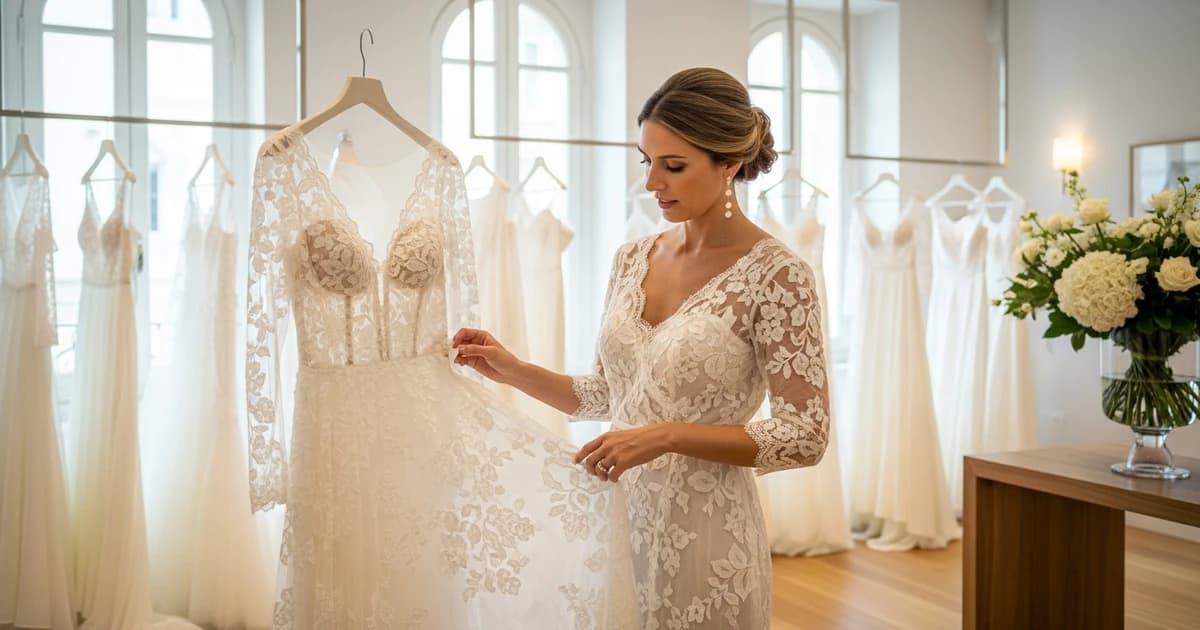
The first trap almost every bride falls into is walking into an atelier without any prior criteria. The result is almost always the same: you leave with a head full of beautiful but incompatible models and the feeling that "everything looks nice". Before booking a single appointment, take time to build a point of view.
Start by collecting images from magazines or bridal editorials and look for what they have in common. Are they all straight silhouettes? Does plain fabric dominate over lace? That pattern is your starting point.
There are two broad camps at the moment. On one side, the romantic bride who embraces the architecture of the dress, the trains and the volumes. On the other, the contemporary bride who chooses crepe, the column silhouette or the midi length. It helps to know which one you identify with before an enthusiastic sales assistant puts you in a princess dress because "it is the bestseller".
Professional tip: The Wedded dress recommender learns your style by swiping 👍 or 👎 on real models. In a few minutes you have a personalised selection you can bring to your appointments as a reference, saving time and unnecessary visits.
2. The Type of Wedding and the Venue Shape Your Choice More Than You Think
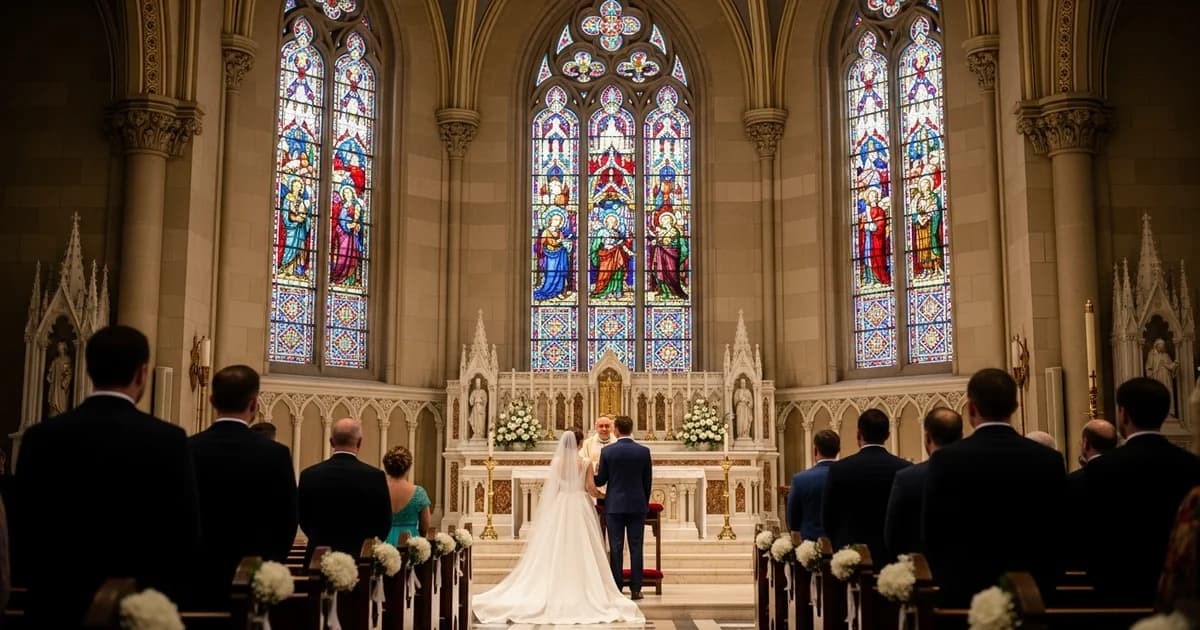
A cathedral-length train is sublime in the central nave of a Gothic cathedral or in the garden of an Andalusian estate with stone floors. On the terrace of an urban hotel, that same train can become a logistical obstacle. The space where you marry is one of the most important criteria for choosing the right silhouette.
For a church wedding or a manor house ceremony, more structured silhouettes, long trains and cathedral veils work naturally. The setting absorbs and enhances them. For a civil wedding at a registry office, an industrial space or a rooftop, cleaner designs and the column silhouette are more coherent with the context. A garden or beach wedding welcomes light fabrics such as chiffon or georgette crepe, which move with the wind.
The time of day also matters. A late afternoon or evening ceremony invites fabrics with sheen and more formal silhouettes. A morning wedding in a Sevillian courtyard calls for something fresher, with less structure.
If you are still defining the format of your celebration, keep in mind that the dress and the space need to work together. When one is already decided, the other should adapt.
3. The Budget: What a Wedding Dress Really Costs
Talking about money before falling in love with a model is the smartest decision you can make. The average off-the-rack dress in Spain costs around 2,150 euros. Adding alterations, basic accessories and possible modifications, the real figure rises to approximately 2,720 euros according to OCU data. The range is enormous: from 300 euros at outlets or second-hand shops to over 8,000 euros for haute couture and bespoke design.
If your total wedding budget were around 25,000 euros, allocating 10% to the dress and accessories would mean roughly 2,500 euros. That is the proportion the Spanish bridal industry typically recommends.
For more detail on price ranges by atelier type, see our wedding dress price guide in Spain.
A few practical points on managing the budget:
- Set a real maximum before trying on any models. Falling for something 40% above your ceiling is an avoidable situation.
- Include alterations in the budget (which can add between 150 and 400 euros depending on complexity) and basic accessories.
- Outlets from recognised brands such as Pronovias and second-hand bridal markets are completely valid options if the budget is tight.
All included
- Banquet venue
- Wedding Planner
- Marriage Paperwork
- Photographer
- Décor
- Flowers
- Master of Ceremonies
- Deejay
- Open Bar
4. Your Body Type: Flattering Yourself Without Obsessing
The bridal industry has spent decades classifying bodies into geometric categories and assigning silhouettes as if they were medical prescriptions. The reality is more nuanced. The goal is to find a dress that makes you feel powerful and recognisable.
The A-line cut is the most versatile of all: it fits at the bust and waist, and the skirt opens gently from the hips, creating a balanced proportion for almost any figure. It is the safest choice when in doubt.
Column or mermaid silhouettes emphasise the figure from top to bottom and are particularly elegant on bodies with similar proportions between shoulders and hips. If you have more volume in the lower half, a neckline with detail or embroidery draws the eye upward and creates visual balance. For straighter figures, dresses with a defined waist or volume in the skirt add definition.
Length also matters. A midi or asymmetric-length dress can be just as formal as a full-length gown if the fabric and design support it. And if you are concerned about comfort for dancing, many designs now incorporate detachable overskirts that let you move from the ceremony to the party without changing.
5. When to Start and How to Organise Appointments
The most common calendar mistake among Spanish brides is underestimating production times. A collection dress needs 4 to 6 months from order to delivery. Add to that the time for alterations, which can extend between 4 and 8 weeks depending on complexity and the atelier's schedule.
The industry recommendation is clear: start looking 9 to 12 months before the wedding. If your wedding is in peak season (May, June, September or October), aim closer to the 12-month end. The most sought-after ateliers in cities like Madrid, Barcelona or Seville have very full diaries during those periods.
To organise appointments efficiently:
- Limit your first visits to three or four ateliers at most. More than that generates saturation and confusion.
- Bring one or two trusted people with you, not a large group. Too many simultaneous opinions make it harder to hear your own.
- Book weekday appointments if you can: the attention is more personalised and there is less time pressure.
- Bring reference photos and, if possible, the underwear you plan to wear on the wedding day.
Remember that bridal shoes need to be decided before the final fitting, since heel height directly affects the dress length.
6. 2026 Trends: What the Labels Propose and What Actually Lasts
Trends are a useful reference. Knowing them helps you understand the visual vocabulary of the moment and decide consciously whether you want to follow it or step away.
For 2026, Elle España and the leading Spanish labels agree on several clear directions. Refined minimalism remains the strongest current: crepe dresses with clean lines and no superfluous ornament, where the cut and fabric quality say everything. It is, in our view, the most elegant trend and the one that ages best in photographs.
At the other end, three-dimensional flowers applied to bodices and skirts lead the most romantic collections. Fernando Claro and other Spanish labels have made a strong commitment to this floral language that connects with the artisan embroidery tradition of the country.
Other relevant movements of the season:
- The square neckline as a symbol of contemporary elegance, in both structured and softer versions.
- Detachable overskirts and capes that allow two looks in a single day.
- The midi length, gaining ground especially for civil weddings and intimate celebrations.
- Bridal veils are back in force: from the short cage-style veil for urban brides to the cathedral veil for large religious ceremonies.
What never goes out of fashion is coherence. A dress that makes sense with the space, the time of day and who you are has a better chance of being perfect than any model that is simply "what everyone is wearing".
Conclusion
Choosing a wedding dress is, at its core, an exercise in self-knowledge. The questions you ask yourself during the process, what makes you feel good, what image you want to project, what memory you want to keep, go far beyond fashion. Take the time you need. Visit the ateliers with curiosity, allow yourself to try models you would not have chosen from a catalogue. And when that dress appears, you will usually know before anyone says a word.
Years from now, when you look at the photos, you will see the dress. You will also see the person you were when you chose it.
Related Reading
This article was reviewed by our editorial team. How we create our content
Frequently Asked Questions
Not sure which one suits you?
Try every silhouette on your own photo with Wedded's virtual try-on. The first 5 try-ons are free.