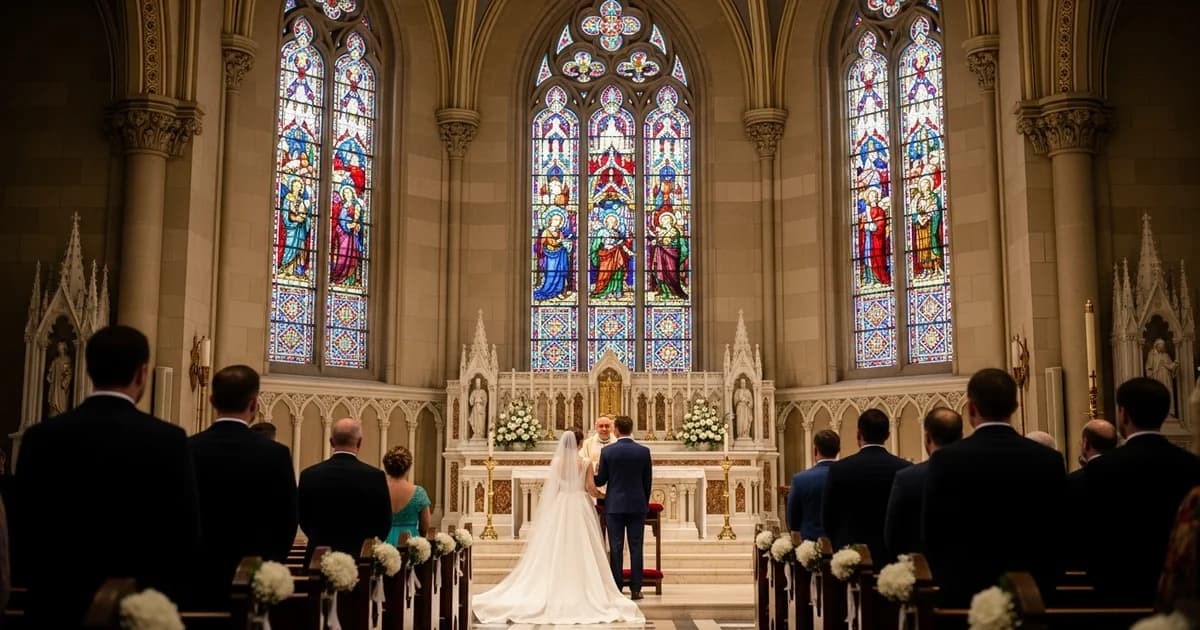
Civil vs religious wedding: key differences
Civil or religious wedding: we walk through requirements, costs, timelines and legal differences so you can choose the ceremony that suits you best.
Created with AI assistance and human review. Editorial standards
Key points
- In Spain, more than 60 per cent of marriages are celebrated through the civil route (INE, 2023); religious weddings remain entirely valid and both produce the same legal effects.
- A Catholic wedding has direct civil effects thanks to the Agreement with the Holy See of 1979; other recognised denominations (evangelical, Islamic, Jewish) also produce civil effects.
- A civil wedding can take place before the Civil Registry, the town hall or a notary. No fees at the registry; between €100 and €200 before a notary.
- A Catholic wedding requires a canonical file, a pre-marriage course and between six and twelve months of advance planning. Parish fees: between €300 and €800 depending on the diocese.
- A symbolic ceremony has no legal validity; it works as a complement for couples who are already married civilly and want a personalised celebration.
- In practice, timelines and paperwork tend to carry more weight in the decision than faith or budget.
Every year in Spain, more than 60 per cent of marriages are celebrated through the civil route, according to INE data from 2023. Two decades ago that proportion was almost exactly reversed. Couples today are clear that both options are legitimate and that the choice comes down to personal conviction, family expectations and, in many cases, pure logistics.
Below we walk through the real differences between the two: what paperwork each route requires, how long it takes to process, what direct costs the ceremony itself involves and what legal implications are worth understanding before you decide.
Legal aspects: validity and recognition
In Spain, a civil marriage and a Catholic marriage produce exactly the same legal effects. Both are recorded in the Civil Registry and generate the same rights and obligations between spouses. The difference lies in the path taken to get there.
A canonical marriage has direct civil effects under the Agreement between the Spanish State and the Holy See of 1979, published in the BOE. No subsequent civil procedure is needed: the parish notifies the Civil Registry of the celebration and registration takes place automatically.
Other religious denominations can also produce civil effects, provided they are recognised by the State. The evangelical, Islamic and Jewish denominations have held that recognition since Law 25/1992 and its equivalents. For any other denomination, it is worth checking its status in the Ministry of Justice Register of Religious Entities before assuming the ceremony will carry automatic legal validity.
Civil wedding: procedures and where to hold it
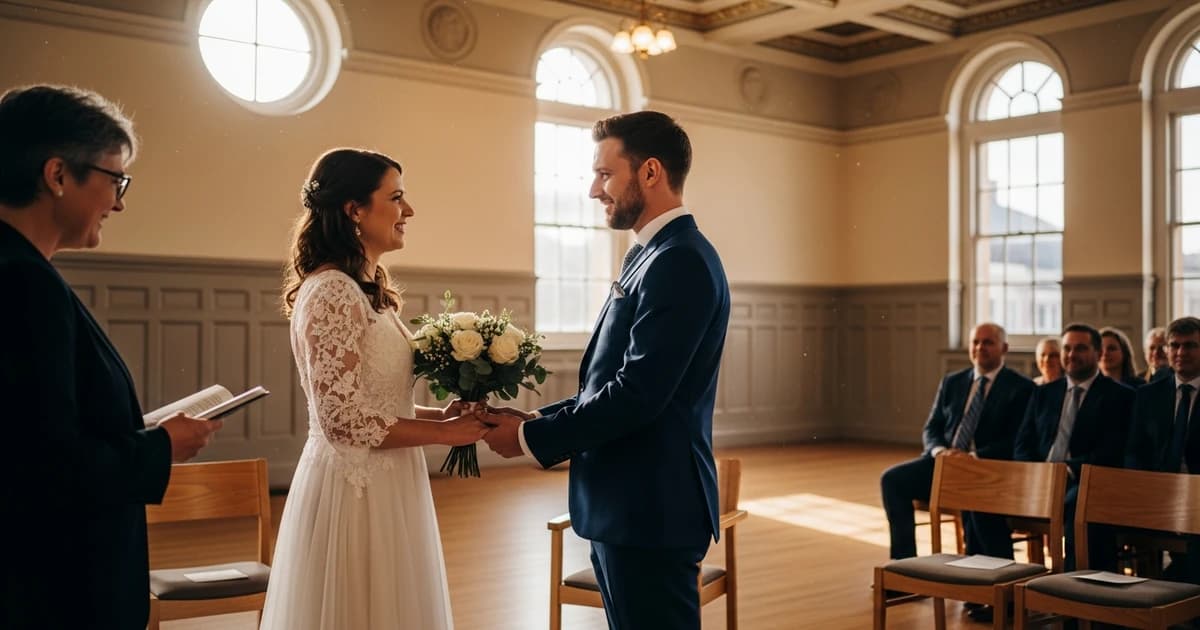
A civil wedding can take place before the Civil Registry, the town hall (with its mayor or delegated councillor) or a notary. Each route has its own timelines and nuances.
Civil Registry and justice of the peace
This is the most traditional route and, in smaller municipalities, the most accessible. The marriage file is opened at the Civil Registry in the municipality where either of the couple is registered as a resident. The period from submitting the paperwork to receiving a favourable resolution is typically two to four months, though in large cities it can take longer. Once the file is approved, the ceremony date is set.
There are no fees for this route. The setting, however, is worth thinking about in advance: a registry office or town hall chamber is not always the backdrop a couple has in mind for their wedding day.
Marriage before a notary
Since the reform of the Civil Registry Act in 2021, a notary can authorise civil marriages. Scheduling tends to be more flexible and the notary's office usually offers a more personal experience. Notarial fees are regulated by official tariff, with an approximate cost of between €100 and €200 for the marriage deed, according to the General Council of Notaries.
For the full list of documents you will need through either of these routes, the detail is here: documentation for a civil wedding.
Catholic wedding: timelines, procedures and protocol
A church wedding requires more advance planning than a civil one. The process involves several steps that cannot be compressed, so it is worth starting earlier than you might think necessary.
The canonical file and the pre-marriage course
The first step is to contact the parish where you wish to marry, normally the parish of one of the couple or the one covering the area where you live. The parish opens the canonical marriage file, which includes baptism certificates (issued no more than six months before the application), a certificate of single status and, in most dioceses, a confirmation certificate.
The pre-marriage course is compulsory in virtually every Spanish diocese. It typically runs over four to eight sessions, organised through the parish itself or the deanery. Some dioceses allow partial completion online, though in-person attendance remains the norm.
The total period from first contact with the parish to the wedding is usually six to twelve months. Booking a church with fewer than six months to go during peak season (May to October) is a risk not worth taking.
Parish fees and direct costs
Parish fees are not set at a national level: each diocese establishes its own. As a guide, the cost of the ceremony itself ranges from €300 to €800, depending on the diocese and whether additional services managed directly by the parish are included, such as an organist or altar flowers.
For a full guide to the protocol on the day itself, more detail is here: guide to Catholic wedding protocol.
All included
- Banquet venue
- Wedding Planner
- Marriage Paperwork
- Photographer
- Décor
- Flowers
- Master of Ceremonies
- Deejay
- Open Bar
Documentation comparison
This is where the most practical differences between the two routes become apparent.
For a civil wedding you will generally need: a national ID card or passport, a certificate of residence, a full birth certificate, a declaration of single status and, if either partner has been married before, the divorce decree or the death certificate of the previous spouse.
For a Catholic wedding, church-specific documents are added: a recent baptism certificate, a canonical certificate of single status, a confirmation certificate and, in some cases, a dispensation if a canonical impediment exists (such as a family relationship, difference of faith or a previous marriage that has not been annulled).
The documentation required for a Catholic wedding is set out in more detail in this article on the necessary paperwork.
Costs: what the ceremony costs, not the wedding
The cost of the ceremony and the total cost of the wedding are frequently conflated, and separating them from the outset helps avoid surprises later.
Civil wedding at the Civil Registry or registry office: no fees. The ceremony itself costs nothing.
Civil wedding before a notary: between €100 and €200 in notarial fees.
Catholic wedding: between €300 and €800 in parish fees, depending on the diocese and the services included.
What drives the budget up in either case is the venue. A couple who marry at the registry office but then hire a private estate for the reception will spend as much or more on the venue as a couple who marry in a historic church with use of the cloister included. When you look at the full budget, the ceremony itself accounts for a relatively small share of the total; the reception, the venue and the suppliers are where the major costs accumulate.
Symbolic ceremonies: the third option that has no legal standing
There is a third route that an increasing number of couples choose as a complement: the symbolic ceremony. It carries no legal validity, but it allows couples who are already married civilly to hold a personalised celebration in any setting, with an officiant of their choosing, free from religious protocol and the scheduling constraints of a registry office.
A symbolic ceremony works particularly well when a couple wants to complete the legal formalities quickly (before a notary, for example) and then organise the celebration with more time and creative freedom. Its function is to complement, not to replace, either of the other two legal routes.
Questions worth asking before you decide
Beyond the paperwork, the choice between a civil and a religious wedding usually comes down to some very specific questions that are worth working through together before speaking to the Civil Registry or the parish.
Does faith or family tradition form part of what you want to celebrate on that day? Is there family pressure in either direction, and how do you want to navigate it? Is the setting you picture for your ceremony a church, a garden or an institutional hall? Do you have six months or more for the canonical file, or do your timelines push you towards the civil route? One practical consideration that often gets overlooked: the two routes differ significantly in how much freedom you have over music. A civil ceremony allows any repertoire; a religious one comes with parish-by-parish restrictions that affect what a live ensemble can perform at the ceremony.
There is no universal answer. There are deeply devout couples who marry civilly, and couples with no religious practice who marry in church because it is what their family has always done. The paperwork is the same for everyone; what changes is the meaning you bring to it.
If you want to see how these ceremony differences play out across the full shape of the day, how long a wedding lasts by ceremony type breaks them down section by section.
This article was reviewed by our editorial team. How we create our content
Frequently Asked Questions
Not sure which one suits you?
Try every silhouette on your own photo with Wedded's virtual try-on. The first 5 try-ons are free.