Types of Wedding Veils: Length, Fabric & Style Guide | Wedded
Cathedral, mantilla, blusher, elbow... Every wedding veil type explained by length, fabric and style so you can choose the one that truly speaks to you.
Created with AI assistance and human review. Editorial standards
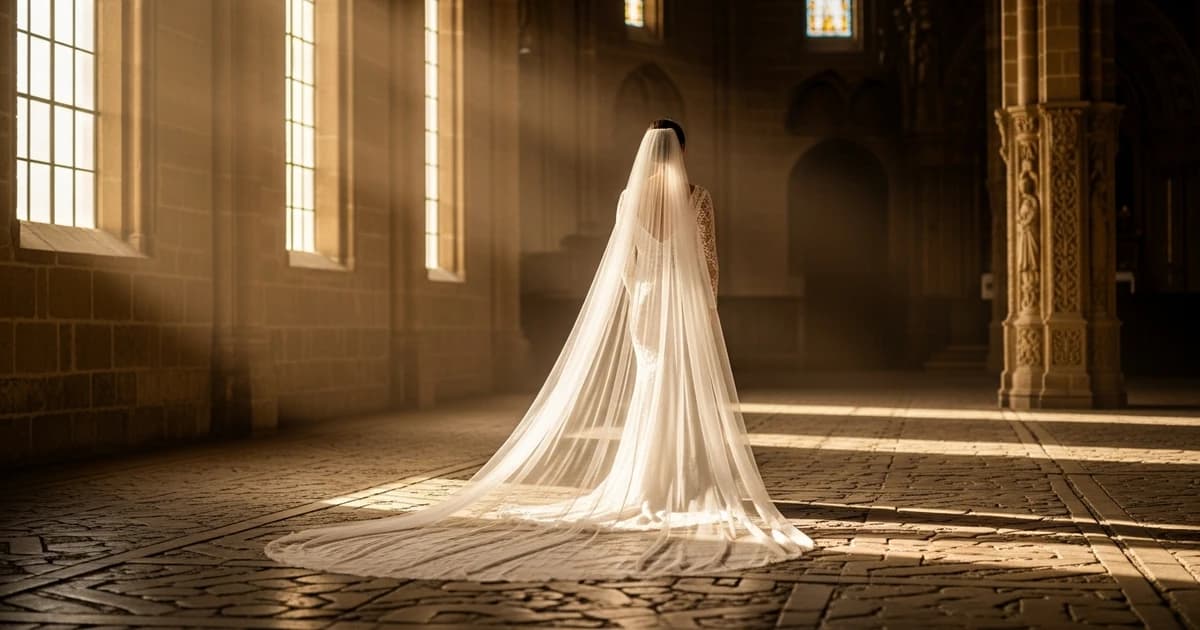
The veil is, arguably, the accessory that most transforms a bridal look. The same gown can feel intimate and romantic with a silk-tulle elbow veil, or utterly monumental with a lace-edged cathedral one. The difference is not only about length: the fabric, the trim and the placement completely change the spirit of the image. Here is a guide to every type, from shortest to longest, with the details rarely discussed in bridal boutiques.
Blusher: the shortest veil, the most symbolic
Measuring between 30 and 45 cm, the blusher covers the bride's face during the processional. It is the most symbolically loaded piece in the entire bridal look: the moment when a partner or father lifts the veil is part of the visual ritual of almost any wedding, regardless of tradition.
Alone or layered
The blusher can be worn on its own as the sole veil, which creates a very contemporary, clean result. It can also serve as the top layer of a two-tier veil: the short layer covers the face while the longer one falls down the back. In this case, both layers should be in the same fabric so the drape is uniform.
When it works best
With a low-cut neckline or a mermaid silhouette, a blusher alone balances the look without adding volume at the hem. It is also the standard choice for brief civil ceremonies or intimate spaces where a long veil would feel excessive.
Shoulder and elbow veils: versatility above all
Between 60 and 90 cm, these two lengths are the most versatile in the bridal repertoire. The shoulder veil falls at or just below the shoulders; the elbow veil reaches, as its name suggests, the elbow.
Why more brides are choosing them
Collections shown at Barcelona Bridal Fashion Week in recent years have established these lengths as a primary option for daytime weddings, outdoor ceremonies and bridal looks built around trainless gowns. They do not compete with the dress silhouette — they frame it. Paired with a structured mikado gown or a voluminous organza skirt, an elbow veil in fine tulle acts as a weightless counterpoint.
Trim and fabric
At these lengths, the trim matters more than on longer veils because it is visible throughout the day. A raw-cut edge (very fine zigzag) gives an almost invisible finish. A rolled silk-thread hem adds presence without weight. Lace trim only works if the gown also features lace; otherwise it can break the visual coherence of the look.
Chapel veil: the elegant middle ground
Measuring between 120 and 150 cm, the chapel veil just grazes the floor without trailing. It is the most elegant length for weddings that are not strictly ceremonial but not informal either: civil ceremonies in architecturally interesting spaces, private gardens or stone-floored country estates.
Which gowns it pairs with
It works especially well with A-line gowns or those with a short train. With a mermaid silhouette, a chapel veil can create a confused visual line if not positioned correctly; in that case it is worth placing it higher on the crown so it falls cleanly down the back.
Fabrics for a chapel veil
Silk tulle at this length is almost ethereal — it moves with any breeze and photographs beautifully. Organza gives more body and is a better choice for outdoor weddings where wind is a factor. Chantilly lace in a chapel veil is one of the most timeless combinations in Spanish bridal fashion, particularly for weddings in the south.
Cathedral veil: the statement piece
Between 2.5 and 3.5 metres from the hairstyle to the tip. The cathedral veil is the most photographed, the most dramatic in practice and the one that most transforms a bride's entrance. It is not just an accessory: it is architecture.
When it makes sense
A cathedral veil makes sense in venues with enough space for the train to unfurl: churches, cathedrals, ballrooms in historic palaces, the stone-paved courtyards of an Andalusian cortijo. In a conventionally sized restaurant or at a beach wedding, it can be difficult to manage and lose all its grandeur.
Details that make the difference
Cathedral veils with lace appliqué along the hem (the so-called "cathedral edge") are the most common in the Spanish market. Brands like Pronovias have spent decades perfecting this finish, and the reason is simple: when the bride stands at the altar, the veil's hem is what guests see from the pews. A well-executed embroidery along that edge turns the veil into a piece of textile craftsmanship.
Logistics nobody mentions
A cathedral veil requires at least two people to place it correctly before the processional. The hairstyle must be secure — a half-up or full updo — so the weight does not shift it. It is worth rehearsing the entrance at least once with the veil on: the length changes the pace of the walk and the distance between the bride and her escort.
All included
- Banquet venue
- Wedding Planner
- Marriage Paperwork
- Photographer
- Décor
- Flowers
- Master of Ceremonies
- Deejay
- Open Bar
Mantilla: the veil with its own identity
The mantilla is not a veil in the conventional technical sense: it is a piece of lace, typically in white, ivory or black, placed directly over the hairstyle with a comb or hairpins. It has no tulle structure; its body comes from the lace itself.
History and relevance today
The Spanish mantilla has roots in 17th-century dress and was for decades the bridal accessory of choice in Spain. Today it coexists with tulle veils in the market, but holds a singular position: it is the only bridal piece that functions simultaneously as veil, headpiece and textile jewel.
How to wear it today
Brides choosing the mantilla in 2025 and 2026 wear it in two ways. The first, the most classic: a long mantilla (cathedral length) in Chantilly or Alençon lace over an A-line or princess gown, with a tortoiseshell or silver comb. The second, more contemporary: a short mantilla (shoulder or elbow length) over a minimalist gown, without a comb, secured with discreet hairpins. This second approach appears regularly in bridal collections shown at Barcelona Bridal Fashion Week since 2022.
A detail rarely mentioned
An authentic lace mantilla (Chantilly, Alençon, Valenciennes) is considerably more expensive than a tulle veil with appliqué. A quality piece in artisan lace can cost between 400 and 1,500 €, compared with 80-350 € for a well-made tulle veil. If the budget is tight, machine-made lace alternatives deliver very good photographic results.
Fabrics: the most underestimated decision
Length is the first choice, but fabric determines how a veil moves, how it falls and how it reads in photographs.
Silk tulle
The lightest and most photogenic fabric. Its transparency is almost total, creating the "cloud" effect seen in high-end editorial photography. The drawback: it creases easily and requires more care during transport and placement.
Polyester tulle
More durable and more affordable than silk. The quality difference is noticeable in person but less obvious in photographs. For weddings with a controlled budget, a good-density polyester tulle (not the costume-veil variety) delivers very respectable results.
Organza
Stiffer and more structured than tulle. It gives the veil body and makes it less susceptible to wind, making it the best option for outdoor ceremonies. Its drape is more geometric and less ethereal; it works especially well with structured silhouette gowns.
Lace (Chantilly, Alençon, Valenciennes)
Used mainly in mantillas and along the hems of chapel or cathedral veils. Chantilly lace, with its net ground and floral motifs, is the most common in the Spanish market. Alençon, with its corded outline around each motif, is more elaborate and more expensive. Valenciennes, with its denser weave, is the most durable of the three.
How to choose your veil: three questions before you decide
Before trying on any veil, it is worth having three things clear.
What is the ceremony space like? A cathedral veil in a small rural chapel can be hard to manage. A blusher in a cathedral with a long nave can look insignificant. The venue dictates the minimum and maximum length that makes sense.
What silhouette does the gown have? Gowns with intricate back detail — deep V-backs, bows, mother-of-pearl buttons — look better with long, plain veils that do not compete with that detail. Minimalist gowns carry embroidered or lace-edged veils well.
What hairstyle will you wear? Long veils need an updo or half-up style so the weight is well distributed. Short veils work with any hairstyle, including fully loose hair.
If you are still defining the gown, Wedded's free dress recommender can help you identify the silhouette that best fits your style before you think about the veil: swipe through designs, the app learns your preferences and suggests gowns aligned with your taste. Once the silhouette is clear, choosing the veil becomes much more straightforward.
Conclusion
The veil is not a secondary accessory: it is the piece that ultimately defines whether a wedding feels intimate, romantic, grand or contemporary. Length matters, but fabric and trim matter equally. The best time to decide is after the gown is confirmed, with a rough idea of the hairstyle in mind and at least one visit to the ceremony venue under your belt. The best bridal decisions are not made in haste or by trend — they are made with your own clear criteria.
Related Reading
This article was reviewed by our editorial team. How we create our content
Frequently Asked Questions
Not sure which one suits you?
Try every silhouette on your own photo with Wedded's virtual try-on. The first 5 try-ons are free.