Wedding Shoes 2026: Types, Prices and How to Choose | Wedded
Complete guide to wedding shoes in 2026: heel types, materials, how to pair them with your dress and average prices in Spain. Choose with confidence.
Created with AI assistance and human review. Editorial standards
Wedding Shoes: The Complete Guide to Choosing Yours
Brides often leave footwear until the dress is almost finalised. And there is the problem: the hem is adjusted to the exact heel you will be wearing, so if you arrive at the first fitting without shoes, you will have to go back. A wedding runs eight to twelve hours, and the shoes you choose are crucial for arriving at the dance floor with energy rather than with ruined feet. Here is a breakdown of heel types, which materials hold up best through the day, and how to pair them with the dress.
Puntos clave
- Wedding shoes in Spain cost between 80 and 400 euros depending on brand and material. Specialist bridal labels sit between 150 and 350 euros.
- Block heels and wedges are the most stable for long weddings or outdoor venues. Stilettos demand firm surfaces.
- Buy your shoes before your first dress fitting: the hem is adjusted to the exact heel height.
- Colour can go well beyond white: ivory, champagne, nude, silver and gold are equally bridal in 2026.
- Many brides buy a second flat pair for dancing (30 to 80 euros). Worth keeping in mind when setting the budget.
Heel Types: Which One Suits Your Wedding
Heel height and base width affect stability over hours of standing and dancing, not just the aesthetic.
Stiletto
The most iconic silhouette in bridal fashion. A thin heel between 7 and 12 cm that lengthens the leg and gives a very defined line. Works well indoors on smooth floors, like hotel ballrooms or churches with wooden floors. For outdoor venues or estates with grass, it can sink or destabilise. Note: if you choose it, carry heel protectors for soft surfaces.
Block Heel
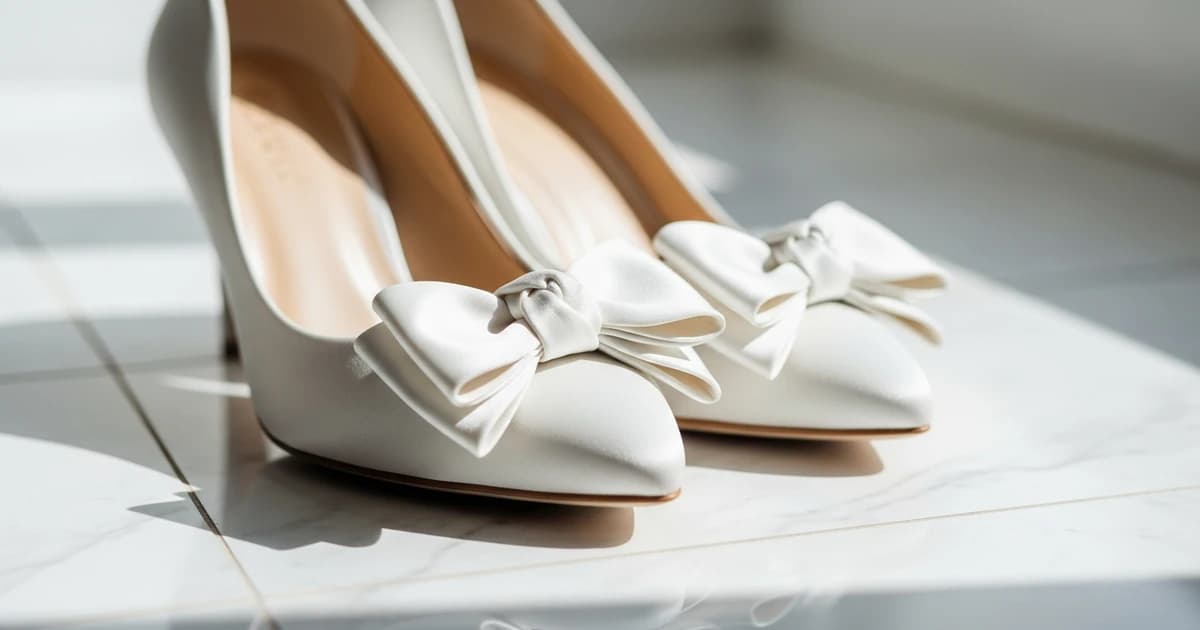
The wide base distributes weight more evenly and reduces fatigue. Vogue España highlights the block heel in nude and ivory tones with bow or discreet crystal details as a key 2026 trend. For weddings with outdoor sections, it is the most practical option without sacrificing height.
Kitten Heel
Between 3 and 5 cm, with a slim but short heel. Classic and elegant, very popular for civil ceremonies or more intimate celebrations. It suits almost every height and is much more comfortable for a full day than the stiletto.
Wedge
The most practical choice for outdoor weddings: gardens, beaches or Andalusian courtyards. Weight is distributed across the whole sole, eliminating the risk of sinking into soft ground. Esparto or jute wedges work particularly well for summer or Mediterranean-style weddings.
Flats and Ballet Pumps
Increasingly present at contemporary weddings. Crystal-embellished mules or satin ballet pumps are a choice Telva identifies as one of the clearest trends for brides who want comfort above all. They work especially well with short dresses or column silhouettes.
Materials: Which Holds Up Best Through the Day
The material determines the visual finish and how well the shoe adapts to your foot over the course of the celebration.
Satin
The most widely used material in bridal shoes for its luxurious finish and how it catches the light. It can also be dyed to match the exact colour of a dress. It is delicate: it stains easily and does not cope well with rain or mud, so best reserved for indoor venues or weather-controlled settings.
Natural Leather
More durable and breathable than satin. With wear, leather moulds to the foot and becomes more comfortable as the day goes on. The best option if the wedding moves between indoor and outdoor settings or involves many hours on your feet.
Lace
Pairs well with lace dresses or bardot and off-shoulder necklines, and gives the whole look a distinctly romantic feel. As Hola notes, lace on bridal footwear is back in 2026, particularly on toes and heels. Worth noting: it requires more care and is more susceptible to scuffing and staining.
Suede and Velvet
Materials with strong character, more suited to autumn or winter weddings. Suede in nude or camel gives an elegant and distinctive result. Velvet in black or burgundy works well for intimate weddings or evening celebrations.
Pairing Shoes with the Dress
The shoes should complement the dress, not compete with it. Here are the key rules by silhouette.
Full-Length Gown with Train
The shoe is barely visible, so absolute priority goes to comfort. A mid heel (between 5 and 7 cm) or even a kitten heel provides enough height for the hem. It is worth investing in comfort even if the shoe is less spectacular.
Short or Midi Dress
The shoe becomes the focal point. A shoe with personality or a striking bow can become the most photographed accessory of the day. Pay attention to the level of ornamentation: if the dress has embroidery or volume, choose a cleaner shoe.
Mermaid or Column Silhouette
A fitted silhouette calls for a heel that elongates. A stiletto or slim block heel works well. A wedge can break the line, best avoided here.
Full-Volume Dress (Princess, Ball Gown)
The volume of the dress can make the shoe disappear. A high heel helps maintain height under all that fabric. Nude or ivory tones visually lengthen the leg even when the shoe is only glimpsed between the folds.
Before deciding, it is a good idea to picture the complete look. Wedded's virtual try-on lets you see the full dress on a full-body photo of yourself, which makes it much easier to see how a particular shoe choice works with the silhouette before buying anything.
If you are still choosing the dress itself, the article on wedding dress prices breaks down exactly where each euro goes.
All included
- Banquet venue
- Wedding Planner
- Marriage Paperwork
- Photographer
- Décor
- Flowers
- Master of Ceremonies
- Deejay
- Open Bar
Average Prices in Spain 2026
The budget for wedding shoes in Spain varies considerably by purchase channel and brand. These are the real market ranges for 2026:
- General fashion (Mango, Zara, Massimo Dutti): between 60 and 120 euros
- Specialist bridal brands (Pronovias, Rosa Clará, Alma en Pena): between 150 and 350 euros
- Spanish independent designers: between 300 and 600 euros
- International labels (Jimmy Choo, Manolo Blahnik, Aquazzura): between 500 and 1,200 euros
The average spend by a Spanish bride on footwear tends to sit between 150 and 250 euros, based on the standard price ranges of brands in the sector. Many brides also buy a second flat pair for the dance floor, which can add 30 to 80 euros. Worth keeping in mind when setting the budget.
Popular Brands in Spain
Specialist Bridal Labels
Pronovias and Rosa Clará are the two main references in the Spanish market. Both offer shoe collections coordinated with their dresses, which simplifies matching. Prices range from 150 to 350 euros.
Alma en Pena is a Spanish label well known in the bridal world for designs featuring crystals and bows. Average price: between 180 and 280 euros.
General Fashion Labels with Strong Bridal Options
Mango and Massimo Dutti offer elegant options in satin or leather at more accessible prices (60 to 150 euros). A good option for brides on a tighter budget or for the second dance-floor pair.
International Reference Labels
Jimmy Choo, Manolo Blahnik and Aquazzura are the names that appear at couture weddings. Prices start at 500 euros and can exceed 1,000 euros. Worth it when the dress is also couture and the shoe will be seen.
When and How to Buy
The timing of the purchase matters as much as the model chosen.
Before the First Dress Fitting
The hem of the dress is adjusted to the exact heel you will wear on the day. Buying shoes after the fittings means returning to the boutique to re-adjust the length. Buying them first saves time and money.
With Time to Break Them In
Three months before the wedding is the minimum. Wear them at home on hard floors for short periods to soften the material and identify any rubbing points. The most common problem areas are the heel and the instep.
At the Right Time of Day
Feet swell over the course of the day. The best time to try on shoes is in the afternoon, when the foot is at its largest, to ensure the fit is still right during the final hours of the celebration.
To complete the look, types of wedding veil and bridal hairstyles are the two other accessories that most influence the overall silhouette.
Conclusion
It is easy to be led by aesthetics alone, but choosing wedding shoes is a balance between style and comfort. Once you know the terrain and the length of the day, the heel type picks itself. Match the model to the dress silhouette, set the budget and remember to leave room for the second pair for the dance floor. In Spain, 150 to 250 euros covers most quality options. And if you are still picturing the complete look, Wedded's virtual try-on lets you see the full dress on a full-body photo of yourself before making any decisions.
Related Reading
This article was reviewed by our editorial team. How we create our content
Frequently Asked Questions
Not sure which one suits you?
Try every silhouette on your own photo with Wedded's virtual try-on. The first 5 try-ons are free.