Bridesmaids: a complete guide for the bride
Everything you need to know about bridesmaids: how many to choose, what their role involves, how to dress them and how to manage the group without the drama.
Created with AI assistance and human review. Editorial standards
Key points
- For an average-sized wedding, two to four bridesmaids tends to work well. An excessive number of bridesmaids does not always improve the organisation and can in fact complicate it.
- Their role is one of support and has a strong symbolic dimension. Logistics and supplier coordination belong with your wedding planner.
- The dress question causes more friction than you might expect: choose the colour and style yourself, give yourself plenty of time, and communicate your decision in writing.
- Appoint a lead bridesmaid as your main point of contact. Managing a group of six people entirely through yourself is exhausting.
- Ask with enough notice: being a bridesmaid involves a genuine financial commitment, a real investment of time and the need to hold dates in the diary well in advance.
When people ask whether having bridesmaids makes wedding planning more complicated, the answer is always the same: it depends entirely on what you ask of them. The tradition has existed in various forms for a long time, though until relatively recently it tended to be associated with very formal weddings or those with strong Anglo-American influences. Today it is part of celebrations of every size and style. Below, we look at what each bridesmaid's role actually involves, how to choose them, how to coordinate their looks and where the friction tends to appear before it becomes a real problem.
What a bridesmaid is, and what she is not
A bridesmaid accompanies the bride at the key moments of the day: the processional into the ceremony space, the formal bridal party photographs and, in many cases, the hen party. Her role has clear limits. Confusing her with an event coordinator is the single biggest source of tension between brides and their bridesmaids, and this is not a theoretical observation: friendships of fifteen years have been strained by expectations that were never properly discussed.
The role has two dimensions. The first is symbolic: a bridesmaid represents the people closest to the bride, those who have been present at the most significant moments of her life. The second is practical: she handles small emergencies on the day, such as holding the bouquet during the ceremony or reminding the bridal party where they need to be and when.
What falls outside her default responsibilities is pure logistics. Coordinating suppliers or managing the overall running of the day is not her job. If you need support with those tasks, hire a wedding planner.
How many to choose, and why the number matters
There is no universally correct figure, but the number does have practical consequences. Each additional bridesmaid complicates the group conversations and the dress decisions and, beyond that, increases the likelihood that someone will not be able to attend one of the pre-wedding events.
For an average-sized wedding, two to four bridesmaids tends to work well. More intimate celebrations are usually well served by one or two; larger weddings of more than 200 guests can accommodate up to six without the bridal party feeling overwhelming.
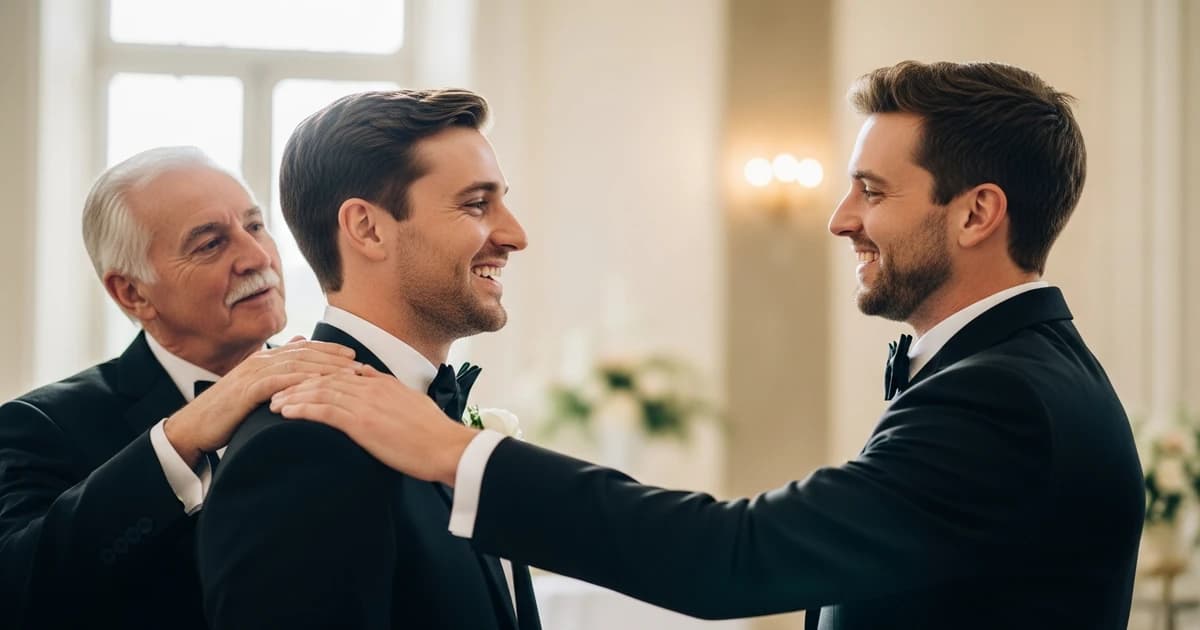
If the groom has groomsmen walking in parallel, it is worth keeping the two groups roughly equal in number so that the photographs and the processional look balanced. Photographers will thank you for it.
How to ask: the bridesmaid proposal
The custom of making a formal request, with a small gift box or a personalised note, has become widely recognised and no longer surprises anyone. If that appeals to you, go for it. A sincere conversation in person works just as well and can feel more genuine.
What matters most is the timing: ask with enough notice for the person to properly consider the commitment. Being a bridesmaid involves real expenditure (dress, possibly travel, the hen party) and dates that need to be held in the diary. Asking someone who lives in another city with three months to go puts her in a very difficult position.
When you make the ask, be clear about what you expect. Do not assume that everyone already knows what the role involves. Explain briefly which events you need her to attend, whether there is a coordinated look, and what the approximate dress budget will be.
The outfits: coordinated without being a uniform
This is the point that generates the most debate in any wedding group chat. Options range from a fully matching uniform to complete freedom for each bridesmaid to wear whatever she likes within a colour palette.
Neither approach is inherently better; it depends on the style of the wedding and your relationship with each bridesmaid. What is worth avoiding is ambiguity: if you say "something in a nude tone" and leave it at that, you will end up with five different shades that do not sit together and bridesmaids who feel they made the wrong call.
Some approaches that genuinely work well:
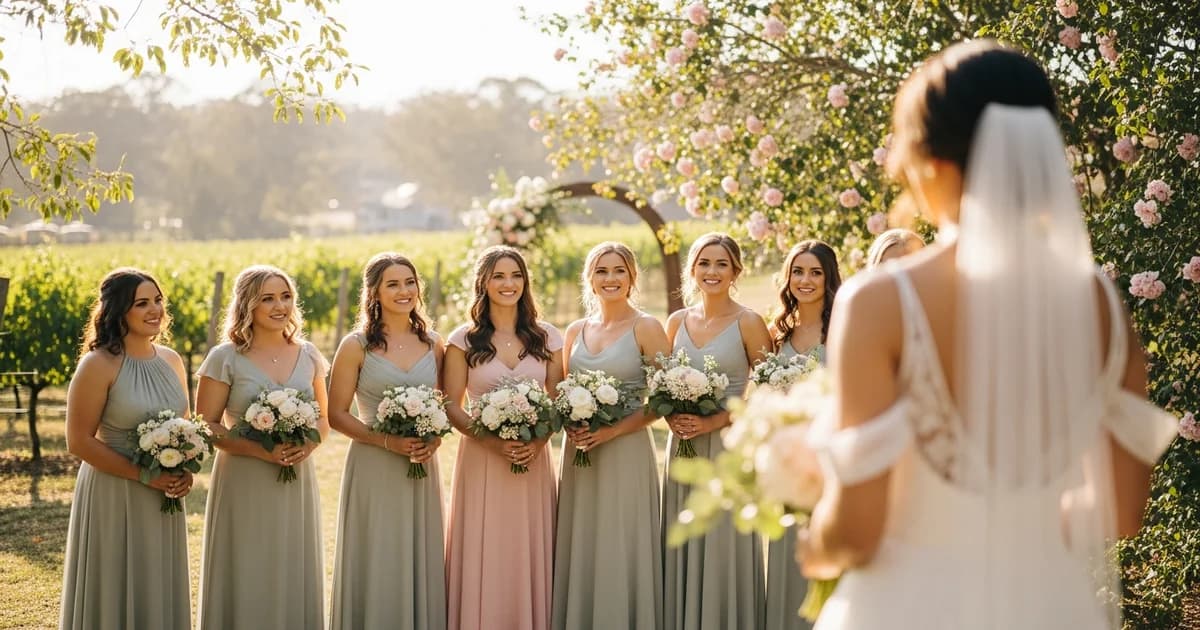
Same colour, free silhouette. You choose a colour or a colour family (terracotta, slate blue) and each bridesmaid picks the style that suits her best. The result is cohesive without being regimented.
Same fabric, free colour within a family. Everyone in satin or crepe, but in different shades of the same palette. This photographs beautifully and allows each bridesmaid to wear the tone that flatters her most.
One dress for everyone. This requires the style to be genuinely flattering across different body types, which is hard to achieve with a single design. If you go down this route, choose a dress with a wide size range and a fabric with some give.
On the question of who pays: if you are specifying a particular dress at a high price point, it is reasonable to cover part of the cost. If you are giving freedom of choice within a colour family, each bridesmaid covers her own. Discuss this before anyone has already bought anything.
All included
- Banquet venue
- Wedding Planner
- Marriage Paperwork
- Photographer
- Décor
- Flowers
- Master of Ceremonies
- Deejay
- Open Bar
Their responsibilities: before, during and after
Before the wedding
The lead bridesmaid (or maid of honour) typically organises the hen party. This has evolved considerably: it might be a weekend away, or a special dinner out, or simply any plan that suits the group without anyone feeling obliged to end up in a nightclub if that is not their idea of fun. She handles the basic logistics, collects contributions and manages expectations within the group.
She may also accompany the bride to a dress fitting or supplier visit, though this is entirely optional and depends on everyone's availability.
On the wedding day
The specific responsibilities on the day are few but important: arriving on time at the agreed meeting point, helping with the dress if needed, holding the bouquet during the ceremony and being available for small emergencies (a needle and thread, a safety pin, a handkerchief). Bridesmaids also take part in the bridal party photographs, which tend to run longer than anyone plans for.
Catering and music are the territory of the event coordinator or wedding planner. Bridesmaids have quite enough to be getting on with.
After the wedding
Some brides ask their bridesmaids to help gather gifts or favours at the end of the night. This is perfectly reasonable if the group is small and the evening wraps up at a sensible hour. Asking it of bridesmaids when the wedding ends at four in the morning and you have also asked them to dance until the last song is perhaps pushing things a little far.
How to manage the group without it becoming a part-time job
A group of five or six people with different schedules and budgets can become complicated quickly if it is not clear from the outset who makes the decisions. A few practical ideas:
Appoint a lead bridesmaid as your main point of contact. This stops all conversations from having to go through you and prevents each bridesmaid from messaging you separately.
Use a single communication channel for the group. A clearly named WhatsApp group works well. Avoid mixing general wedding conversation with bridesmaid-specific discussions in the same thread.
Make the dress decisions yourself or with your lead bridesmaid, then communicate them to the group. Decisions made by a committee of six people about the shade of a dress can drag on for weeks without resolution.
If a conflict arises (and in larger groups, one usually does), call her or meet in person. The group chat is not the right place for it.
Bridesmaids at civil ceremonies and intimate weddings
The role of bridesmaid is versatile and suits all kinds of celebrations, from religious to civil and from large to intimate. At a civil ceremony of thirty guests, having one or two friends walk in with you and stand beside you during the vows makes complete sense.
At very intimate weddings, the distinction between "bridesmaid" and "special guest" becomes blurred. There is no need to give the role a formal title if you do not want to: you can simply ask your closest friend to be with you from the start of the day and to walk in alongside you. The gesture matters far more than the label.
For more on how the bridal party fits together with the groom's side, see our guide to the best man and groomsmen at the best man and groomsmen guide.
The most common flashpoints and how to avoid them
The dress nobody wants to wear. This happens when the bride chooses a style without consult
This article was reviewed by our editorial team. How we create our content
Frequently Asked Questions
Not sure which one suits you?
Try every silhouette on your own photo with Wedded's virtual try-on. The first 5 try-ons are free.