The complete guide to the best man
What the best man does at a wedding, what his responsibilities are, and how to choose him. Everything you need to know.
Created with AI assistance and human review. Editorial standards
Key points
- The best man is the groom's most trusted person: he looks after the rings during the ceremony and takes the microphone at the reception. He also organises the stag do.
- In Spain the role overlaps with that of the legal witness, who additionally signs the marriage register. It is worth establishing from the start whether one person will take on both roles.
- The key to choosing the right person lies in genuine logistical reliability and real availability in the months beforehand, not simply in the depth of the friendship.
- His work begins eight to twelve months before the wedding. The suit is almost the least of it.
- The ideal speech includes one genuine anecdote and ends with a toast. Nothing more.
Few wedding decisions generate as much quiet deliberation as this one: who do I ask to be my best man? The groom has spent weeks turning it over, weighing loyalties, working out who will not forget the rings and who will give a speech that does not make anyone want to disappear under the table. The role has existed in Spain for decades under the name of padrino or testigo del novio, though the Anglo-American version of the best man comes with a considerably more detailed list of responsibilities. Here is what the role actually involves, how to choose the right person, and what is expected of him from the moment you ask to the last song of the night.
What the best man actually is
The title comes from English and designates, quite literally, the groom's best man: his most trusted person, the one standing beside him at the most significant moment of his life. In Anglo-American tradition, the best man coordinates the groomsmen, organises the stag do, looks after the rings during the ceremony, and delivers the first speech at the reception.
In Spain, this figure overlaps with that of the legal witness, who also carries formal weight: his signature appears on the marriage certificate. A witness can technically do nothing more than sign and sit down; the best man, by contrast, has a schedule of tasks that begins months before the wedding. Many Spanish couples have adopted a hybrid model in which the witness takes on the best man's functions, or a different person is named for each role.
The best man's role is nothing like that of a wedding planner. Loading him with responsibility for everything going perfectly is, quite simply, unfair.
How to choose the right best man
The most common mistake is confusing "best friend" with "best candidate." They are different things, and it is worth thinking through carefully. The question that actually helps is: who will be available and organised when you need them, genuinely present in the months leading up to the wedding, prioritising logistical reliability over the mere length of the friendship.
The criteria that genuinely matter
Logistical reliability. The best man will be managing bookings, coordinating group chats, and tracking deadlines. If the person you have in mind tends to be disorganised, slow to reply, and unreliable when plans need to hold, affection will not make up for it.
Comfort with public speaking. He does not need to be a natural orator. What matters is that he can hold a microphone without freezing. A two-minute speech built around one real story and an emotional ending is more than enough.
His relationship with the couple. The best man will be interacting with the bride, her family, and the wedding coordinators. If people warm to him, or at least feel at ease around him, everything runs more smoothly.
Real availability. Someone who lives in another city, travels constantly for work, or is expecting a baby that same year may say yes out of love and then find they cannot deliver. It is better to choose someone whose life at that point genuinely allows them to be involved.
How to make the ask
Asking someone to be your best man deserves a proper moment. A face-to-face conversation in which you explain what the role involves is far better than a quick message sent between meetings. The sooner you do it, the better: between twelve and eight months before the wedding is the right window.
Responsibilities, month by month
The best man arrives on the wedding day with months of work already behind him. The rings in his pocket are simply the final step.
Months before the wedding
Organising the stag do is probably the most visible task. It means sounding out the groom about what he wants (or what he would rather avoid), coordinating dates with the group, managing bookings, and sometimes collecting money. Stag dos fall apart when this is not discussed early enough, so the sooner he gets started, the better. More on how this works in the guide to wedding witnesses.
It also falls to the best man to help coordinate the groomsmen's outfits if the wedding has a defined dress code. If the groom is wearing a morning coat, the best man needs to know exactly what is expected of him and the rest of the group; this guide covers what witnesses wear when the dress code is morning dress.
The week of the wedding
Checking in with the groom to make sure he has everything in order: identification, wedding rings, and any last-minute details. The best man is also the referent for groomsmen or the groom's friends who have questions about timings.
The wedding day
Looking after the rings is the most symbolic task and, in practice, the simplest. What takes more energy is being present for the groom during the hours before the ceremony. Keeping him company while he gets ready and maintaining easy conversation if nerves are running high matters far more than carrying a pair of rings in a jacket pocket. Arriving at the venue with plenty of time helps everything else fall into place.
At the reception, the best man gives his speech. The usual sequence at Spanish weddings with Anglo-American influence is: the bride's father (or a family member) speaks first, then the groom, and the best man closes. At more informal weddings, the order varies. What does not vary is that the speech should be brief, personal, and end with a toast.
The speech: structure and tone
In our experience, a speech of around three minutes tends to work well. If it stretches much beyond five, the room starts to lose focus. The best man has licence to share one anecdote that reveals something genuine about the groom and to close with something sincere about the couple. If he also manages to get a real laugh without crossing any lines, wonderful, but it is not compulsory.
What does not work: speeches that are essentially a catalogue of past nights out, speeches that barely acknowledge the bride, and speeches that end without a toast because the speaker forgot to raise his glass.
A useful approach: write the speech two weeks in advance, read it aloud while timing it, and ask someone you trust to listen. Not to censor it, but to check that the references make sense to people who have not known the groom their whole lives.
All included
- Banquet venue
- Wedding Planner
- Marriage Paperwork
- Photographer
- Décor
- Flowers
- Master of Ceremonies
- Deejay
- Open Bar
Best men at mixed or non-binary weddings
More and more couples are redefining these roles. A groom may have his closest female friend serve as a "best woman" or "man of honour." A non-binary couple may abandon the best man and maid of honour framework entirely and simply name their people of support without any gendered title. What matters is that whoever takes on the role understands what is expected of them, regardless of what the role is called.
The bridesmaids have a parallel dynamic on the bride's side: similar roles, different expectations depending on the family and the style of the wedding.
What to do when something goes wrong
The rings are in the car. The speech gets deleted from his phone. The groom has a panic attack in the vestry. The best man is not responsible for preventing these things from happening, but he is responsible for staying calm when they do.
The rule that works: fix it first, explain later. If the rings are in the car, someone goes to get them without drama. If the speech is gone, he improvises with two honest sentences. The best man who handles the unexpected with quiet composure does more for the wedding than the one who manages to prevent every mishap.
A note on the tie knot
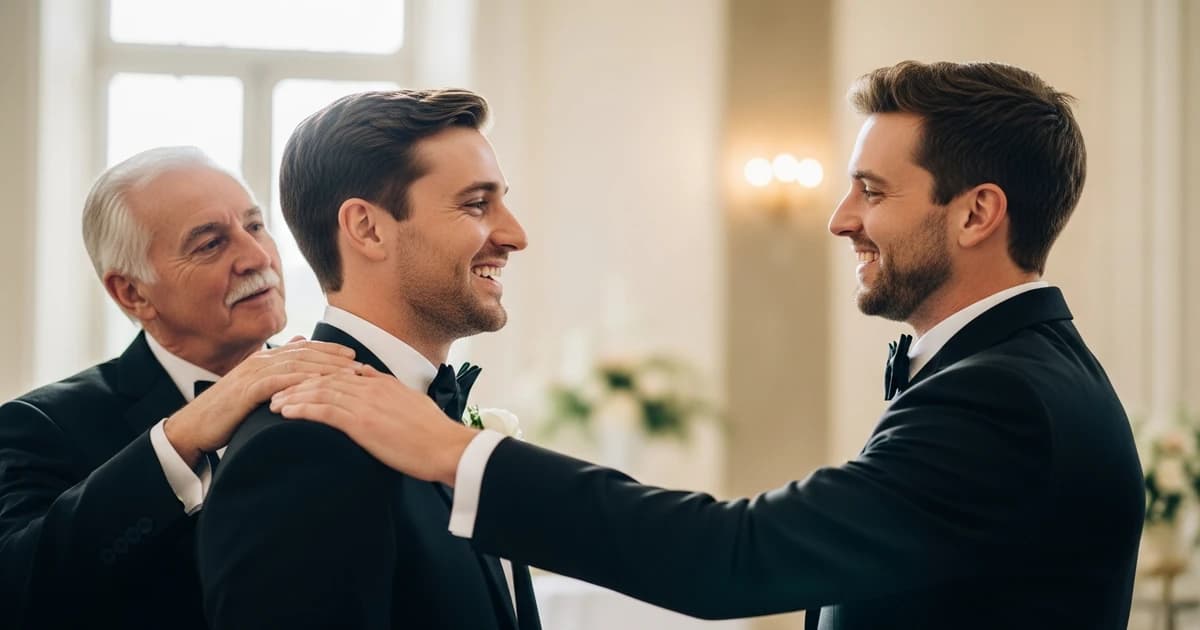
It sounds like a minor detail, but the best man is often the one who helps the groom straighten his tie before the ceremony. If neither of them is confident doing it, there is time to learn. I have written about this before: tie knots for the groom, covering the most common options depending on collar style and suit.
Conclusion
The best man is, at his core, the person who allows the groom to be fully present at his own wedding. Choosing well means looking beyond affection and honestly assessing real availability, organisational ability, and willingness to commit for months. The best best man is not remembered for the rings or the speech. He is remembered because at some point during that day, probably one of the most intense of the groom's life, he made things easier without making a fuss about it. That quiet usefulness is harder to find than it sounds, and worth choosing deliberately. If you are still unsure who that person is, it may be worth asking yourself not who you would most like to celebrate with, but who you would most want beside you if something went wrong.
This article was reviewed by our editorial team. How we create our content
Frequently Asked Questions
Not sure which one suits you?
Try every silhouette on your own photo with Wedded's virtual try-on. The first 5 try-ons are free.