Bridal hairstyles 2026: ideas for every wedding style
Updos, half-up styles or loose waves: a guide to the most beautiful bridal hairstyles of 2026 and how to choose yours based on dress, veil and wedding type.
Created with AI assistance and human review. Editorial standards
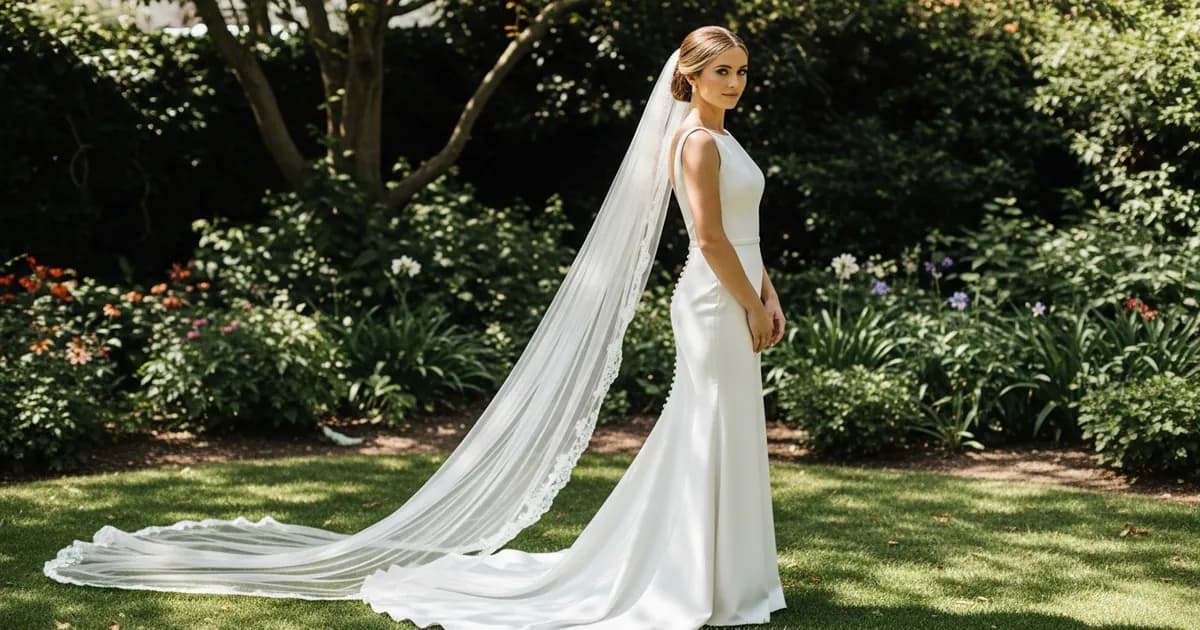
The hairstyle is the last piece of the bridal look to be decided, and often the hardest. Unlike the dress, which can be photographed and compared at leisure, the hairstyle depends on the real texture of your hair, the weight of the veil, and how it holds up through twelve hours of dancing and emotion. Arriving at the trial with clear ideas makes all the difference. Here are the styles that will define 2026, how to pair them with each dress silhouette, and what to ask your hairdresser before signing the quote.
Bridal updos: buns, braids and chignons
The updo remains the most popular bridal hairstyle in Spain. According to the OCU, 65% of brides choose an updo or half-up style, partly for durability and partly because it frees the neckline and neck for photos. In 2026, the trend points to cleaner, less architectural versions than in previous years, as documented by Vogue España's bridal hair editorials.
Polished low bun
This is the standout updo of the season. According to Vogue España and María Palomo Couture, the low bun with clean lines, with or without a centre parting, accounts for the majority of requests at bridal hair salons this year. It works with any veil type and is particularly flattering for off-the-shoulder, bardot and V-necklines. For fine hair, it is often built with volume extensions or a bun piece.
Chignon and French twist
The classic chignon, with wrapped and pinned sections that hide every clip, conveys a timeless elegance that suits both a cathedral and a rural cortijo. The French twist, more structured and vertical, suits brides who want height and poise. Both styles welcome fresh flowers or jewellery accessories.
Braided updos
Braids integrated into an updo (fishtail braid finishing in a bun, crown braid) have gained ground at outdoor and daytime weddings. They are less formal than a chignon, but with the right accessories they can be just as sophisticated. The hairdresser should work on clean, conditioner-free hair so the braid grips well.
Half-up bridal hairstyles
The half-up is the choice for brides who do not want to sacrifice the movement of their hair but need the style to last. The upper half is pinned back, clearing the face for photos, while the lower half falls in waves or curls.
Low half-up with waves
This is the most versatile style of 2026, according to La Salonería. It adapts to straight, wavy and curly hair, and pairs well with elbow or chapel veils secured at the point of the half-up, as covered in Harper's Bazaar España's guide to bridal hairstyles. For evening or night weddings, a crystal or pearl accessory at the pin adds a finishing touch.
Half-up with volume at the crown
A more structured variant, with the upper section backcombed or curled to create height. It flatters halter and jewel necklines by visually elongating the neck. It is the half-up that holds best through long celebrations, because the volume is supported by setting spray rather than gravity alone.
Half-up with a side braid
A fine braid running from the temple to the nape, where it is integrated into the pin. It adds a romantic touch without excess. It works especially well at garden and rural venue weddings, where the look can be slightly more relaxed.
Loose bridal hairstyles
Loose hair has regained ground at 2026 weddings, especially at daytime celebrations, beach weddings and intimate civil ceremonies. According to Vogue España, 70% of brides look for a natural or natural-effect result, and loose hair with waves is the most direct expression of that trend, as reported in Vogue España's 2026 bridal hair trends feature.
Soft waves (natural effect)
Waves made with a large barrel iron and then lightly brushed to break the curl are the most requested finish. The result is a moving, seemingly effortless mane, even if an hour of preparation went into it. To make them last, apply a wave cream before drying and a light hairspray at the end.
Hollywood waves
More dramatic and structured than natural waves, with all the waves oriented in the same direction. This is the ideal style for brides wearing mermaid or column dresses and for formal evening weddings. It requires hair in good condition and often some root volume.
Sleek straight hair
Perfect straight hair, with a centre or side parting and a mirror-like finish, is a minimalist option that suits dresses with clean lines and modern architecture. It requires very well-conditioned hair and a good smoothing treatment at least two weeks before the wedding so the result is luminous rather than flat.
How to choose your hairstyle based on your wedding dress
The hairstyle and the dress should read as a single unit. Some combinations enhance each other; others compete for attention. These are the most useful guidelines:
| Dress neckline | Hairstyles that work best |
|---|---|
| Off-the-shoulder / bardot | Low bun, high updo, low ponytail |
| Halter / jewel | Half-up with crown volume, high ponytail |
| Deep V-neck | Loose waves, side half-up |
| Boat / Sabrina | Low bun, side braided updo |
| Illusion / sheer | Clean updo that does not cover the fabric detail |
| Backless | Any updo that leaves the back completely free |
Beyond the neckline, consider the full silhouette. A dress with a lot of volume in the skirt (princess, ball gown) calls for a hairstyle that balances with height or volume at the crown. A mermaid or column dress gains from a low updo or straight hair that does not compete with the fabric drape.
If you are still choosing your dress, the Wedded dress recommender helps you refine your style: swipe to learn which silhouettes and necklines appeal to you, useful context before the hair trial. The virtual try-on (full-body photo, first 5 try-ons free) lets you see how the dress falls and which areas of the neckline and back are most exposed, practical information to bring to your hair appointment.
All included
- Banquet venue
- Wedding Planner
- Marriage Paperwork
- Photographer
- Décor
- Flowers
- Master of Ceremonies
- Deejay
- Open Bar
Bridal hairstyles by veil type
The veil shapes the hairstyle more than any other accessory. It is not just about how to secure it, but about the weight it adds, how it falls, and whether it covers or enhances the updo.
Cathedral or chapel veil
The longest and heaviest. It requires a solid updo at the crown or nape that holds the weight without shifting during the ceremony. A low bun or chignon are the most secure anchors. If you want to wear it with loose hair, the hairdresser must pin the comb with extra clips and, in some cases, a small crepe base.
Elbow veil or mantilla
The lighter elbow veil accepts more options: half-up, low ponytail, even loose hair. The Spanish mantilla, which frames the face, is almost always worn with a low updo or ponytail so that the lace takes centre stage.
Short veil (blusher or fingertip)
Short veils are the most versatile. They work with any hairstyle, including loose hair, because they add no weight and do not pull at the updo. They are ideal for civil ceremonies, daytime celebrations or brides who want a more modern look.
No veil
More and more brides are replacing the veil with a minimalist tiara, fresh flowers, a jewellery clip or nothing at all. In this case, the hairstyle must stand alone: the updo or loose hair is the main accessory, and it should have a point of interest (texture, integrated accessory, subtle asymmetry).
Bridal hair trends 2026
Bridal collections and fashion editorials point to a cycle in which naturalness and minimalism coexist with fine jewellery details. These are the trends that appear most consistently:
Revisited low bun
The low bun is the number one trend of 2026, according to María Palomo Couture and Framesi España. It is worn more polished than the undone bun of previous seasons, with a centre parting and neatly placed strands, as Vogue España details in its analysis of the most requested bridal hairstyles. The most editorial version incorporates a hair jewel or a pearl integrated into the updo.
Structured low ponytail with waves
The low ponytail has stopped being a second-choice style. In 2026, it is worked with soft waves in the tail and a very careful finish at the elastic (covered with a wrapped strand). It is comfortable, durable and photogenic from every angle.
Centre parting and clean look
The centre parting is consolidating as the starting point for almost any 2026 hairstyle, in both updos and loose hair. It conveys symmetry and effortless elegance. It flatters oval and long faces; for round faces, shifting it slightly to one side is advisable.
Waves as a universal tool
Waves appear in every category: in loose hair, in the ponytail tail, in the strands falling from a half-up. La Salonería describes them as the most versatile tool of 2026 because they adapt to any hair texture and any wedding formality.
Statement hair accessories
Minimalist diamond or cubic zirconia tiaras, pearl hairpins and fresh flowers integrated into the updo are the most seen accessories in 2026 bridal collections. The trend is to wear one statement piece rather than accumulate several.
How to choose your wedding hairdresser: key questions
The hairdressing service on the wedding day ranges from 150-250 euros in major Spanish cities, and the trial session usually costs an additional 60-120 euros, according to Harper's Bazaar España's bridal beauty preparation guide. A full hair and make-up package ranges from 250 to 400 euros, as covered in Vogue España's bridal accessory trends report. Before signing, clarify these points:
What to ask at the first contact
- Do you have experience with my hair type? Very fine, very thick, curly or chemically treated hair requires specific techniques. Ask to see photos of similar work.
- Does the fee include travel? If the wedding is at a rural venue, the standard surcharge is 15-30% above the base price (Telva).
- How many trials are included? One is standard; if you need two, negotiate the price upfront.
- How long do you need on the wedding day? A bridal hairstyle takes 60-90 minutes. If bridesmaids or family members also want their hair done, calculate the total time to avoid delaying the ceremony.
The hair trial
Book it 4-6 weeks before the wedding, with your final dress chosen and your veil decision made. According to the bridal beauty experts at Harper's Bazaar España, the hair trial is an essential step in bridal preparation. Bring reference photos, but also photos of what you do not want: it is sometimes easier to explain your style by exclusion.
Professional tip: photograph the trial result from every angle and save the photos on your phone. On the wedding day, show them to the hairdresser so they can replicate exactly what you both liked, without relying on either person's memory.
Warning signs
A hairdresser who does not request a trial, has no bridal portfolio or cannot confirm availability in writing deserves more questions before you proceed. 56% of Spanish brides hire professional hairdressers for their wedding day (according to the OCU), which means the best professionals have full diaries months in advance: if someone has immediate availability in peak season, it is worth asking why.
Conclusion
The ideal bridal hairstyle does not exist in the abstract: it exists in relation to your dress, your veil, the type of celebration and, above all, your actual hair. The trends of 2026 (polished low bun, low ponytail with waves, natural loose hair) share a common thread: the appearance of invisible effort. The result looks simple, but it requires a professional who knows your hair and a trial with enough time to adjust. Book it before the best hairdressers in your area are fully booked.
Related Reading
This article was reviewed by our editorial team. How we create our content
Frequently Asked Questions
Not sure which one suits you?
Try every silhouette on your own photo with Wedded's virtual try-on. The first 5 try-ons are free.


