Halter Neckline: The One That Lengthens the Torso
The halter neckline on a wedding dress: why it lengthens the torso, who it flatters, how it leaves the back, and the silhouettes it pairs with best.
Created with AI assistance and human review. Editorial standards

Halter Neckline: The One That Lengthens the Torso
If one neckline works in favour of height, it is the halter. That line rising from the bust and tying around the neck, leaving shoulders, arms and back bare, does something few others manage: it stretches the torso upward and narrows the top of the body. It is the neckline of 1970s glamour, of bare backs, and of brides who want a modern, athletic air without giving up elegance. Here we go through why it lengthens so much, who it really flatters, and what you need to know about that open back before you say yes.
What it traces, and why it stretches
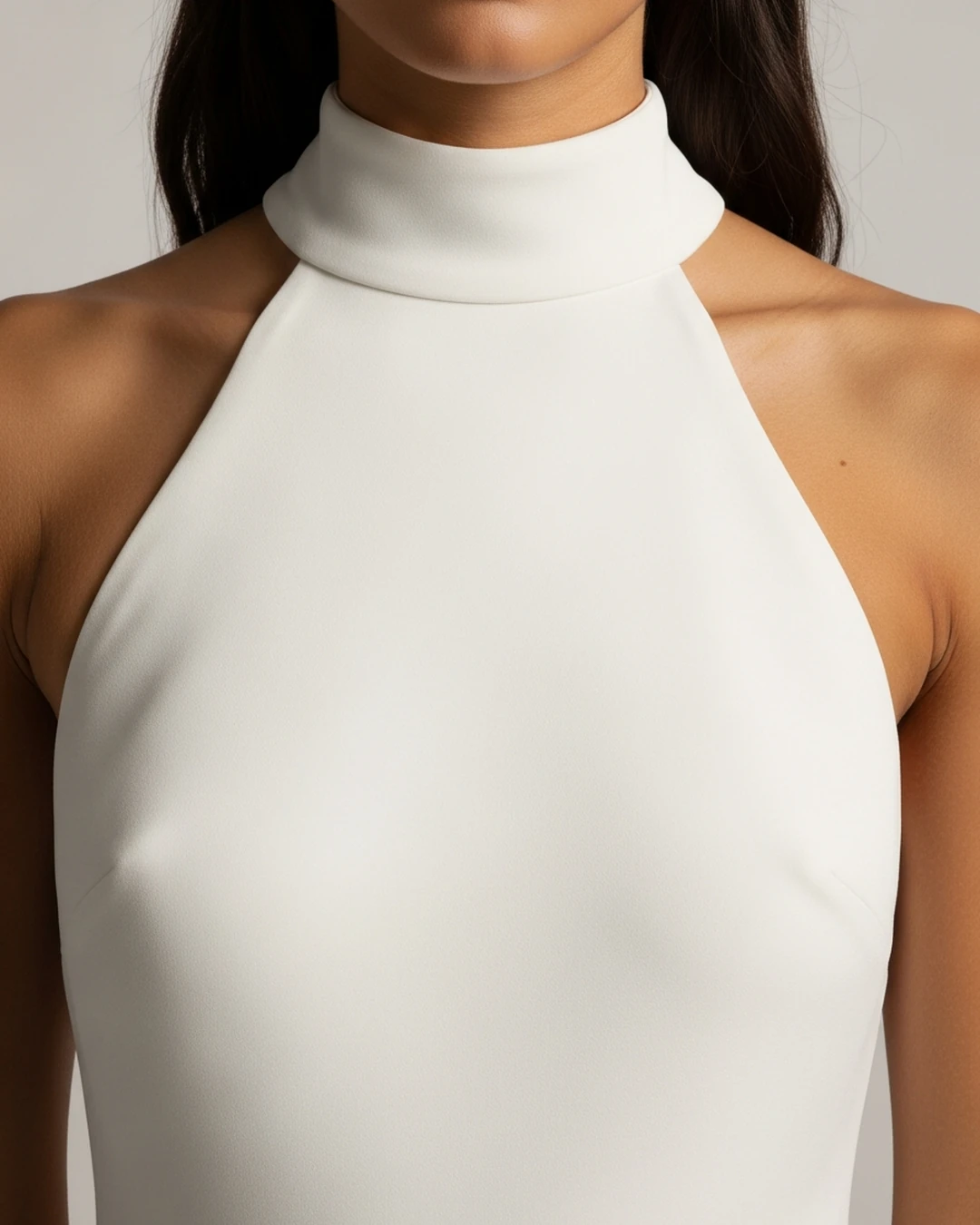
The halter neckline is held from the neck, not the shoulders. The fabric rises from the centre of the bust and ties, crosses or wraps behind the nape, leaving the shoulders and arms entirely free and most of the back exposed.
Its charm is purely geometric. By drawing a vertical line up toward the neck, it creates an axis the eye follows from bottom to top, and that path stretches the torso and lengthens the neck. At the same time, it leaves the shoulders clear at the sides, which visually narrows the top. The result is a taller, sharper-topped silhouette, the exact opposite of what a horizontal neckline like the bateau does.
Who it really flatters
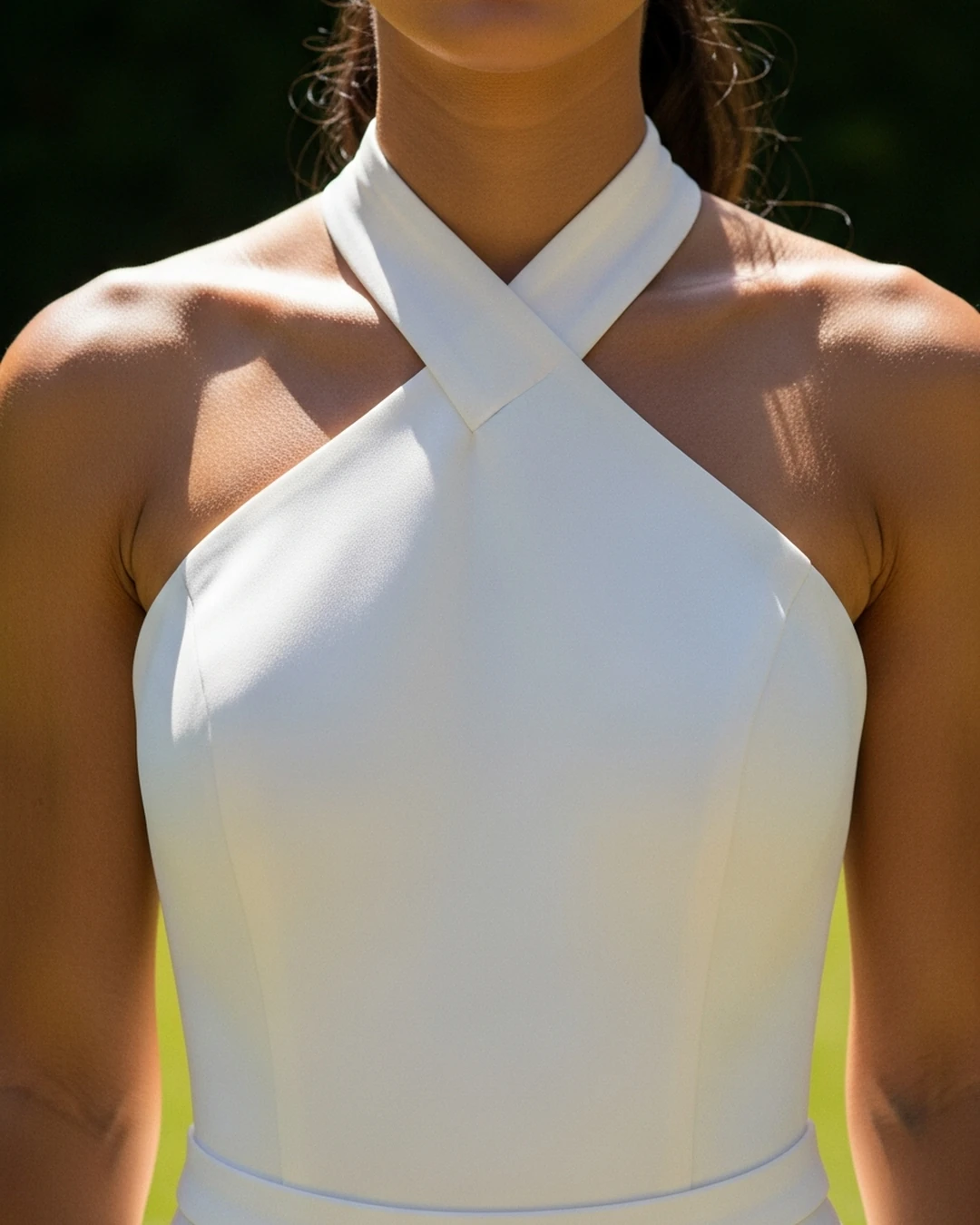
Here the halter is clear: it flatters anyone who wants to streamline upward and show off the top of the body.
Where it works best is on broad shoulders and athletic figures. That vertical line narrows the top instead of widening it, so it balances strong shoulders and folds them into a finer silhouette. If you train and have toned arms and back, the halter puts them front and centre effortlessly. And because it lengthens, it is a great ally if you want to look a little taller. To match the overall shape to your figure, the wedding dress for your body type is the best place to start.
It also flatters figures with hips wider than the shoulders, because it draws the eye toward the centre and upward, balancing the bottom. If you are torn between streamlining vertically or framing horizontally, the halter and the bateau are exactly the two sides of that coin.
The case where I would go carefully? A very full bust without good internal support. The halter holds from the neck, and without a well-built inner corset it can pull and feel uncomfortable all night. It is solvable, but talk it through at the atelier from the first fitting.
The open back: its best card, and its fine print
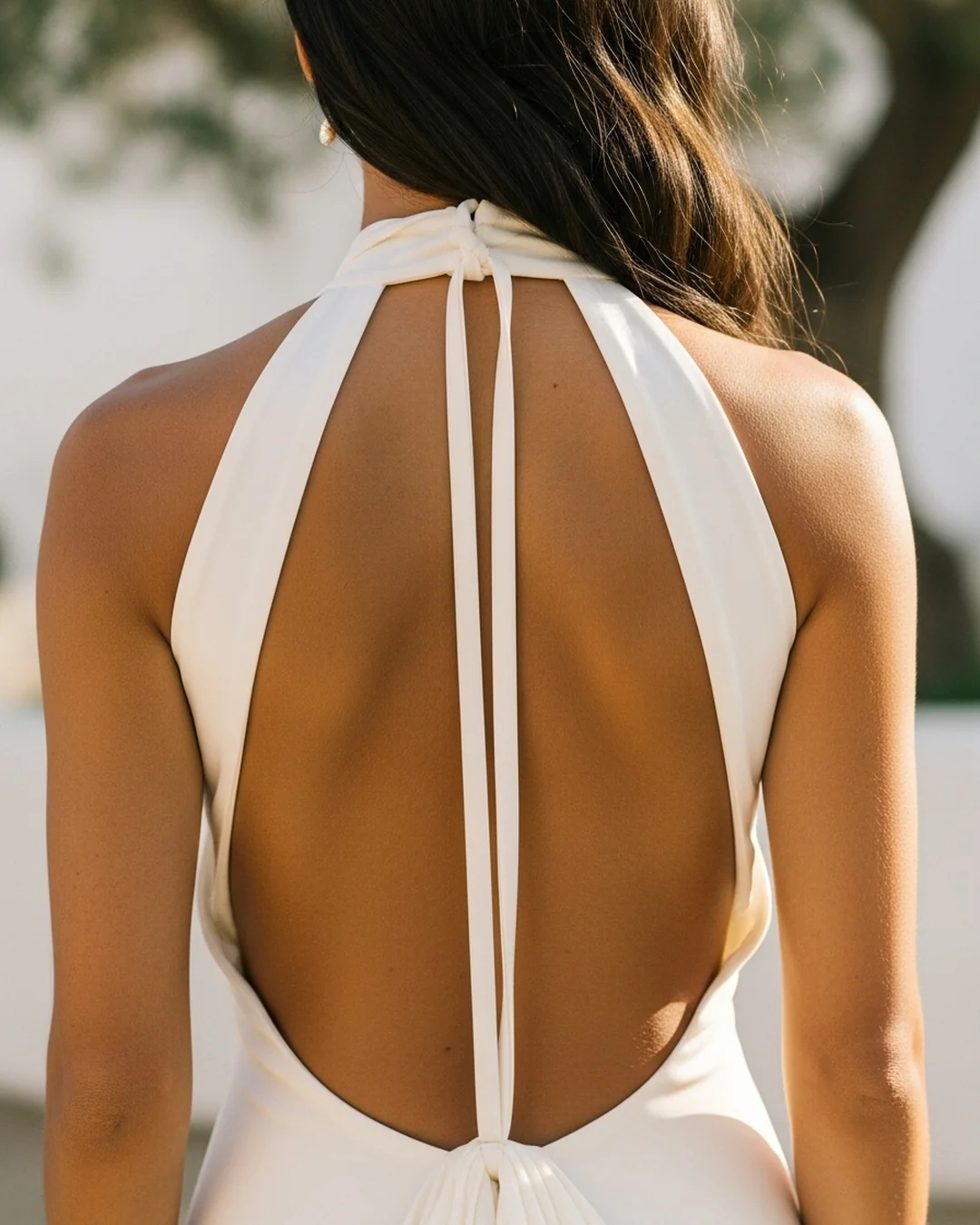
What the halter shows at the back matters as much as what it traces at the front. It almost always leaves the back very open, often down to the waist, and much of its charm lives there: it is one of the most sensual necklines without baring any cleavage at the front. All the skin is on the back.
That bare back is perfect for a summer, evening or garden wedding, where air and light play in your favour. But keep two things in mind. First, the venue's code: for a religious ceremony, a back open to the waist may fall short on coverage, and you might need a cape or a bolero for the church. Second, the support: with no straps or shoulders, the inner corset does all the work, so demand boning and a solid base at the fitting.
If you ask me, the back is where the halter truly wins. A discreet front and a spectacular back is one of the most elegant moves a bride can make.
All included
- Banquet venue
- Wedding Planner
- Marriage Paperwork
- Photographer
- Décor
- Flowers
- Master of Ceremonies
- Deejay
- Open Bar
Which silhouettes it pairs with
The halter asks for lines that follow its verticality. It shines on a column or mermaid silhouette, where the neckline continues the line of the dress and the lengthening effect multiplies: the bride looks stretched from top to bottom. Over an A-line it reads fresher and more youthful, a good option for a daytime wedding.
As for fabric, the halter changes character with what it is made of. In plain crepe it is modern and minimalist, very contemporary bride. With crystals or lamé, it turns red-carpet, pure 1970s glamour. To see where each neckline fits within the whole dress, the guide to types of wedding dress gives you the full map.
One trick before you reach the shop: try the shape in Wedded's virtual try-on, which shows how a dress looks on your own full-body photo before you book an appointment. The first five try-ons are free and save you ruling out shapes you already know are not for you.
Conclusion
The halter neckline is the ally of anyone who wants to streamline upward: it lengthens the torso and neck, narrows broad shoulders, and shows off arms and back like no other. Its best card is at the back, in that open back that makes it one of the most sensual necklines without baring any cleavage at the front. Before you fall for it, check two things at the fitting: that the support holds without pulling at the neck, and that the back coverage fits the place where you are marrying. Solve those two, and you have one of the most flattering, modern necklines there is.
Related reading
This article was reviewed by our editorial team. How we create our content
Frequently Asked Questions
Not sure which one suits you?
Try every silhouette on your own photo with Wedded's virtual try-on. The first 5 try-ons are free.


