Bardot Neckline: The Off-the-Shoulder That Flatters
The bardot or off-the-shoulder neckline on a wedding dress: who it flatters, how it differs from strapless, its sleeve variations and how to wear it.
Created with AI assistance and human review. Editorial standards

Bardot Neckline: The Off-the-Shoulder That Flatters
There is one neckline that comes back every few seasons and never quite leaves: the off-the-shoulder, the bardot. That horizontal line that drops below the shoulder, leaves the collarbones bare and rests a band or a sleeve on the upper arm. Brigitte Bardot turned it into an icon in 1956, with her film And God Created Woman, and it has come and gone ever since, but on a bride it does something few necklines manage: it shows skin without showing cleavage. Here we go through who it really flatters, how it differs from its cousins (the strapless and the bateau) and the practical detail almost nobody checks before saying yes.
What it traces, and why it is not a strapless
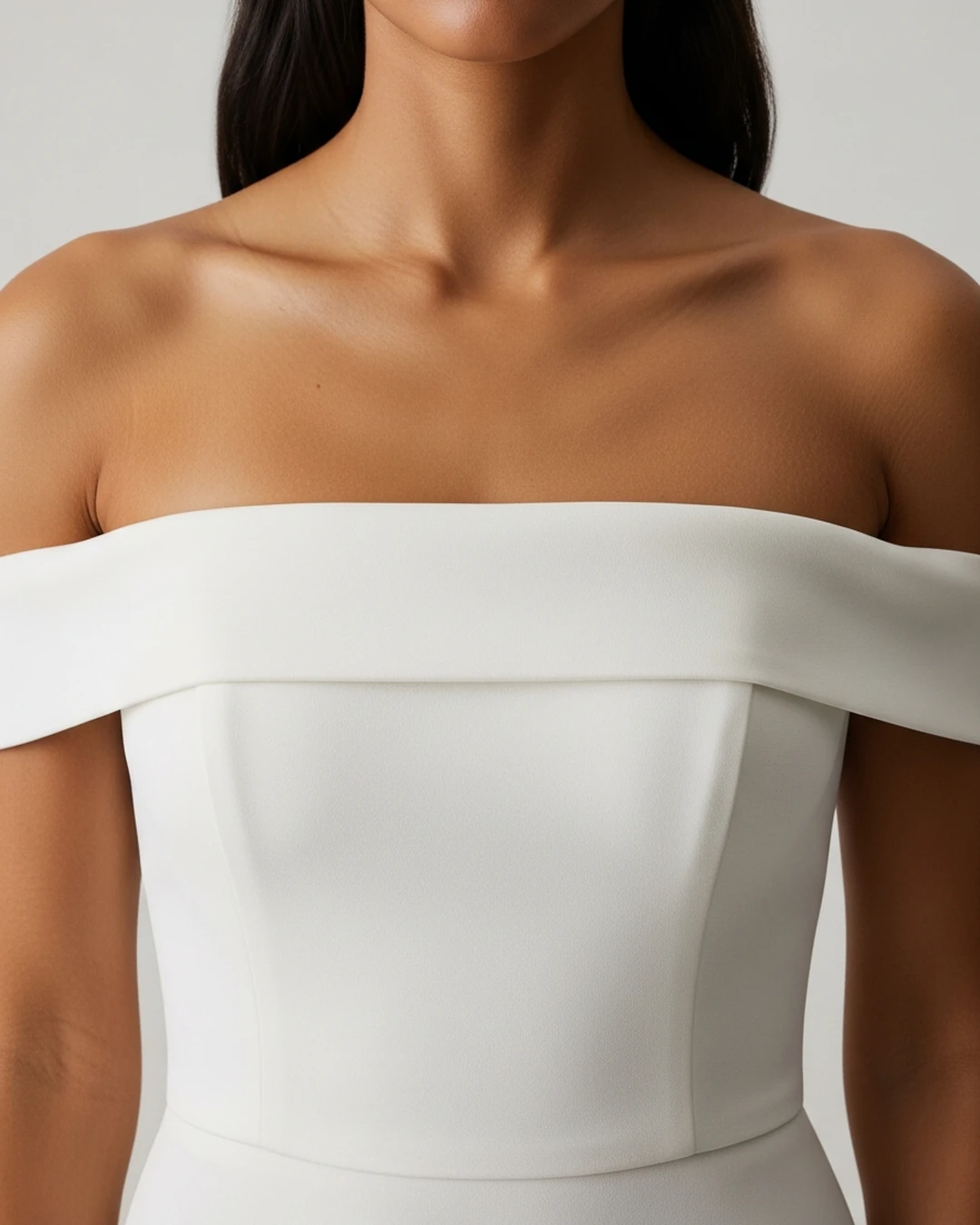
The bardot neckline is horizontal and low. The fabric crosses the chest straight, drops below the shoulders and is held by a band, a ruffle or a sleeve that rests on the arms, never on the shoulders. That band is the key to everything, because it is what sets it apart from the necklines it resembles.
It pays to be clear before you reach the shop, because on the rail they blur together:
- Strapless. Straight across the bust, shoulders and arms entirely free. Nothing rests on the arm.
- Bateau (boat). Rests on the shoulders and runs straight from collarbone to collarbone without dropping them. Covers higher up.
- Bardot. Drops the line below the shoulder and rests the band on the arm. Neither as bare as a strapless nor as covered as a bateau.
The bardot shows shoulders and collarbones, the most photogenic part of the torso, while a straight line covers the bust and hints at no cleavage. That is why it works so well on brides who want to show skin without the dress shouting. It is sensual in a restrained way, almost like an old portrait.
Who it really flatters
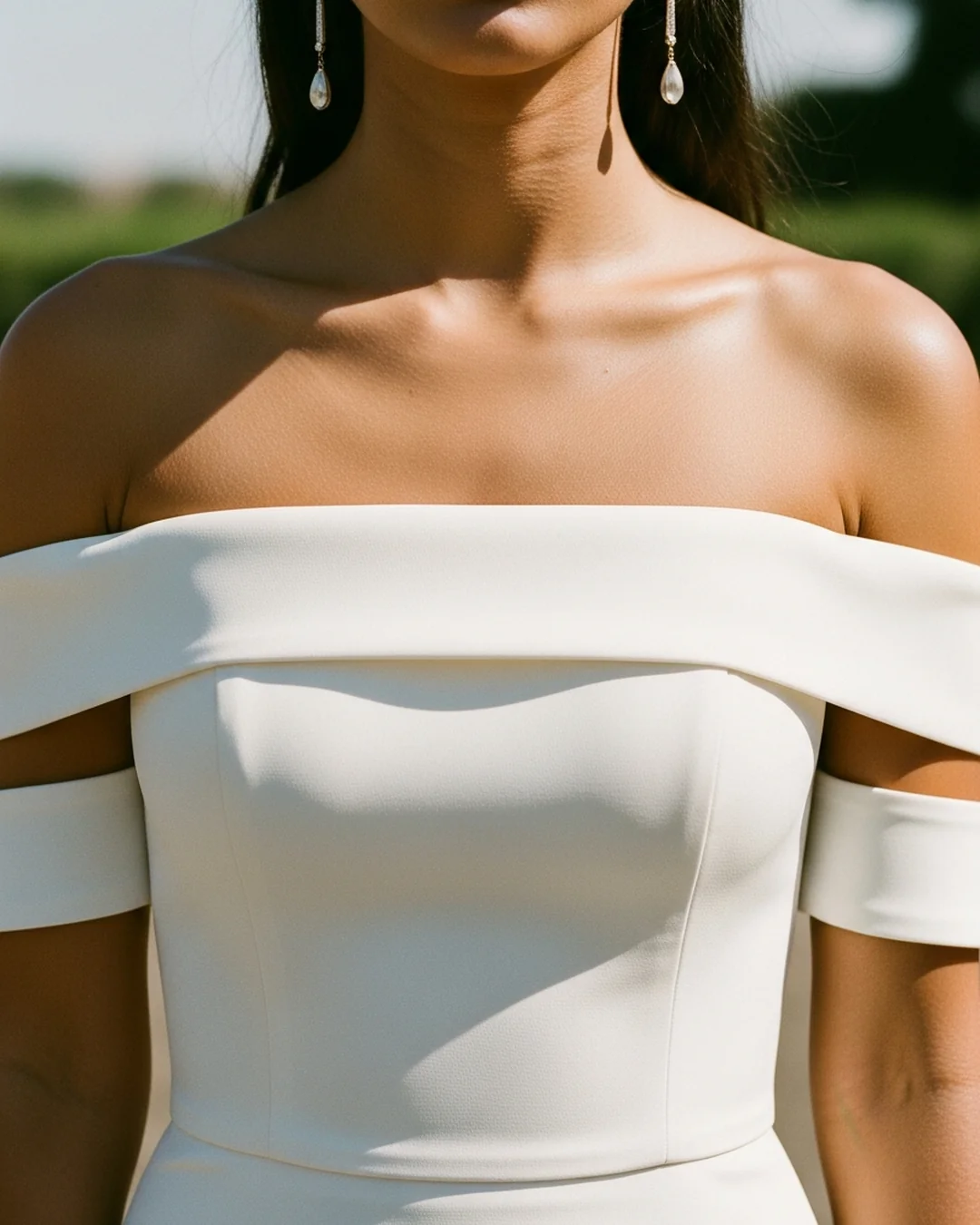
The bardot is built to show off shoulders, collarbones and neck. If you like that part of yourself, this neckline puts it front and centre, no argument. And because it leaves the neck clear, it lengthens it: if you have a short neck, it stretches the line in a way a high neckline never will.
Where it truly shines is on figures with hips wider than the shoulders, the shape often called pear or triangle. The horizontal line visually widens the top and balances the silhouette, restoring symmetry between torso and hip. If that is your shape, the bardot works in your favour almost without you noticing. To match the cut to your figure before fixing on a neckline, the wedding dress for your body type is the best place to start.
The case where I would go carefully? Very broad or athletic shoulders. The same horizontal line that balances wide hips emphasises shoulders that already dominate the figure. It is not a flat no, there are softer versions with a touch of sleeve that mellow it, but try it with your eyes open. If you want to lengthen and slim vertically rather than widen the top, a V-neckline does the opposite and may suit you better.
The detail almost nobody tests in the shop
Raise your arms.
That is the gesture that decides whether you will be comfortable. The bardot band rests on the arms, which means it limits how far you can lift them. Hugging your mother, throwing the bouquet, raising your arms in the middle of the floor at two in the morning: all of it pulls on the band. At the ten o'clock fitting, standing still in front of the mirror, the dress is perfect. The problem shows up eight hours later, mid-party.
That is no reason to rule it out. It is a reason to try it properly. Ask for the band to sit loose, or choose a version with a touch of stretch that gives. And in the fitting room, do what you will do on the day, not what you do in front of a mirror.
Variations: from long sleeves to a simple bare shoulder
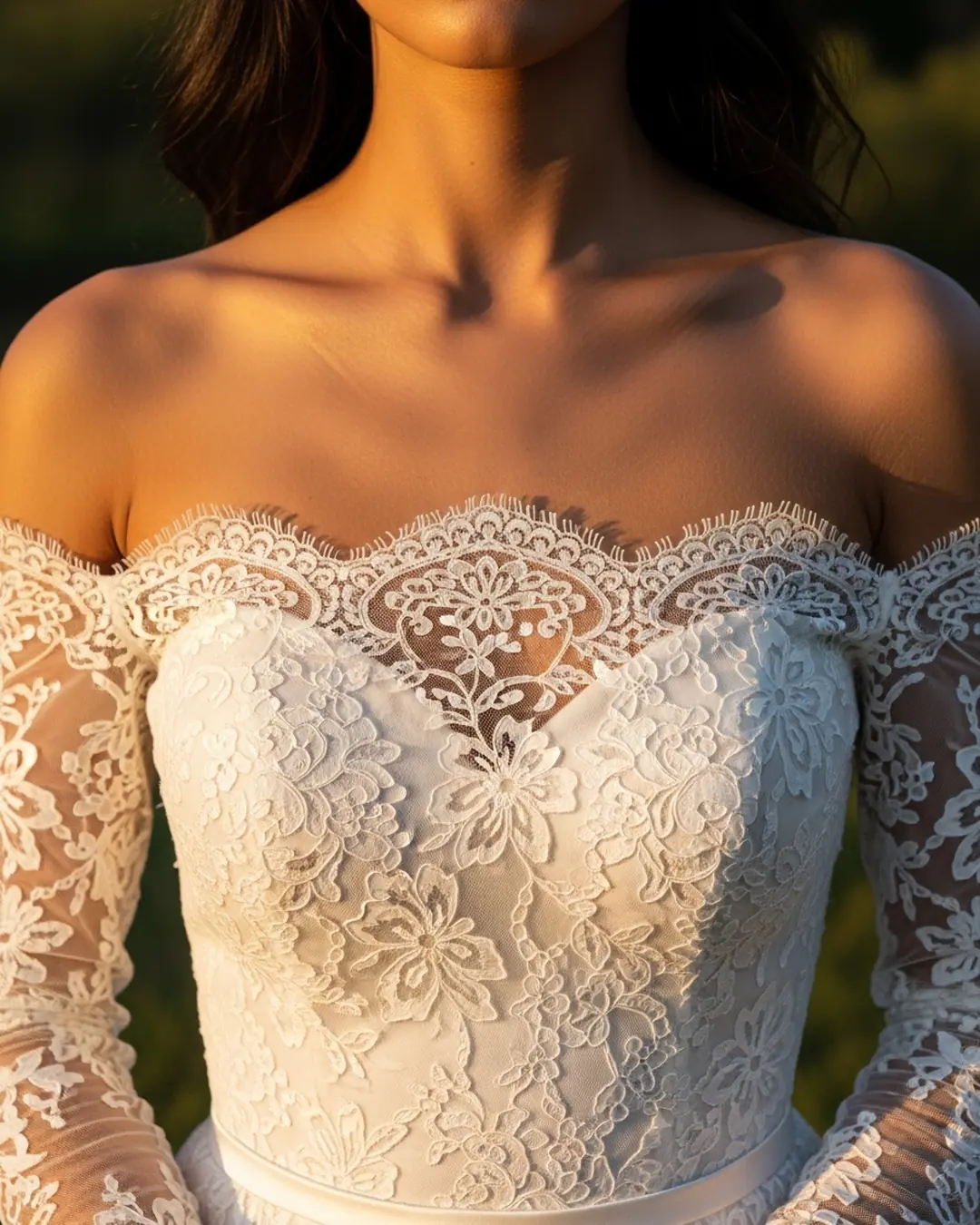
The bardot is not one thing. What rests on the arm changes the whole character of the dress.
- Plain band. A wide strip of the dress's own fabric. The cleanest, most modern version, perfect over crepe or mikado for a minimalist bride.
- With a short or puff sleeve. A little volume on the arm that adds softness and a very 1950s, classic-bride air.
- With a long sleeve. Often lace or sheer tulle, running down the whole arm from the shoulder line. Romantic, ideal for an autumn or winter wedding and for anyone wanting coverage without giving up the bare shoulder.
- With a ruffle or drape. The band falls as a ruffle over the arm, with movement. The most theatrical, and the one that catches the wind best in photos.
If you are torn between two, think about the season and the time of day. A plain band in mid-August needs body underneath; a long lace sleeve solves a church ceremony in November. The neckline has to say the same thing as the rest of the wedding.
All included
- Banquet venue
- Wedding Planner
- Marriage Paperwork
- Photographer
- Décor
- Flowers
- Master of Ceremonies
- Deejay
- Open Bar
How it stays up and how to wear it
There is a misunderstanding worth clearing here: the band does not hold the dress up. It is decorative. The bardot stays up exactly like a strapless, from the inside, with a boned inner corset, preformed cups and, in well-made dresses, a silicone strip along the top edge that grips the skin. If you trust the band to hold, you will get a surprise at the first fitting. Insist on that internal structure from the start, because it is what separates a neckline that looks lovely in the mirror from one that survives the whole wedding.
And then there is the hair, which on a bardot is no small detail: it is part of the neckline. The whole point of bare shoulders is to clear the area, so loose hair covers exactly what the dress wants to show. Updo, no question. A low bun, a sleek ponytail, a clear nape. This is the neckline of long earrings and a discreet necklace, or none at all. If you ask me, this is where the bardot is won or lost: with hair down it loses half its charm.
Which silhouettes it pairs with
The bardot gets along with almost every silhouette, but some pairings nail it. Over a mermaid silhouette it creates a very film-star look, bare shoulders and a fitted body, the kind that fills a full-length photo. Over a ballgown, the contrast between the clean shoulder line and a full skirt gives the timeless romantic classic. And over a sheath or column in crepe, the result is modern and sober, no lace, all line.
To see where each neckline fits within the whole dress, the guide to types of wedding dress gives you the full map. And one trick before booking an appointment anywhere: try the shape in Wedded's virtual try-on, which shows how a dress looks on your own full-body photo. The first five try-ons are free and save you trying on, in person, necklines you already know are not for you.
Conclusion
The bardot neckline shows off the loveliest part of the torso, the shoulders and collarbones, without baring cleavage, and that is why it returns every few seasons. It especially flatters anyone with hips wider than the shoulders and anyone wanting to lengthen the neck, and it adapts from the most minimalist plain band to the most romantic long lace sleeve. The decision is not only about looks. Before you fall for the photo, raise your arms in the fitting room and check you will be able to hug and dance with the dress on. That, and an updo that clears the nape, is what turns a pretty bardot into one you wear without thinking about it.
Related reading
This article was reviewed by our editorial team. How we create our content
Frequently Asked Questions
Not sure which one suits you?
Try every silhouette on your own photo with Wedded's virtual try-on. The first 5 try-ons are free.


