Wedding Dress Before or After the Venue: The Right Order
Should you choose the wedding dress before or after booking the venue? Book the venue first: it sets the formality, season and movement. Here is the order, and its exceptions.
Created with AI assistance and human review. Editorial standards

Wedding Dress Before or After the Venue: The Right Order
Venue first, dress second. It looks like a question of taste and it is really one of logistics: where you marry sets the formality of the ceremony, the season, the time of day and how much you will move. And those four factors happen to be the same ones any bridal consultant uses to narrow down which dress is right for you. Ordering the dress before you know where you marry is choosing the ending before the beginning. In this article we go through why the venue leads, the two exceptions that flip the order, and how to get a head start without committing to anything.
Why the venue leads over the dress
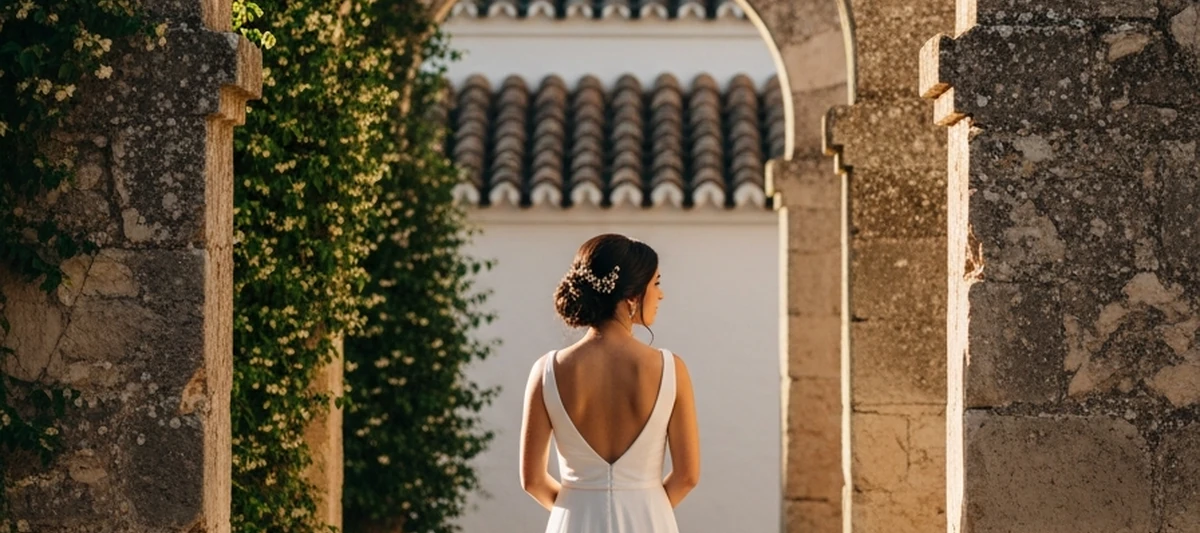
A dress is not worn in a vacuum. It is worn in a specific place, at a specific hour, in a specific temperature. A grand gothic nave calls for a floor-length gown and a solemnity a short dress cannot carry. A country estate with gravel underfoot at five in the afternoon in July punishes long trains and heavy fabrics. A civil ceremony on an urban rooftop at sunset opens the door to the midi, to the bridal suit, to colour.
The venue settles most of those variables before you try anything on. That is why the order matters. Book the space first and you arrive at your first atelier appointment with half the work done: you already know the season, the type of ground, the scale of the place and whether the ceremony is religious or civil. Do it the other way around and you risk buying a beautiful dress for a wedding that does not exist yet, and then bending the whole celebration to fit a gown you bought in a hurry. The dress should serve the day, not dictate it.
What the space decides for you before the first fitting
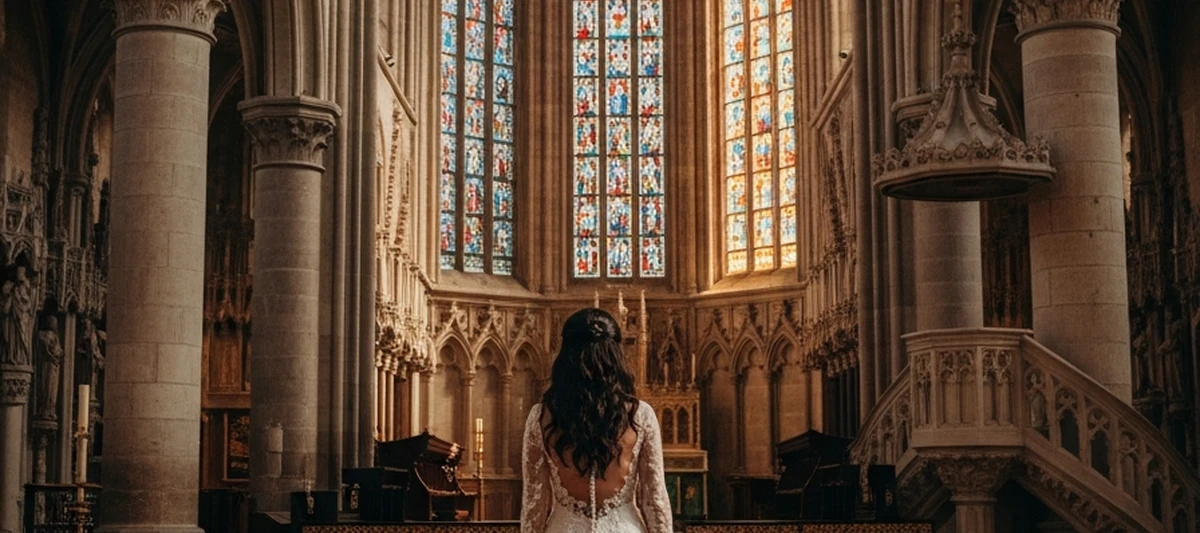
Saying the venue matters sounds obvious until you count how many decisions it triggers. The space fixes the formality: a cathedral or a grand banquet hall push towards the formal floor-length gown and noble fabrics, while a rural estate or a beach relax the code and welcome lighter silhouettes.
It also fixes the season and the hour, which rule the fabric. A heavy satin is a blessing in November and an ordeal at a midday wedding in August. An airy organza works in a June garden and falls short in a winter ballroom.
And it fixes the movement. A static ceremony at an altar is not the same as an outdoor wedding on uneven ground, where a cathedral train becomes a burden. If your celebration has a lot of dancing or moving between spaces, that weighs on the silhouette as much as the style. A gown that looks perfect standing still can fight you all evening if the venue asks you to walk across a garden, climb a few steps and dance until late.
If you want to see how the dress changes with the format of the wedding, we cover it in the guide on the wedding dress by wedding type. And the season factor, which many people underestimate, has its own article: how to choose the dress by season.
The two exceptions that flip the order
There are two cases where the dress comes first.
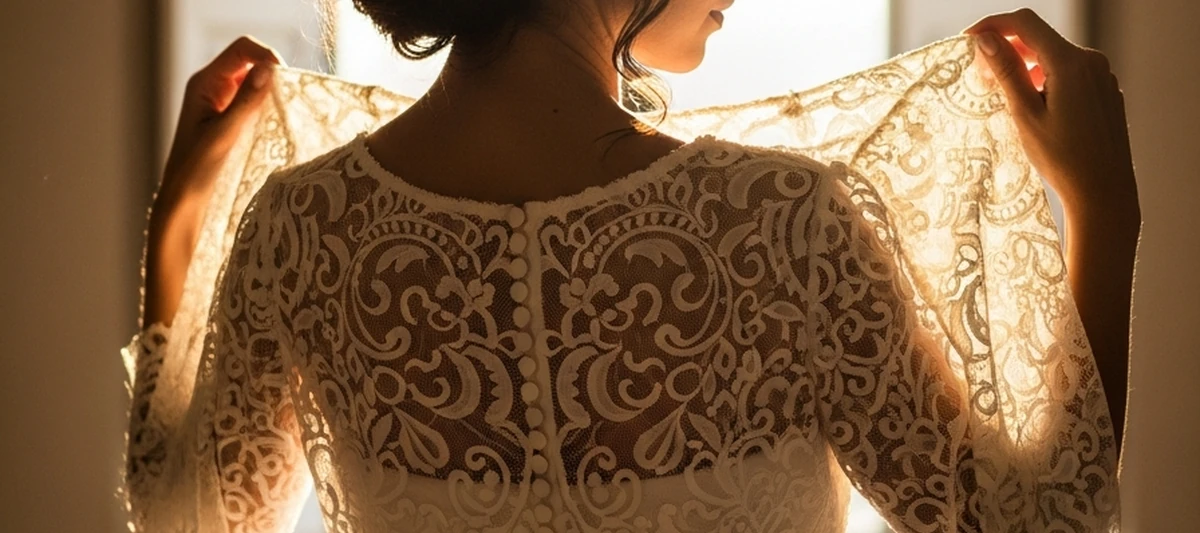
The first is the heirloom or sentimental dress. If you are wearing your mother's, your grandmother's, or one you already know you want for personal reasons, that dress stops being a variable and becomes a fixed fact. Then the order reverses: you look for a venue that suits it. A seventies lace gown belongs in a Galician manor and clashes with a minimalist exposed-concrete wedding. Bear in mind too that adapting an old dress (resizing, modernising the sleeves or neckline, reinforcing delicate fabrics) takes time, so that piece also sets the timeline.
The second is the production lead time. Some made-to-measure dresses or specific houses need six to twelve months from order to final fitting. If you fall for a design like that and your date is tight, you sometimes have to reserve it before signing the space, simply to make the date. It is the most uncomfortable exception, because it asks you to commit to an expensive piece without the rest locked in. If it happens to you, at least have the season and the tone of the wedding decided.
Getting a head start without committing
The dress coming second does not mean sitting on your hands until the venue is signed. There is a huge difference between discovering and buying, and almost all the good work lives in the first phase.
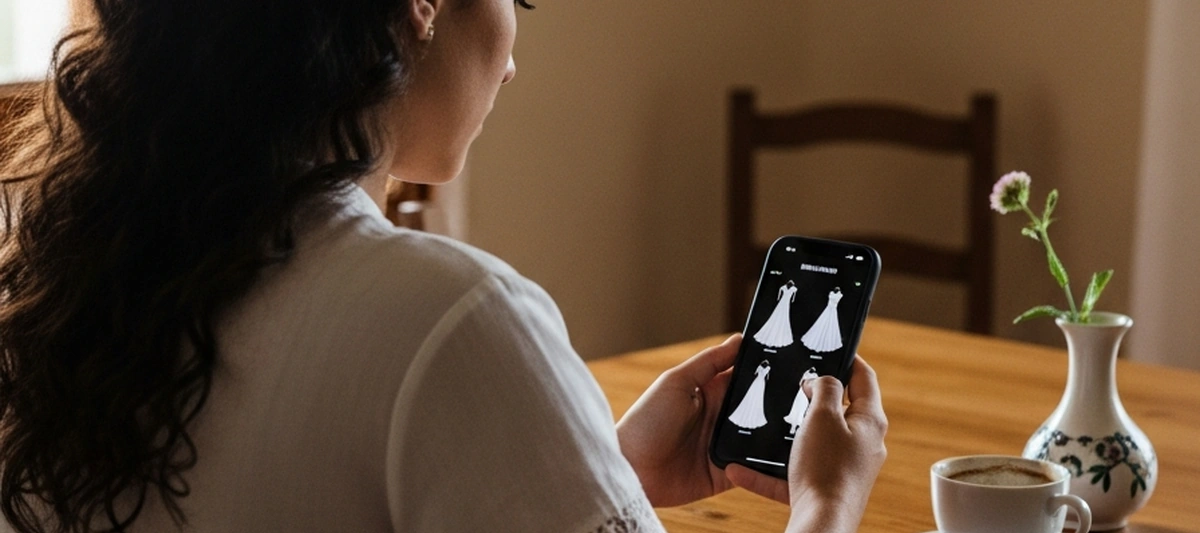
You can start refining your style from day one. This is where bridal tech genuinely helps. The Wedded app runs on a swipe recommender: you swipe through hundreds of dresses with a thumb gesture, and the system learns your style the more you swipe. Within minutes it knows whether structured or fluid cuts pull at you, plain fabrics or embroidery. It also has a virtual try-on: you upload a full-body photo of yourself and see how a dress would look on your own body, not on a runway model. The first five try-ons are free. It is free and asks for no card.
This lets you reach your first atelier appointment with a point of view, rather than a Pinterest board mixing ten incompatible styles. And, above all, it lets you explore without spending or ordering anything while you close the venue. If you want to see how to approach that phase, we walk through it step by step in how to discover your ideal wedding dress.
All included
- Banquet venue
- Wedding Planner
- Marriage Paperwork
- Photographer
- Décor
- Flowers
- Master of Ceremonies
- Deejay
- Open Bar
The trap of buying too soon
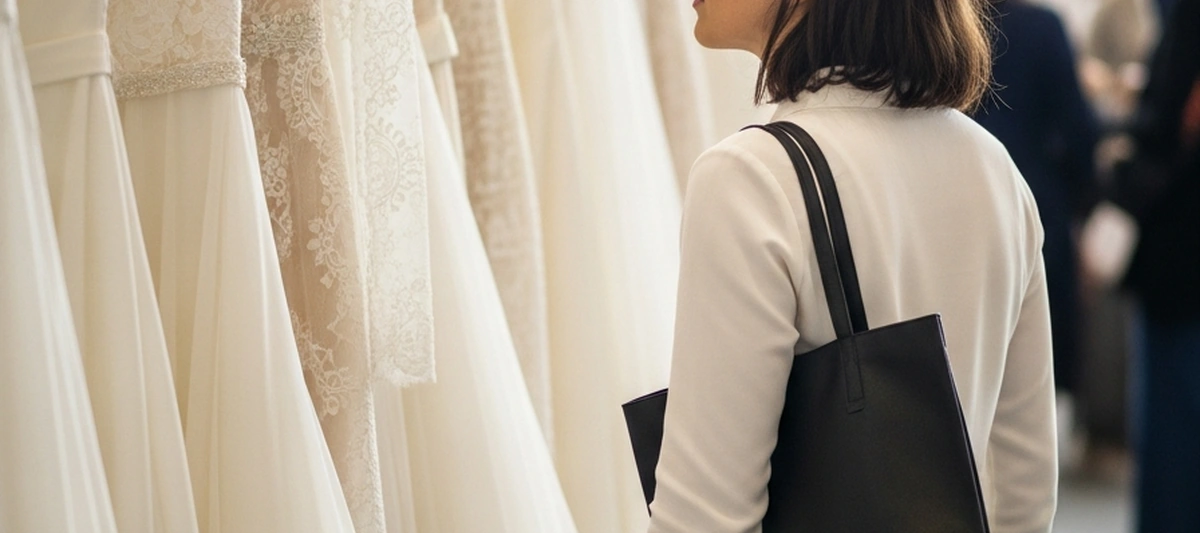
Almost every rushed dress purchase has the same setting: a wedding fair on a Sunday morning, or a trunk show with a time-limited discount, and a stunning dress at a price that will not come back. The pressure of the moment does the rest. You try it on, it fits beautifully, and the assistant reminds you the price is only good today.
The problem is not the dress. It is that you still do not know which wedding you are buying it for. A dream gown for a cathedral can be exactly the wrong call if you end up marrying in a cove at sunset. And sample dresses rarely allow returns.
My advice, after watching plenty of these decisions, is simple: sales come back, houses release a new collection every season, and there is always another dress. What does not come back is the chance to choose with the venue already decided. If you love something at a fair, note it down, take a photo, save it. But do not sign anything until you have the space.
The realistic timeline: what to lock in and when
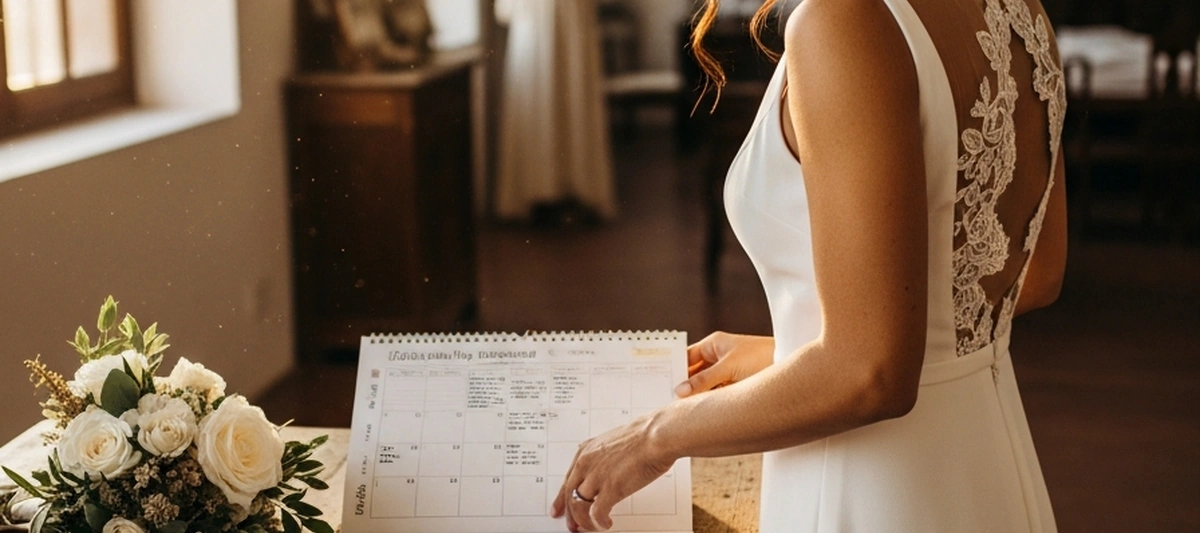
Put in order, the calendar has a clear logic. The most sought-after spaces are booked twelve to eighteen months ahead, especially for peak-season Saturdays. That is, almost always, the first serious signature of the wedding.
The dress comes after. Ideally you start trying it on between eight and twelve months out, given that a made-to-measure dress needs several months of production and a couple of fitting adjustments. Leave it to the final months and you lose the margin for alterations and shrink the catalogue to whatever is available with fast delivery.
The practical rule? Sign the venue, set the date, and only then book the first atelier appointment. You will arrive knowing the season, the scale of the place and the formality code, which is exactly what the consultant needs to avoid showing you dresses that will not work.
Conclusion
The dress is the part that sparks the most excitement, which is why it is so tempting to start there. But the dress is an answer, and the venue is the question. Flip the order and you risk making the most visible decision of the wedding blind, without knowing whether it will fit the place, the season or the rhythm of the day.
Get a head start on everything in the discovery phase: browse, save, try on virtually, refine your style. Save the purchase for when the venue is signed. If you take one line from here: fall for the dress the day you already know where you will wear it.
Related Reading
This article was reviewed by our editorial team. How we create our content
Frequently Asked Questions
Not sure which one suits you?
Try every silhouette on your own photo with Wedded's virtual try-on. The first 5 try-ons are free.


