How to Choose Your Wedding Dress by Wedding Type
The definitive guide to choosing your wedding dress by wedding type: civil, religious, beach, intimate, country estate. With concrete recommendations for each format.
Created with AI assistance and human review. Editorial standards
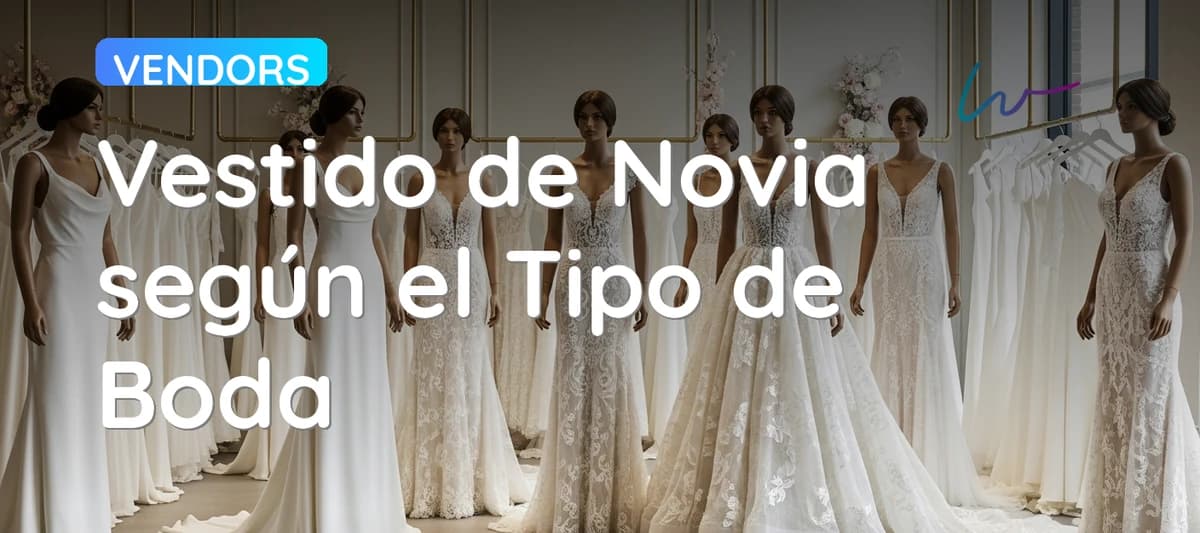
How to Choose Your Wedding Dress by Wedding Type
The most common mistake when searching for a wedding dress isn't choosing the wrong style. It's starting with the style before defining the format. Brides who arrive at boutiques with a Pinterest board full of voluminous gowns, before knowing whether their wedding is a civil ceremony, a beach gathering, or a religious celebration in a cathedral, inevitably spend hours looking at options that don't fit their actual context.
The wedding type isn't a detail. It's the variable that determines which silhouettes are viable, which fabrics are appropriate, and what level of formality the dress needs to carry. Before opening any catalogue, that variable needs to be settled.
This guide covers the five most common wedding formats in Spain — civil ceremony, religious wedding, beach wedding, intimate wedding, and country estate — with three specific dress recommendations for each and the criteria behind every choice.
Why Your Wedding Type Changes Everything
There is no universally perfect wedding dress. There is the right dress for a specific context, and that context is defined by the type of wedding more than any other single factor.
The logic is one of scale and proportion. A voluminous ballgown with a cathedral train makes sense in a Gothic nave with a hundred-metre aisle because it holds its own visually against the space. That same dress in a fifteen-square-metre registry office doesn't add drama — it creates logistical discomfort. Equally, a minimalist midi that works perfectly at an intimate civil ceremony can look underdressed at a religious wedding with four hundred guests.
Three variables are directly shaped by the wedding type.
The physical space. Small interiors call for more contained silhouettes. Large outdoor venues accommodate volume and trains. The beach has its own specific rules around fabric and weight.
The level of formality. A traditional religious wedding carries an implicit dress code: covered shoulders during the ceremony, a contained neckline, some structural presence. An intimate civil ceremony carries none of those requirements.
Duration and logistics. A country estate wedding with a garden cocktail hour, a dinner inside, and dancing afterwards means the dress needs to perform across eight hours and multiple settings. A two-hour micro-wedding in a restaurant places far less physical demand on the dress.
With those three variables in mind, searching for a dress becomes a process with clear filters rather than an open-ended and often exhausting exploration.
Civil Ceremony: Elegance Without Protocol
The civil ceremony is the most open format. There are no neckline rules, no sleeve requirements, no conventions that mandate anything. That freedom is an advantage and also a challenge — without constraints, some brides drift toward options that look beautiful in isolation but feel out of place in context.
The guiding principle for a civil ceremony is proportion: matching the scale of the dress to the actual space of the ceremony and the production level of the celebration.
Recommendation 1: Midi dress in crepe with a straight neckline. The length between knee and ankle is the quintessential civil ceremony silhouette. Clean, versatile, and photogenic both indoors and outdoors. A crepe midi with a straight neckline and an open or tied-detail back is one of the most consistently effective civil ceremony looks in 2026. Recommended fabrics: crepe, matte satin, lightweight mikado.
Recommendation 2: Long slip dress in satin or silk. The slip dress silhouette has been a sustained trend since 2024 and remains the most elegant choice for an evening civil ceremony. No internal structure, no ornamentation. The detail lives in the back: a deep open back, a bow, or criss-crossed fine straps.
Recommendation 3: Wide-leg trouser suit in a quality fabric. For brides with a more architectural or urban aesthetic, a white or ivory crepe or satin trouser suit is the most distinctive civil ceremony choice of 2026. It achieves the same level of elegance as a dress with significantly greater ease of movement throughout the day.
What to avoid: cathedral trains, heavily boned corsets, and voluminous tulle. Not because they're not beautiful, but because they're disproportionate to most civil ceremony settings.
Religious Wedding: Honouring Tradition While Staying Yourself
The religious wedding is the format with the most established conventions. Churches generally expect shoulders to be covered during the ceremony, a contained neckline, and some structural presence in the silhouette. These conventions vary by officiant and venue — always confirm before purchasing the dress — but the underlying expectation of presence and scale applies consistently.
What the religious wedding always demands is visual impact: it's the format with the largest guest count, the grandest space, and the longest ceremony. The dress needs to hold its own against that scale.
Recommendation 1: Fitted lace bodice with long transparent sleeves. Long transparent lace sleeves are the most elegant solution for meeting coverage requirements without sacrificing modernity or femininity. In an A-line or evasé silhouette, with a lace bodice and satin or mikado skirt, this is the most requested religious wedding style in 2025-2026.
Recommendation 2: Princess silhouette in mikado with a boat neckline. The princess silhouette — fitted bodice, full skirt from the waist — in mikado or duchess satin is the classic religious wedding choice. A boat neckline allows some forward openness without exposing the shoulders. The train can be chapel or cathedral depending on the size of the church.
Recommendation 3: Column dress in crepe with long sleeves and cathedral train. For brides who want a more modern line within the religious format, the column dress — fitted from top to bottom, no volume — in crepe or viscose jersey with long sleeves and a cathedral train provides the visual drama through length rather than volume. This is the most contemporary religious wedding option of 2026.
Beach Wedding: Fabrics, Silhouettes, and What to Leave at Home
The beach wedding has its own physics. Wind, sand, heat, and humidity turn many beautiful dresses into uncomfortable experiences. Fabric choice is not a secondary aesthetic decision in this format — it is a primary practical one.
Fabrics that work at the beach: chiffon, georgette, batiste, lightweight lace, crepe georgette, linen. These fabrics move well in a breeze, don't trap heat, and don't accumulate sand the way textured fabrics do.
Fabrics that don't work: mikado, duchess satin, rigid tulle, structured organza. They are heavy, retain heat, and lose their shape in humidity.
Recommendation 1: Bohemian chiffon dress with layered skirt. The bohemian silhouette — V-neckline, defined waist, layered chiffon or georgette skirt — is the most photogenic beach wedding dress. It moves with the wind rather than fighting it, keeps cool, and works as well at sunset as in full afternoon light.
Recommendation 2: Minimalist slip dress in silk or washed cotton. For brides with a more pared-back aesthetic, a long slip dress in washed silk or fine batiste is the most refined beach option. No volume, no internal structure — just the movement of the fabric. The detail can live in the neckline or the back.
Recommendation 3: Lightweight lace dress with V-neck and open back. Lace in a lightweight version — without a heavy lining, without internal boning — works well at the beach when combined with a fluid drape. An open back adds genuine practical function: it reduces heat without sacrificing any of the elegance.
What doesn't work at all on the beach: long trains (they drag sand and absorb moisture), heavily structured corsets (uncomfortable in the heat), voluminous tulle (unmanageable in the wind), and stiletto heels (they sink). A flat sandal or a low wedge in natural fibre is the most practical and coherent choice.
All included
- Banquet venue
- Wedding Planner
- Marriage Paperwork
- Photographer
- Décor
- Flowers
- Master of Ceremonies
- Deejay
- Open Bar
Intimate Wedding or Micro-Wedding: Less is More, But Make it Count
The micro-wedding — fewer than thirty guests, a shorter ceremony, a single intimate setting — has been the fastest-growing format in Spain between 2023 and 2026. It also generates the most uncertainty around the dress: without the weight of convention or the scrutiny of four hundred guests, how far can the bride depart from the traditional wedding dress?
The answer is as far as she wants. The micro-wedding is the most permissive format. The criterion isn't protocol — it's coherence with the bride's personal style and the tone of the celebration.
Recommendation 1: Bridal jumpsuit in crepe or satin. A wide-leg jumpsuit with a structured top or a fluid blouse is the most genuinely distinctive choice for an intimate wedding. Comfortable, photogenic, and memorably different — with the added practical advantage that, unlike most wedding dresses, it can realistically be worn again.
Recommendation 2: Midi dress with a statement detail. At a micro-wedding, the bride has the full attention of all guests in a small space for the entire event. That means individual details register. A midi with a single distinctive element — an oversized bow at the waist, a puff sleeve, a floral embroidery at the neckline — reads more intentionally here than at a large wedding where detail gets lost at a distance.
Recommendation 3: Short dress above the knee in a quality fabric. A mini dress is entirely legitimate at an intimate wedding. The key is balancing the informality of the length with the quality of the fabric: a mini in mikado, organza, or quality lace has a very different visual weight than one in a synthetic blend. A structured ceremony coat or a sharp blazer can add formality when the setting calls for it.
Country Estate or Cortijo Wedding: The Look the Venue Demands
Country estate and cortijo weddings are the most widespread celebration format in Spain outside major urban hotels. The setting — gardens, stone architecture, olive groves, terracotta — creates a very specific visual context that the dress should complement without tipping into costume territory.
The guiding criterion here is coherence with the environment. The silhouettes that work at a country estate have some degree of romance or organic reference. Overly urban or severely minimalist styles can feel tonally misaligned with the surroundings.
Recommendation 1: Evasé silhouette with 3D floral details. Three-dimensional applied flowers — at the bodice, neckline, or shoulder — are one of the central trends of 2025-2026 and sit naturally in a garden setting. In an evasé silhouette (which flares gently from the hip), with a worked bodice and a clean skirt, this is the most contemporary country estate dress of the moment.
Recommendation 2: Lace dress with V-neckline and French sleeves. The lace wedding dress has the strongest historic association with Spanish country estate and cortijo weddings. The most current interpretation in 2026 combines all-over lace with a pronounced V-neckline and French sleeves (ending below the elbow) that lighten the overall effect. A sweep or chapel train completes the look without overwhelming it.
Recommendation 3: Multi-layer tulle skirt with a simple bodice. Multi-layer tulle — less structured than a ballgown, more voluminous than chiffon — creates a light, romantic effect that works particularly well in outdoor estate settings. A simple bodice (a clean straight neckline or a V-neck) in contrast with the movement of the skirt keeps the overall silhouette from feeling overloaded.
Quick Reference: Dress by Wedding Type
| Wedding type | Dress 1 | Dress 2 | Dress 3 |
|---|---|---|---|
| Civil ceremony | Crepe midi, straight neckline | Long slip dress in satin | Wide-leg trouser suit |
| Religious | Lace bodice + transparent long sleeves | Princess in mikado, boat neckline | Column in crepe + cathedral train |
| Beach | Bohemian layered chiffon | Minimalist slip dress in washed silk | Lightweight lace, open back |
| Intimate / micro | Bridal jumpsuit in crepe or satin | Midi with statement detail | Short dress in quality fabric |
| Country estate | Evasé with 3D floral details | Lace with V-neck + French sleeves | Multi-layer tulle, simple bodice |
This table is a starting point, not a limit. The wedding type narrows the options to those most likely to work contextually. Within each format there is still significant room for personal style. What the table does is cut through the noise — the beautiful-but-wrong options that consume time and energy during months of planning.
To explore how these silhouettes look on your figure before visiting any boutique, the Wedded dress finder learns your style through swipes and surfaces options filtered by wedding format. For a deeper dive into the silhouettes, fabrics, and colours shaping all formats in 2026, the 2026 wedding dress trends guide covers the key collections in detail.
Conclusion
The wedding type is the first filter for the dress, not the last. Civil, religious, beach, intimate, or country estate: each format carries its own criteria of scale, fabric, formality, and logistics that determine which silhouettes make sense and which create a conflict with the context.
With that filter in place, finding a wedding dress shifts from an open-ended search through hundreds of options to a focused selection of the twenty or thirty styles that are genuinely compatible with the wedding being planned. Personal taste and instinct remain decisive — that doesn't change. What changes is the amount of noise: the pretty-but-wrong options that take up space in the search and delay the moment of recognising the right one.
Related Reading
This article was reviewed by our editorial team. How we create our content
Frequently Asked Questions
Not sure which one suits you?
Try every silhouette on your own photo with Wedded's virtual try-on. The first 5 try-ons are free.


