Sweetheart Neckline: Who It Suits and How to Choose
The sweetheart neckline on a wedding dress: which bodies it flatters, how it stays up strapless, its variations and the silhouettes it pairs with best.
Created with AI assistance and human review. Editorial standards

Sweetheart Neckline: Who It Suits and How to Choose
The sweetheart neckline is one of those details you recognise before you can name it: two soft curves across the bust that close into a point in the centre, like the top of a drawn heart. It has been the most requested neckline in Spanish bridal boutiques for decades, and not out of habit. It lifts, it feminises and it suits a great many bodies. Here we go through who it really flatters, how it holds itself up when it goes strapless, and what variations exist so you can choose well before the first fitting.
What this neckline actually traces
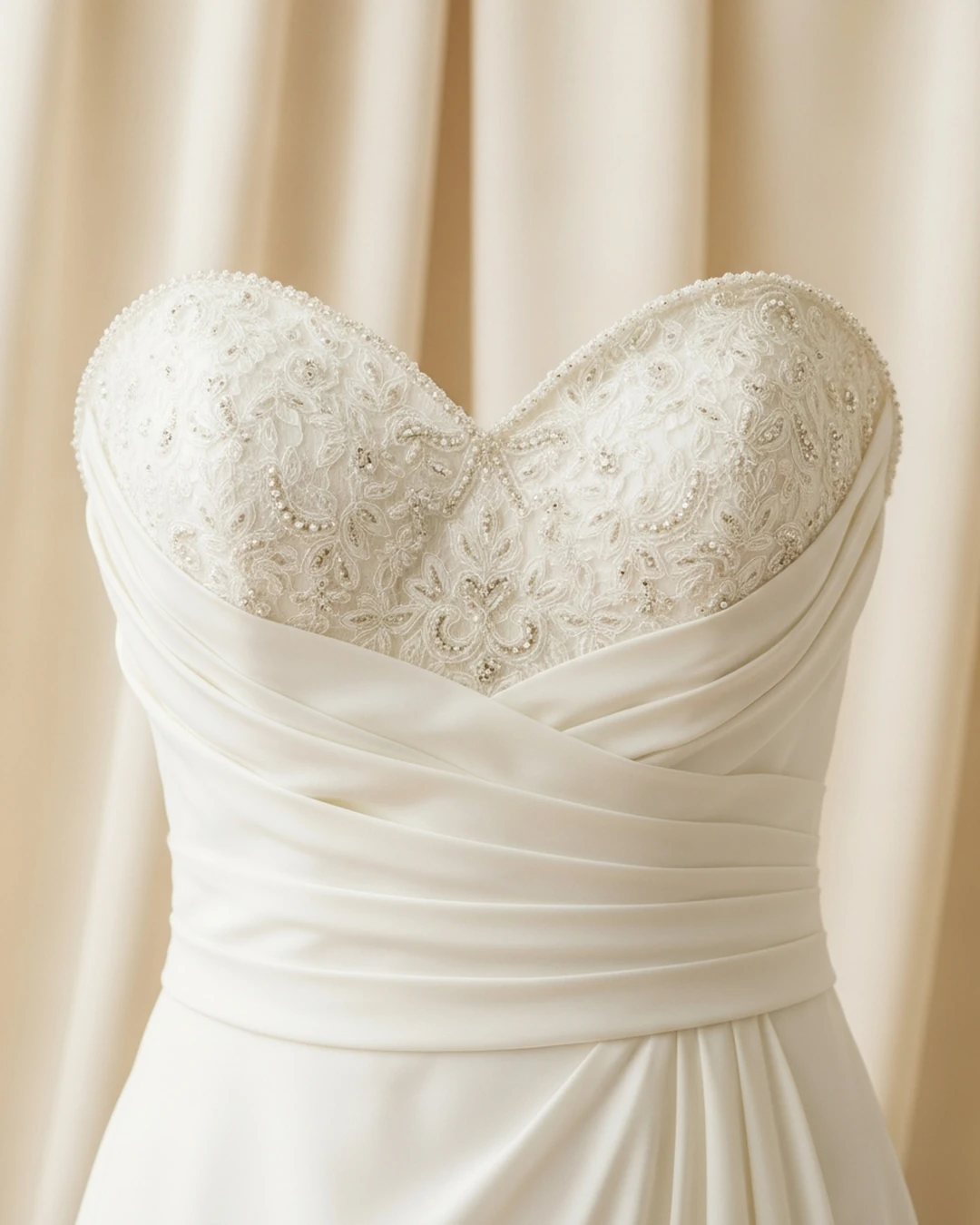
The sweetheart neckline comes from the lingerie and couture of the last century, and from there it moved into bridal and stayed. Its charm is in the geometry: two arcs that rise from the sides of the bust and dip into a small valley at the centre. That shape follows the natural line of the bust instead of cutting straight across it, the way a pure strapless does.
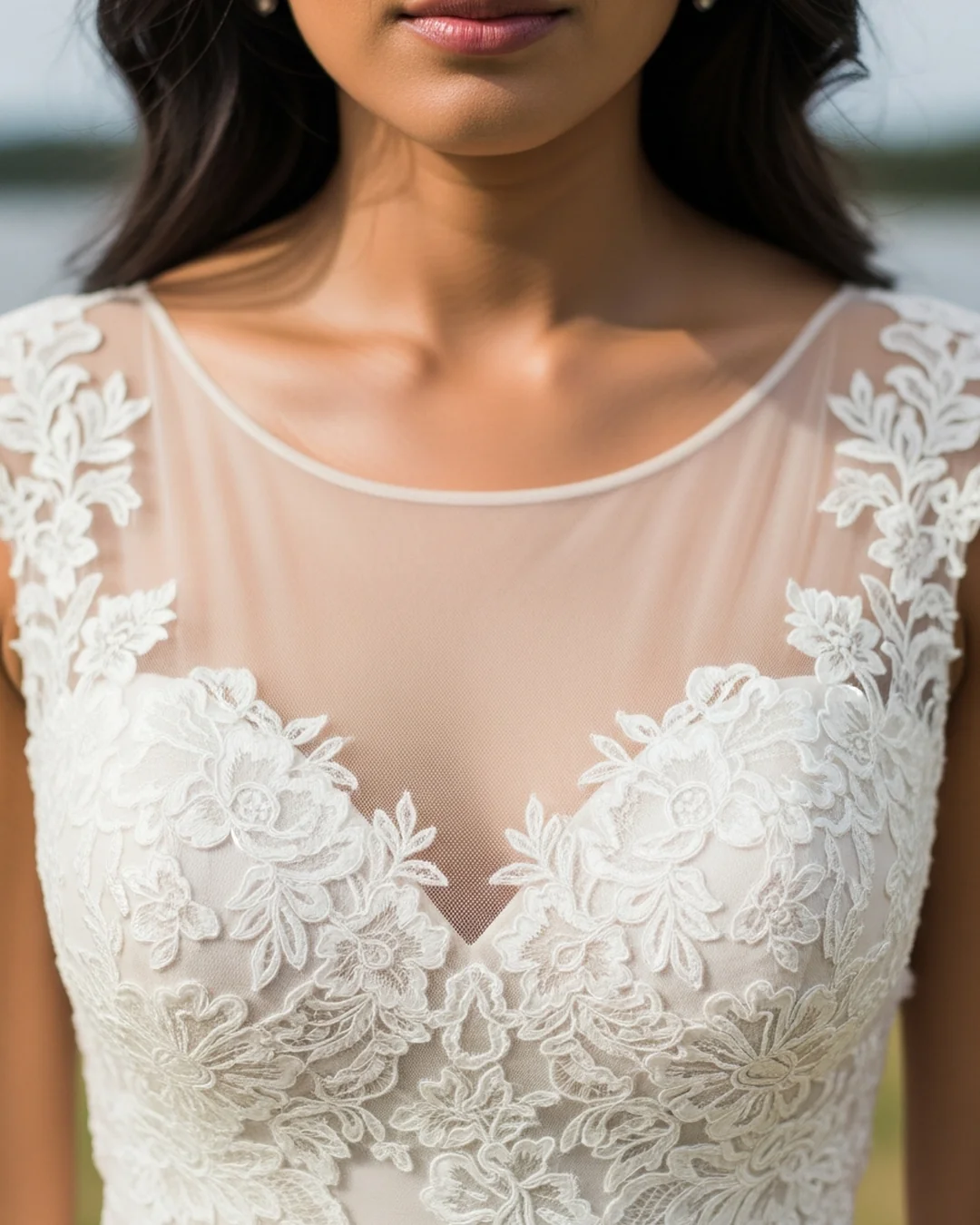
The most common version is strapless, held up from the inside. But the sweetheart does not force you to bare your shoulders. You will find it with thin straps, with sleeves, with an illusion tulle panel covering the chest and arms while the heart shape stays visible beneath, or finished with a lace edge tracing the line. That flexibility is part of why it survives every shift in fashion.
Who it suits (and why, not just "almost everyone")
This is where it pays to be specific, because "it suits almost everyone" is true and at the same time no help at all when you are deciding.
The sweetheart is built to show off the bust. If you have a medium or fuller chest, this is probably the shape that holds and draws it best without flattening or exaggerating it. The central point visually splits the area and avoids the "shelf" effect a straight strapless can give over a fuller bust.
It also works the upper body well. If your shoulders are broad, the curves soften them by carrying the eye toward the centre. If your neck is short, that same point lengthens the line of the neckline. It is one of the few necklines that solves two things at once. If you are still settling the overall shape before fixing on the neckline, start with how to choose a wedding dress.
And yes, it works on a smaller bust, though the design changes here. Over a modest chest, a sweetheart with a very deep point can sit empty at the top. The fix is not to give up the neckline, it is to ask for a closer, softer curve with cups that add a touch of volume. The result builds shape where there was once a straight line.
If I had to flag the one case where I would tread carefully: a very high, very full bust on a body that needs more support. Without good internal structure, a strapless sweetheart there becomes an all-night problem. It is fixable, but you have to raise it at the atelier from the very first fitting, not the last.
The thing nobody mentions at the first fitting: how it stays up
A sweetheart that looks lovely in the mirror and a sweetheart that survives eight hours of a wedding are two different dresses, and the difference is all on the inside.
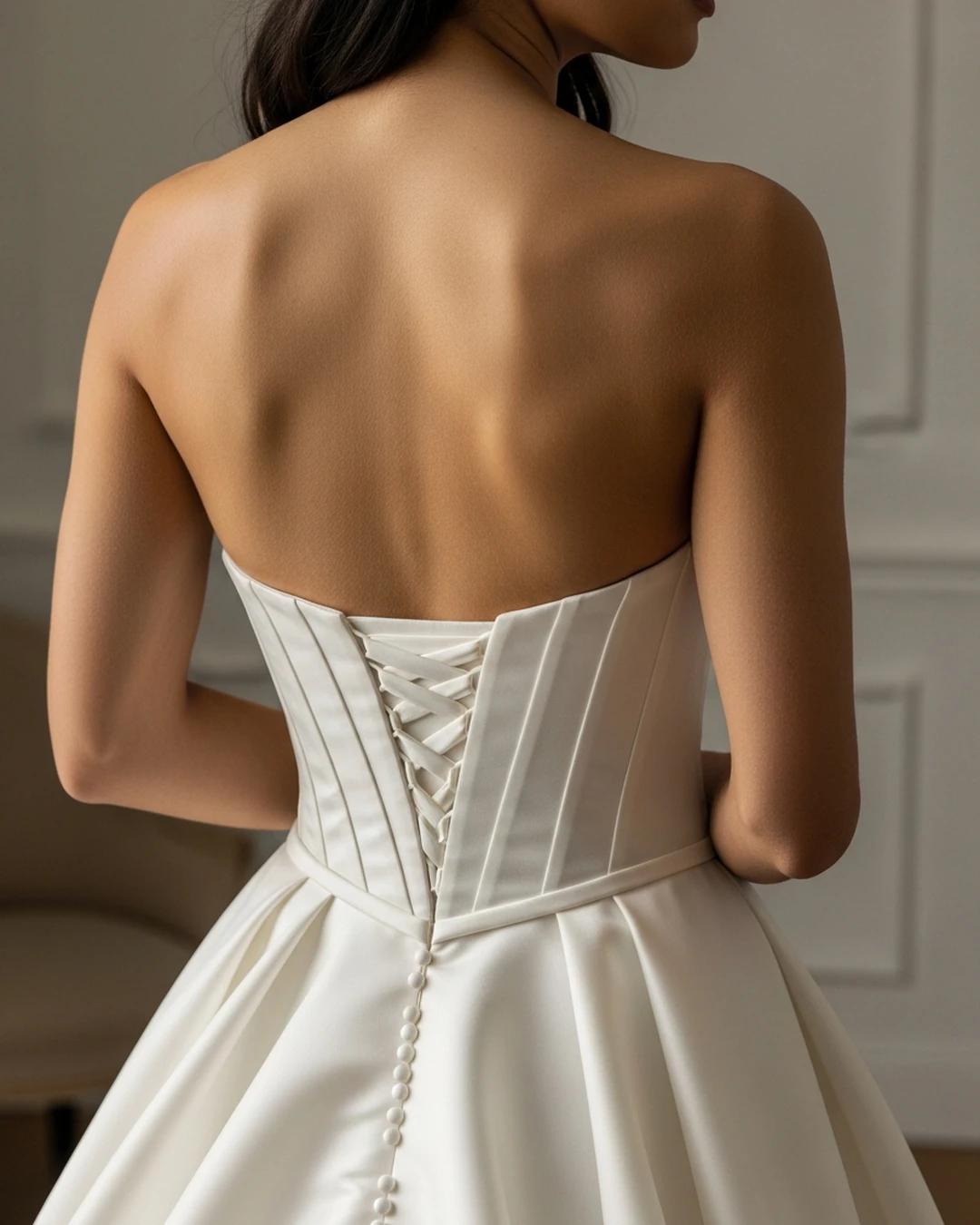
The internal support of a strapless sweetheart comes from an inner bodice: boning that follows the ribcage, preformed cups that shape the bust and, in well-made dresses, a firm elastic band right under the bust that actually carries the weight. Many also have a strip of silicone along the top edge that grips the skin and stops the neckline from gaping when you move.
What makes the difference is fitting that corset to your body. It is not an extra, it is the central piece. At the fitting, do what you will do on the wedding day. Lift your arms, hug someone, bend down to pick something off the floor, sit and take a deep breath. If the neckline shifts, gaps or makes you readjust it, it is not fitted right yet. Ask. That is exactly what fittings are for.
If you have a fuller bust, one concrete tip: ask for extra boning and a wider band under the bust. It completely changes the sense of security. And if depending only on the inner corset makes you uneasy, removable thin straps or an illusion panel give you extra hold without breaking the line of the neckline.
All included
- Banquet venue
- Wedding Planner
- Marriage Paperwork
- Photographer
- Décor
- Flowers
- Master of Ceremonies
- Deejay
- Open Bar
Variations that completely change the result
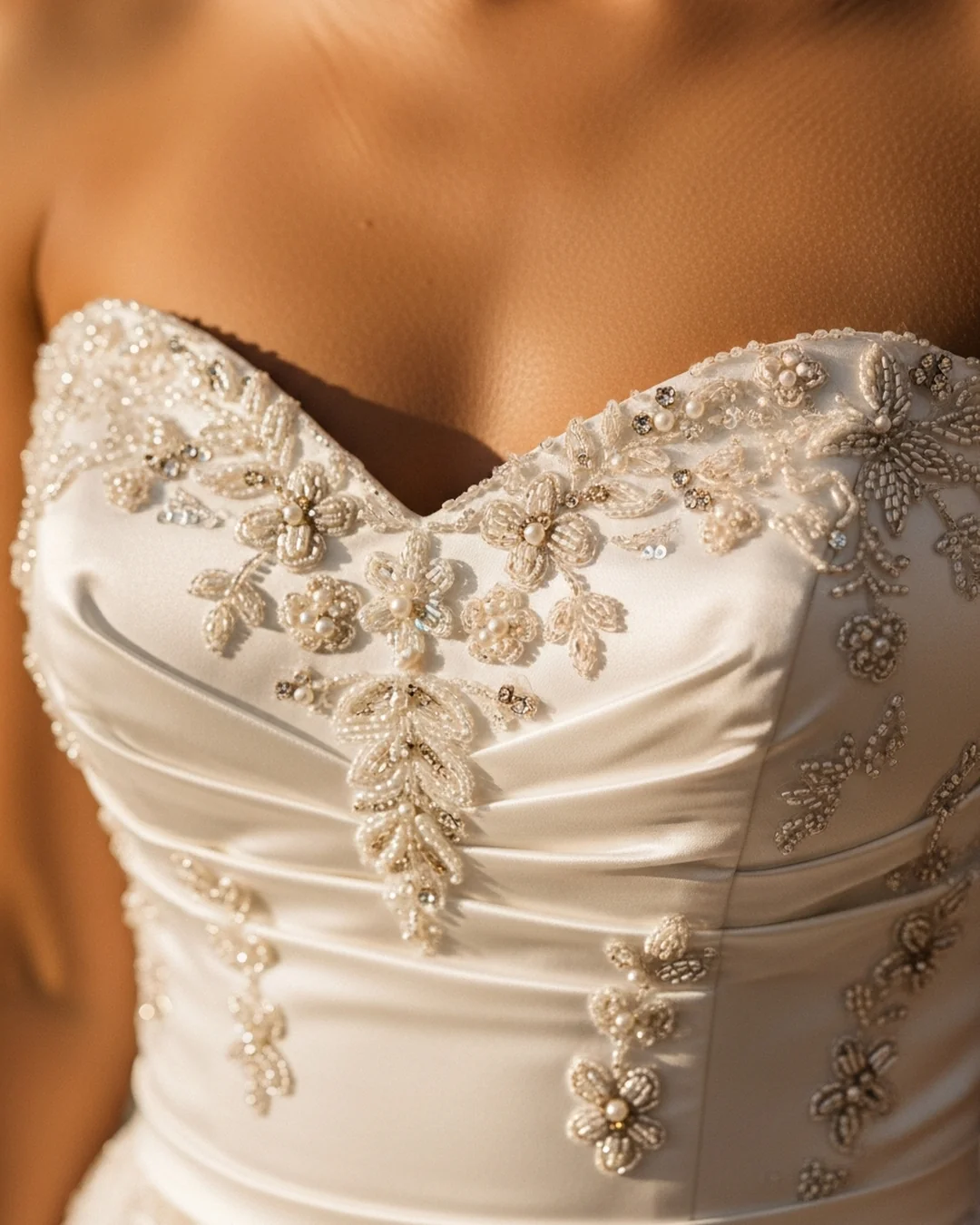
The sweetheart is not just one thing. These are the versions you will see and what each one brings.
- Classic strapless. The timeless one, no straps, the heart clearly drawn. The most romantic and the one that most needs good internal structure.
- Soft or closed. The curves are less pronounced and the point shallower. The most versatile, and the one that works best on a smaller bust or for brides who want something understated.
- With illusion. A sheer tulle panel rises above the neckline, sometimes up to a high collar or sleeves, with the heart shape hinted beneath. It gives coverage without losing the shape; ideal for religious ceremonies or winter weddings.
- Lace-edged. A scalloped lace finishes the line of the neckline and blurs it against the skin. It softens the contrast and adds a more handcrafted feel.
If you are torn between two, think about where you are marrying and at what time. A morning ceremony in a church asks for more coverage than an afternoon celebration in a garden. The neckline speaks, and it should say the same thing as the rest of the wedding.
Which silhouettes it pairs with best
The sweetheart is generous: it pairs with almost any silhouette. But there are matches that work especially well.
Over a mermaid silhouette, the lifted bust continues the fitted line of the body and creates a very cinematic whole, the kind that fills a photograph. Over an A-line the effect is similar but more comfortable to wear. And over a ballgown, the contrast between a defined torso and a full skirt is the classic of bridal classics, the one that never goes out of fashion because it never quite was a fashion: it simply works.
With a sheath or column cut the sweetheart turns more sober and contemporary, a good option if you want something less traditional. To understand how each neckline fits within the whole, the guide on types of wedding dress gives you the full map, and if you are still deciding the overall shape, the dress for your body type is the best place to start.
One trick before you set foot in the shop: try the shape on in Wedded's virtual try-on, which lets you see how a dress looks on your own full-body photo before booking an appointment. The first five try-ons are free and save you from ruling out shapes you already know are not for you.
Conclusion
The sweetheart neckline is still the most requested for a simple reason: it does its job well on a great many different bodies. It lifts the bust, softens the shoulders and adapts from the most romantic strapless to the most covered illusion version. The point is not whether it suits you (it almost certainly does) but choosing the right variation for your bust and insisting on internal support that lets you forget the dress. That last part, more than the shape of the neckline, is what separates a wedding where you look beautiful from one where you are also comfortable.
Related reading
This article was reviewed by our editorial team. How we create our content
Frequently Asked Questions
Not sure which one suits you?
Try every silhouette on your own photo with Wedded's virtual try-on. The first 5 try-ons are free.


