Godmother with mantilla: a complete style guide
Everything a godmother needs to know about wearing a mantilla at a wedding: types, fabrics, colours and how to pair it with the dress.
Created with AI assistance and human review. Editorial standards
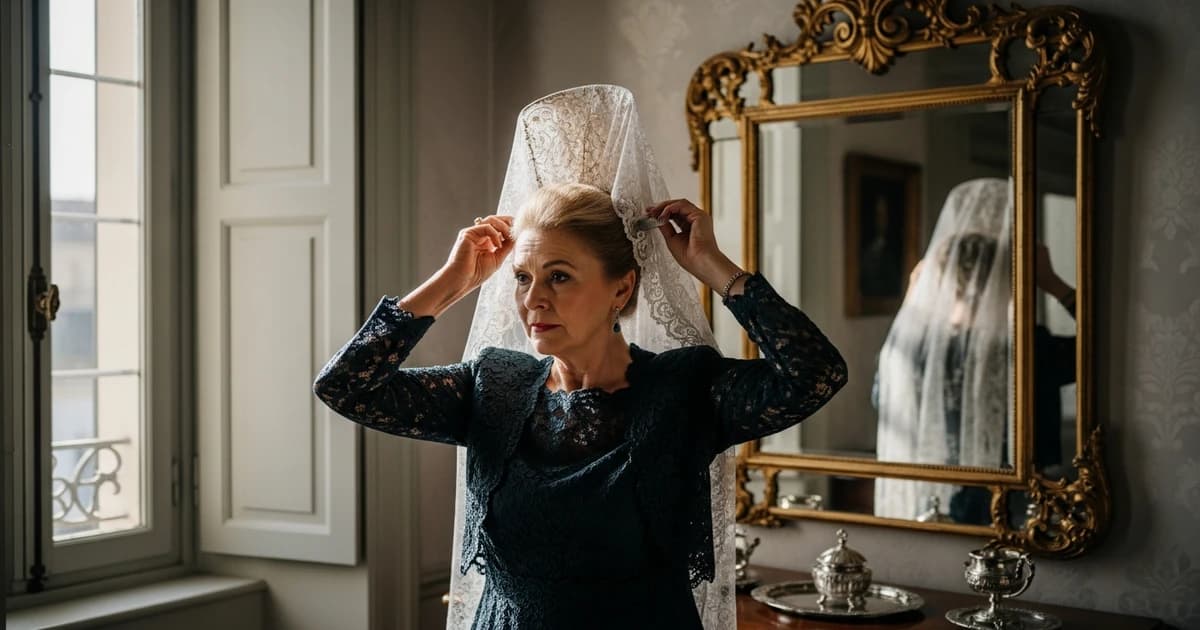
A menudo, cuando una mantilla no luce como debería, el problema no es la mantilla en sí, sino las decisiones de estilo que la rodean. El tejido equivocado para la estación, un color que desentona con el vestido. La mantilla española tiene un peso simbólico que ningún otro complemento puede igualar en una boda religiosa, y precisamente por eso merece mucha más reflexión que un simple «blanco o negro».
Repasamos los distintos tipos de mantilla, los tejidos que aguantan bien bajo el sol de junio y el frío de noviembre, cómo combinarlos con el vestido y qué decisiones de peinado y color marcan la diferencia entre un resultado impecable y uno que se queda a medio camino.
Key points
- The mantilla is the definitive protocol accessory for a godmother at a Spanish religious wedding; no other headpiece comes close in symbolic weight.
- The most common fabrics are handcrafted bobbin lace (Almagro, Camariñas) and Chantilly; each has its season and its price point. Blonda lace is the lightest option for summer.
- Pure white belongs to the bride. For the godmother, warm neutrals such as cream and champagne are the safest and most elegant choice.
- The godmother's mantilla must never be longer or more ornate than the bride's veil: that is the most serious protocol error of all.
- Always try the mantilla with the finished hairstyle before the day itself; lace behaves very differently depending on the volume of the updo and the height of the peineta.
- Hire from specialist ateliers in Madrid or Seville (between €80 and €200) is a widely used and entirely valid option.
Puntos clave
- La mantilla es el complemento de protocolo por excelencia para una madrina en una boda religiosa española; ningún otro tocado se le acerca en peso simbólico.
- Los tejidos más habituales son el encaje de bolillos artesanal (Almagro, Camariñas) y el Chantilly; cada uno tiene su temporada y su precio. La blonda es la opción más ligera para el verano.
- El blanco puro es para la novia. Para la madrina, los neutros cálidos como el crudo y el champán son la elección más segura y elegante.
- La mantilla de la madrina nunca debe ser más larga ni más ornamentada que el velo de la novia: ese es el error de protocolo más grave de todos.
- Prueba siempre la mantilla con el peinado definitivo antes del día; el encaje se comporta de manera muy distinta según el volumen del recogido y la altura de la peineta.
- El alquiler en talleres especializados de Madrid o Sevilla (entre 80 y 200 euros) es una opción muy habitual y completamente válida.
Qué es exactamente una mantilla de madrina
Una mantilla es una pieza de encaje o tul bordado que cubre la cabeza y cae sobre los hombros. Sus raíces en la liturgia católica española la convierten en el complemento de protocolo por excelencia en las bodas religiosas, donde la madrina la lleva como señal de distinción y respeto al espacio sagrado.
Conviene no confundirla con otras piezas: el mantón se lleva sobre los hombros sin cubrir la cabeza; el velo nupcial está reservado, por convención, a la novia; un tocado de plumas o sinamay pertenece a un registro completamente distinto, más festivo que litúrgico. Tomar cualquiera de estas piezas por una mantilla es el primer error que conviene evitar.
Los tipos de mantilla que debes conocer
Por tejido
Encaje de bolillos artesanal. El más valorado y el más costoso. Los principales centros de producción en España son Almagro, en Ciudad Real, y Camariñas, en Galicia, cada uno con su propia tradición: el encaje de Almagro tiende a los motivos geométricos, mientras que el de Camariñas favorece los patrones florales más abiertos. Una pieza de taller artesano puede llevar semanas de trabajo, y el precio refleja ese tiempo.
Encaje Chantilly. De origen francés, pero adoptado por la industria nupcial española desde el siglo XIX. Un tejido más fino y fluido, con motivos florales sobre un fondo de tul hexagonal. Es la elección más habitual para mantillas de gama media porque funciona muy bien en producción industrial sin perder elegancia.
Blonda. Un encaje de seda o algodón con un tejido más abierto y ligero. Especialmente habitual en Cataluña y el Levante. Pesa menos que el Chantilly y es ideal para ceremonias de verano porque no retiene el calor contra la cabeza.
Tul bordado. La opción más contemporánea. Una base de tul liso con bordado a máquina o a mano. Permite mayor versatilidad de diseño y suele ser la elección cuando la madrina busca una mantilla con un perfil más moderno.
Por longitud
La mantilla corta cubre la cabeza y llega hasta los hombros o el escote; es la opción más práctica para madrinas que se moverán durante la ceremonia. La mantilla media, que termina a la altura del pecho, se ha convertido en una de las proporciones más solicitadas en los últimos años y resulta especialmente versátil. La mantilla larga cae hasta la cintura o incluso las caderas, tiene mayor presencia visual y sienta especialmente bien en catedrales o iglesias de gran escala.
All included
- Banquet venue
- Wedding Planner
- Marriage Paperwork
- Photographer
- Décor
- Flowers
- Master of Ceremonies
- Deejay
- Open Bar
El color: más allá del blanco y el negro
El blanco puro está reservado a la novia por protocolo. El negro, aunque indudablemente elegante, lleva en España asociaciones con el luto que muchas familias prefieren evitar en una boda, salvo en ceremonias muy formales o en madrinas de cierta generación que lo llevan con total soltura y autoridad.
El territorio más rico para una madrina está en los neutros cálidos. El crudo, el marfil antiguo, el champán y el taupe claro funcionan con casi cualquier color de vestido, no compiten con la novia y resultan impecablemente correctos. A estos se puede añadir el arena o el gris perla, aunque este último exige un vestido con suficiente presencia para que el conjunto no resulte apagado.
Las mantillas de color existen y son una opción válida en bodas más informales. El azul marino o el burdeos pueden funcionar bien, pero requieren que el resto del conjunto sea muy sobrio para que el resultado no caiga en el exceso.
Cómo combinar mantilla y vestido
Aquí es donde surge la mayor incertidumbre y donde se cometen más errores.
La regla más fiable: el tejido de la mantilla y el tejido del vestido deben complementarse. Un vestido en mikado o crepé satinado pide una mantilla de encaje fino, porque el contraste entre la solidez de un tejido liso y la transparencia del encaje es visualmente muy satisfactorio. Un vestido que ya va en encaje o bordado tiene mucho movimiento en la superficie, así que la mantilla debería ser más sencilla, en tul liso o blonda ligera, para evitar que el conjunto resulte sobrecargado.
En cuanto al color, la mantilla no necesita coincidir exactamente con el vestido. Una madrina de azul noche puede llevar una mantilla cruda o gris plata con total coherencia. Lo que no funciona es un contraste marcado entre tonos cálidos y fríos: una mantilla en tonos melocotón con un vestido azul acero, por ejemplo, genera una disonancia que se fotografía con especial crueldad.
La silueta del vestido también importa. Los escotes bajos se equilibran mejor con mantillas largas que restituyen la proporción. Los vestidos de manga larga o con el cuerpo muy trabajado piden mantillas más cortas para evitar acumular volumen en la parte superior del cuerpo.
El peinado: la decisión que lo condiciona todo
Una mantilla no puede ir sobre cualquier peinado. Algunas combinaciones funcionan; otras arruinan el resultado independientemente de la calidad del encaje.
Con peineta alta. La combinación clásica es un recogido bajo o medio con la peineta colocada en la coronilla. Un moño español o un recogido francés funcionan bien, al igual que un chignon moderno bien estructurado. Conviene evitar recogidos muy altos y voluminosos, ya que compiten con la peineta y desestabilizan la mantilla.
Con prendido bajo. Para madrinas que prefieren un resultado más contemporáneo, la mantilla puede sujetarse con horquillas enjoyadas directamente sobre un recogido bajo o un semirecogido. Este prendido es visualmente más discreto, pero requiere más horquillas para mantenerse en su sitio durante varias horas.
Con el cabello suelto o semisuelto. Posible con mantillas cortas y ligeras, especialmente en blonda o tul. El resultado es más informal y encaja bien en ceremonias civiles o al aire libre. En una catedral, el cabello completamente suelto bajo una mantilla puede resultar demasiado desenfadado según las expectativas de protocolo de la familia.
El protocolo de la boda católica tiene sus propias consideraciones sobre la indumentaria en la iglesia que van más allá de la mantilla. Más en la guía de protocolo de boda católica.
Mantilla o pamela: cuándo elegir cada una
La pregunta surge en casi todas las consultas de madrina, y la respuesta depende del tipo de ceremonia, la hora del día y, por supuesto, el estilo del vestido.
En una boda religiosa, la mantilla tiene una ventaja de protocolo clara. Cubre la cabeza en la iglesia, lo que tiene un significado litúrgico que una pamela sencillamente no puede replicar. Dicho esto, muchas iglesias españolas han dejado de exigir en la práctica el cubrimiento de la cabeza, así que la elección se convierte, sobre todo, en una decisión estética.
La pamela gana terreno en bodas civiles, en fincas al aire libre o en celebraciones de tarde con un ambiente de fiesta en el jardín. Su ala favorece muchas siluetas y tiene un aire más festivo que la mantilla. El riesgo es que en espacios interiores o en bodas muy formales pueda resultar desproporcionada.
Para los tocados más pequeños que se sitúan entre estas dos opciones, hay una guía completa de alternativas aquí.
Errores de estilo que conviene evitar
Llevar una mantilla más larga que el velo de la novia es el error de protocolo más grave. Si la novia
This article was reviewed by our editorial team. How we create our content
Frequently Asked Questions
Not sure which one suits you?
Try every silhouette on your own photo with Wedded's virtual try-on. The first 5 try-ons are free.