Engagement rings: a guide to choosing yours
Everything you need to know to choose an engagement ring: stones, metals, budget and sizing. A straight-talking editorial guide to getting it right.
Created with AI assistance and human review. Editorial standards
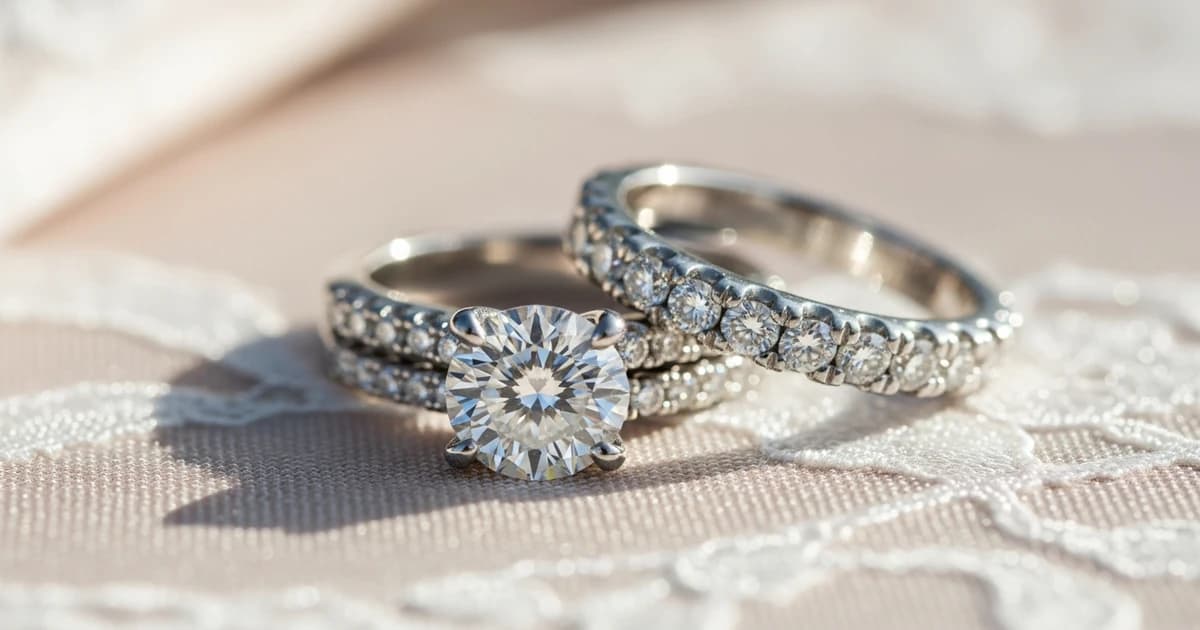
Around 170,000 marriages take place in Spain each year, according to the INE. Behind most of them is a moment that defines the relationship almost as much as the wedding itself: the proposal, and the ring that accompanies it. Choosing that ring should not feel like an obstacle course, yet the sheer number of variables (carats, metals, settings, certificates) can turn something beautiful into a paralysing decision.
Here we cover everything that matters: which stones exist and what they cost, how to read a diamond's characteristics, which metal suits each skin tone and lifestyle, and how much it is reasonable to spend without the bank account weeping before the wedding has even been planned.
Key takeaways
- The diamond is the most traditional choice. Sapphire, ruby, emerald and lab-grown stones are all completely legitimate alternatives, often more affordable and more distinctive.
- The 4 Cs of a diamond (cut, colour, clarity and carat weight) determine the price. Cut is the most important factor for visual brilliance. Always insist on a GIA or IGI certificate.
- The metal shapes the long-term experience of the ring. It determines how much upkeep it needs, how well it holds up to daily wear, and what it adds to the overall cost. Platinum lasts longer and requires no upkeep, though it is noticeably more expensive than 18ct gold. Rose gold is particularly flattering on warmer, olive and darker skin tones.
- The idea that a ring should cost one or two months' salary has its roots in advertising, not tradition. A reasonable mid-market ring sits between £800 and £3,000, depending on the broader context of the wedding.
- Ring size is easily overlooked when planning a surprise proposal. If you want to keep things secret, borrow a ring your partner wears on their ring finger and take it to a jeweller to be measured.
- Always ask for a detailed receipt describing the stone, the metal and the technical specifications, regardless of where you buy.
The stones: beyond the diamond
The diamond remains the most sought-after stone for engagement rings across Europe, though depending on your partner's taste, it may not even be the best fit.
Diamond: the 4 Cs that set the price
When a jeweller talks you through a diamond, the price is determined by four factors: cut, colour, clarity and carat weight. Cut is the most important for visual brilliance, colour runs from D (colourless) to Z (yellowish), and clarity measures internal inclusions. A 0.5 ct diamond with an excellent cut, F colour and VS1 clarity can cost between £1,200 and £2,000 for the stone alone, before the setting.
Always ask for a gemological certificate. The most internationally recognised are those issued by the GIA (Gemological Institute of America) and the IGI. Without a certificate, there is no way to verify what you are paying for.
Coloured stones: sapphire, ruby and emerald
The blue sapphire has long been associated with royalty and gained enormous visibility through Princess Diana's engagement ring, now worn by the Princess of Wales. It is a hard stone (9 on the Mohs scale, compared to the diamond's 10) and well suited to everyday wear.
Ruby and emerald are more delicate in terms of resistance to impact. Both are beautiful, though they call for more careful handling. If your partner works with their hands or leads an active life, that detail is worth factoring in.
Moissanite and lab-grown: the alternative that is gaining ground
Lab-grown stones, both synthetic diamonds and moissanite, have grown considerably in popularity in recent years. A 1 ct lab-grown diamond can cost between £300 and £600, compared to £4,000 or more for a natural equivalent. Visually they are nearly indistinguishable. The difference lies in origin and resale value, which for lab-grown stones is considerably lower.
The metals: gold, platinum and their variations
The setting does more than shape the aesthetic of the ring. It determines maintenance requirements, durability and, in part, the total cost.
Yellow, white and rose gold
Pure gold (24 carat) is too soft for everyday jewellery. Rings are typically made in 18ct gold (75% pure gold) or 14ct gold (58.5% pure gold). 18ct is the standard across Spain and much of Europe, and is widely used in the UK too.
White gold is created by alloying gold with palladium or silver, and is usually coated with rhodium to intensify the white finish. Over time that rhodium plating wears away and the ring can take on a slight yellow tint, which means periodic maintenance at a jeweller.
Rose gold, a blend of gold and copper, had a significant moment over the last decade and has remained a favourite. It is warm, particularly flattering on olive and darker skin tones, and its price is comparable to yellow gold.
Platinum: the most durable option
Platinum is denser and more resistant than gold, and considerably rarer. A platinum ring feels weightier on the hand and requires no rhodium plating because its white colour is entirely natural. The price is noticeably higher: a platinum setting can cost between 40% and 60% more than the same piece in 18ct white gold. For anyone looking for a ring that will last a lifetime without maintenance, it is the most logical choice.
Settings: how everything changes with the mount
The setting is the structure that holds the stone and defines the visual character of the ring. The same 0.5 ct diamond can look entirely different depending on the mount chosen.
Solitaire
The most classic setting. A single central stone, typically held in prongs, that shows the stone to its fullest advantage and never goes out of fashion. It is one of the most popular styles for engagement rings across the market.
Pavé and halo
A pavé setting lines the band with small inset diamonds. A halo places a crown of smaller stones around the central stone, making it appear larger. Both options add brilliance, though also complexity when it comes to maintenance: the smaller stones can loosen over time.
Bezel setting
The stone sits enclosed within a rim of metal. It is the most practical option for active wearers because it protects the stone more effectively. Visually it reads as contemporary and minimal.
All included
- Banquet venue
- Wedding Planner
- Marriage Paperwork
- Photographer
- Décor
- Flowers
- Master of Ceremonies
- Deejay
- Open Bar
Budget: what is reasonable and what is marketing
There is a widely held idea, fed for decades by advertising campaigns within the industry, that an engagement ring should cost the equivalent of one or two months' salary. It is a deeply embedded belief, but in practice it is a marketing strategy with no real foundation.
What does make sense is thinking about the ring within the context of the total wedding budget. If the celebration is likely to cost between £15,000 and £25,000, a ring priced between £800 and £2,500 sits comfortably within that picture. If the wedding will be intimate and low-key, it may actually make more sense to invest more in the ring, which lasts a lifetime, than in a single day's reception.
For a broader sense of where your budget sits overall, the Wedded wedding budget calculator is a good starting point.
Ring size: the detail most often forgotten
It is a surprisingly common outcome for the ring not to fit on the first attempt. Ring size is something many people simply do not know off the top of their head, and guessing is a risk.
If you want to preserve the element of surprise, there are a few approaches worth trying: borrow a ring your partner wears regularly on their ring finger and take it to a jeweller to be measured, or ask someone close to them discreetly.
Most jewellers include a free or low-cost resizing after purchase, so it is not a disaster if the fit is slightly off. There is more detail on this in the guide to engagement ring sizing.
The family ring: a piece with history
Inheriting an engagement ring from a previous generation carries something no jeweller can sell: context and continuity. If a piece like that exists in your family, it is worth considering whether passing it on makes sense.
That said, it is worth having the setting checked, along with any prongs, and confirming the size before the proposal. A trusted jeweller can assess whether any restoration is needed. More on how to approach that decision in the article on family heirloom rings as engagement rings.
Where to buy: traditional jeweller versus online
A physical jeweller offers the chance to see the stone in person, receive expert guidance and have clear recourse if anything goes wrong. This is particularly advisable for purchases above £2,000 or when you have limited experience with precious stones.
Specialist online platforms (as opposed to general marketplaces) allow you to configure the ring by selecting the stone and setting separately, often at a better price than the high street. The trade-off is not being able to see the stone before buying, a risk that can be reduced by requesting the gemological certificate and making use of the returns window.
Whichever route you choose, always ask for a detailed receipt.
This article was reviewed by our editorial team. How we create our content
Frequently Asked Questions
Not sure which one suits you?
Try every silhouette on your own photo with Wedded's virtual try-on. The first 5 try-ons are free.